Practical answer up front: for most first-time visitors, the right approach is the option that balances refundable or flexible hotel nights with independently cancellable flights, rather than committing to a nonrefundable all-in-one package. Before you judge a bundle as a “deal,” always compare the same travel dates, same traveler names, identical room types, and the final cancellation penalties and deadlines. Bundles can simplify logistics, but they often lock you into tighter terms for one component (usually the hotel or activities). If your dates might change, prioritize refundable hotel nights and flight tickets with change waivers. Read provider cancellation pages closely and verify the exact penalties and refund timing on the booking confirmation — that page is the contract you’ll rely on if plans shift.
Test package value fairly
| Booking approach | Best for | Tradeoff to check |
|---|---|---|
| All-in-one packaged bundle | Travelers seeking convenience and single-point coordination for transfers and tours. | Often less flexible — changing one item can trigger penalties for the whole package. |
| Separate refundable hotel + separate flight | Visitors who may change dates and want clear control over each supplier’s policy. | Requires more booking effort and coordination but keeps each refund process isolated. |
| Nonrefundable discounted bundle | Travelers with fixed, certain plans who prioritize upfront savings over flexibility. | Lowest flexibility — cancellations or date changes usually incur steep fees or no refund. |
| Flexible flight fare + prebooked nonrefundable activities | Those who want flight flexibility but plan to keep specific tours or shows. | Flight can be adjusted, but activity charges can still make the trip effectively inflexible. |
Check current package and separate options
Use identical dates, travelers, room needs, baggage, and flexibility so the comparison stays meaningful.
What to compare before judging a bundle
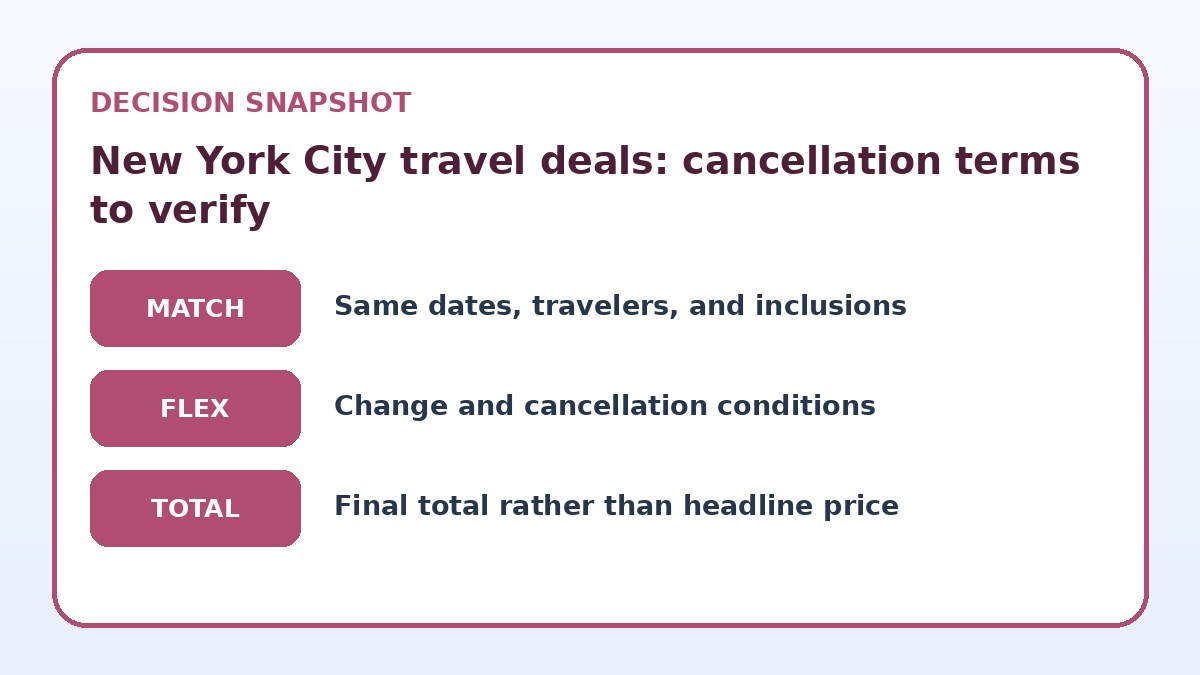
Start by lining up apples-to-apples comparisons: identical dates, the same number of rooms and travelers, and the same hotel room type. A bundle can look cheaper only because it downgrades the room, adds connections instead of direct links, or bundles nonrefundable attraction tickets. Put the supplier’s cancellation policy for each component side-by-side with the separate supplier policies. Note exact deadlines, how refunds are processed, and whether a voucher or cash refund is offered.
Also check how cancellations are handled when only part of a bundled booking changes. Some bundles treat the whole package as one contract: cancel one component and the provider may cancel the entire booking or apply higher penalties. Ask whether a partial cancellation or date change is allowed and whether penalties apply proportionally. Knowing this lets you decide whether the convenience of a bundle is worth the potential rigidity.
Inclusions: what affects flexibility most
Look closely at what the bundle includes beyond flights and hotels: transfers, attraction tickets, city passes, and protected fares. Transfers and attraction reservations are frequently nonrefundable or have stricter cutoffs than hotels. If the bundle includes prebooked Broadway-style shows, museum priority entries, or guided tours, check each activity provider’s cancellation window — these can make an otherwise flexible hotel/flight booking effectively nonrefundable.
Equally important is how the bundle documents inclusions. A line-item list with separate supplier names and booking codes is preferable because it makes it easier to manage changes or cancellations directly with the supplier. If the bundle only shows a single confirmation number and vague descriptions, you may have to go through the bundling agent for any modification, which can increase processing time and complicate refunds.
Look past the headline total
Compare inclusions and change conditions before deciding whether a package is genuinely useful for this trip.
Deal comparison checklist
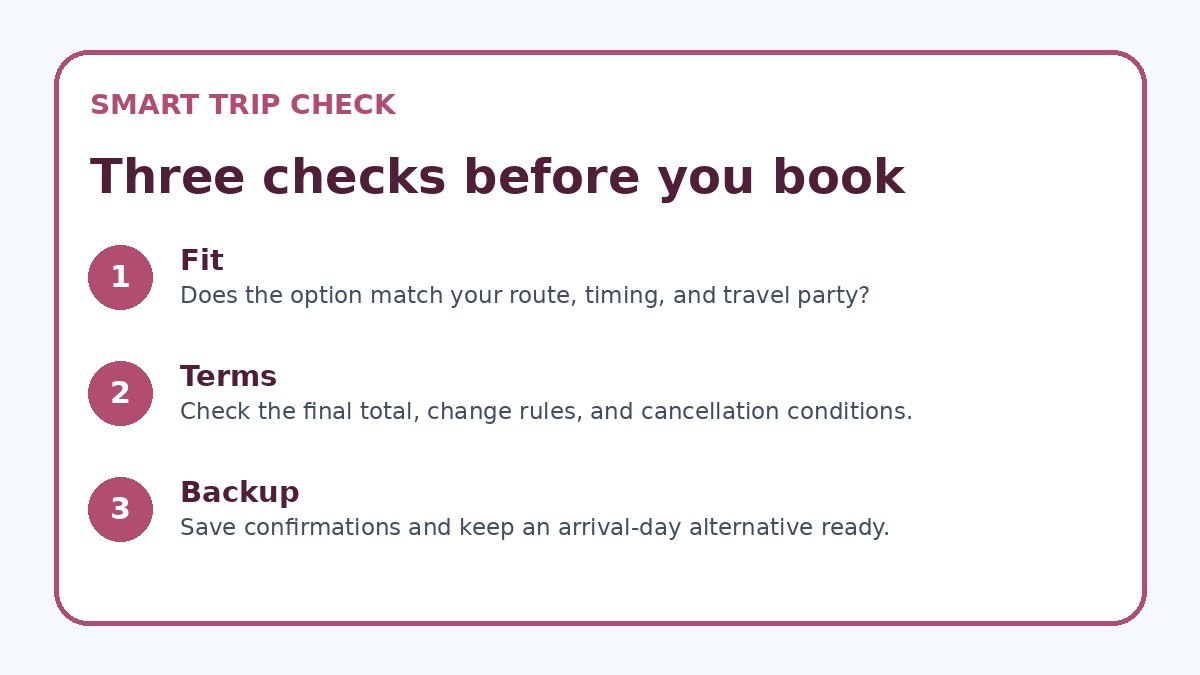
- Match dates, room type, number of travelers, and traveler names when comparing bundle vs separate quotes.
- Open the full cancellation policy for each component and note exact deadlines and penalty amounts.
- Confirm whether refunds are processed as cash or travel credit and estimate the refund timeline.
- Check for partial cancellation rules and whether changing one component voids bundle pricing.
- Save screenshots or PDFs of the booking page and the detailed cancellation policy after purchase.
- Verify the contact path for disputes: supplier direct contact, bundling agent, or third-party reseller.
Traveler-specific value: who benefits from which approach
Different travelers need different things. If you’re a first-time visitor on a fixed schedule with confirmed dates, a bundled package that locks in logistics can reduce stress and save time coordinating transfers and tours. However, if you anticipate date changes, work obligations, or simply want the freedom to swap hotels or extend your stay, separate refundable or flexible bookings usually offer better protection even if the upfront price appears higher.
Solo travelers or couples willing to self-manage can often extract more flexibility and transparency by booking flights and hotels separately, keeping receipts and confirmation codes handy. Families or travelers who prefer one-stop service may value a bundle despite limited flexibility, because the convenience of coordinated itineraries and one customer-service contact can outweigh stricter cancellation terms.
Final terms: what to verify on the booking page
Before you click pay, verify four things on the provider’s final booking page: the exact cancellation window and any associated fees; whether refunds are cash or travel credits; the timeline for processing a refund; and who to contact for disputes. Don’t rely on marketing blurbs like “free cancellation” without seeing the detailed policy linked to the booking reference. Take screenshots or save the policy text; it’s often your strongest evidence if a dispute arises.
Finally, check whether any third-party intermediaries (including bundling agents) appear as the payer, supplier, or reseller on the confirmation. If so, changes and refunds may have to go through that intermediary rather than the hotel or airline. Trip.com or other comparison sites can be used to view alternative availability and cancellation terms, but always confirm the final terms on the booking page you will use to pay.
Travel Deals & Booking Strategy questions travelers ask
Is a bundle usually cheaper than booking flights and hotels separately for New York City travel deals?
Bundles can appear cheaper because they package services and sometimes negotiate wholesale rates, but the price alone doesn’t tell the whole story. A bundled rate may lock you into nonrefundable terms or downgrade room categories. Always compare the same room type, traveler count, and exact cancellation windows before deciding. Also confirm who issues refunds and whether partial cancellations are permitted. Use a bundle only after you’ve compared the separate options for identical services and verified the final booking terms on the provider’s page.
What cancellation features should first-time visitors prioritize for New York City?
Prioritize refundable or flexible hotel nights and flights with clear change or waiver policies if your schedule could change. For activities, favor those with short cancellation windows or refundable options when possible. Make sure to check processing times for refunds because some providers issue credits rather than cash refunds. If convenience matters more than flexibility, accept that some inclusions may be nonrefundable but document that decision and retain all confirmation details in case you need to dispute a charge.
If I buy a bundled package, how can I verify who handles refunds and changes?
Check the booking confirmation and the terms on the final payment page for supplier names and reseller information. The page should state whether the bundle is sold by a tour operator, an online travel agency, or directly by the hotel/airline. If the supplier isn’t clear, contact customer service before paying and request written confirmation of who processes refunds and handles changes. Keep any email exchanges; they become essential if you need to escalate a refund or amendment.
Final decision note
For first-time visitors to New York City, the best booking choice depends on how firm your dates are and how much time you want to spend managing bookings. If your schedule may shift, favor refundable hotels and flexible flight options booked separately to preserve control. If you prefer a single point of contact and your dates are fixed, a bundled package can ease logistics but read the final terms carefully. Always compare identical dates, inclusions, and cancellation language before deciding, and save the booking-page policies. Verifying those details is the surest way to avoid false savings and unexpected penalties.
Continue planning
Check current options and final conditions
Use the provider page to confirm live availability, the final total, cancellation terms, and every condition that matters to your trip.
This evergreen planning guide was created with AI-assisted drafting and a structured quality review. It does not display live prices, schedules, availability, visa guidance, or provider rankings. Verify current details before booking. Some links are affiliate links; we may earn a commission at no additional cost to you.