Practical answer up front: choose your Da Nang neighborhood first, then filter hotels by flexible cancellation, simple payment options, and clear change policies that suit solo travel. If you plan a relaxed beach-and-cafe rhythm, aim for My Khe/An Thuong; if you want quick museum and river access, pick the city center; for quieter local life with easier hostel social scenes go to Hai Chau or Cham Island-facing neighborhoods. After you shortlist areas, compare the fine print: free cancellation deadlines, non-refundable rates versus refundable options, how much is charged for a late change, and whether ID or a deposit is required at check-in. Always verify those terms on the provider’s final booking page — including refund timing, card holds, and whether a third-party platform or the hotel handles refunds. This guide helps you match neighborhood fit to the exact flexible terms solo travelers need.

Check live stays in the areas that fit
Use your dates and party size to compare current rooms after you narrow the neighborhood fit.
Neighborhood fit: match daily rhythm to area
Start by choosing the neighborhood that matches the rhythm of your trip. My Khe and the An Thuong strip suit solo travelers who plan daily beach time, cafes, and easy scooter or rideshare runs — this area offers a concentration of guesthouses and mid-range hotels where flexible cancellation is common. If your day plan centers on museums, markets and riverfront cafés, the central riverbank and Hai Chau district reduce daily transit time and let you walk between sites. Consider whether you’ll prefer to end evenings close to food stalls and bars or in quieter residential streets; the wrong neighborhood adds friction to every day.
Think about how neighborhood choice changes the type of flexible terms you’ll need. Beach-facing properties often have seasonal rules — look for hotels that clearly state off-season cancellation windows or allow date changes without penalties. City-center hotels can be more business-oriented with stricter non-refundable deals, so search specifically for refundable or flexible-rate filters. If you want hostel social life, check dorm-friendly cancellations and day-rate options; if you need privacy, ensure private rooms offer the same cancellation flexibility as dorm beds. Shortlist three neighborhoods, then compare their typical booking terms before opening inventory lists.
Choose an area-selection strategy
| Area approach | Best for | Tradeoff to check |
|---|---|---|
| Stay in the beach area (My Khe / An Thuong) | Solo travelers who want beach days, cafes, and nightlife within short walks. | May encounter seasonal rate rules and slightly longer rides to central museums. |
| Stay in the city center / Han River | Walkable access to museums, markets, and riverfront nightlife with low daily transit. | Business hotels here sometimes favor stricter non-refundable corporate rates. |
| Stay in Hai Chau / local neighborhoods | Quiet local life, lower-cost guesthouses, and easier hostel social scenes for meeting others. | Fewer beachfront conveniences and possible extra short rides to main sights. |
| Stay near ferry piers or island departure points | Travelers planning early tours or island trips who need short transfers to boats. | Limited evening amenities and higher value on flexible arrival and change policies. |
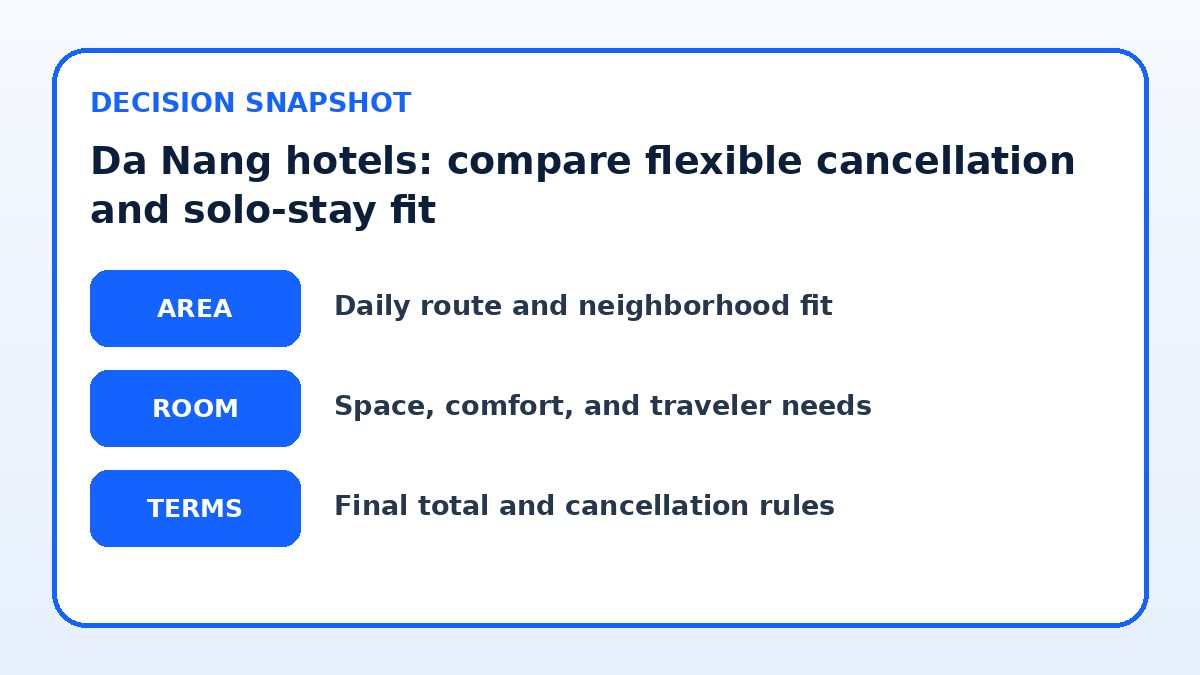
Daily-route friction: how location affects cost and convenience
Map a typical day before booking: morning coffee, afternoon sightseeing, evening meals. If attractions are clustered around the Han River, staying in Hai Chau or the city center means shorter trips and fewer rideshare costs; that reduces the value of a super-flexible rate if you can move quickly between activities. Conversely, if your plan depends on catching early ferries or island tours, a hotel near the ferry pier or the beach saves time and stress, making flexible arrival and late-check-in policies more valuable because boats and tours often shift schedules.
Assess last-mile options and how they affect cancellation needs. If rideshares are plentiful and cheap, you can tolerate a hotel slightly further from main sites and use flexible transport instead of a flexible rate. If you expect heavy luggage or prefer walking, pick a central hotel where daily-route friction is minimal so you won’t need to change bookings due to transit fatigue. Always check the hotel’s stated proximity to landmarks and confirm local transport options; if a hotel’s location forces frequent plan changes, prioritize clearer, lenient change and cancellation terms.
Now compare like with like
Keep the same dates, guests, room needs, and cancellation preferences while you compare the final choices.
Room and party needs: solo traveler priorities
Decide what type of room and social environment you want. Solo travelers often choose small private rooms, budget studios, or a mixed dorm in a social hostel. Private rooms give more privacy for remote work and late nights; hostels increase opportunities to meet people but can have different cancellation rules for shared beds versus private cabins. If you need workspace, verify whether the room or public areas are quiet during daytime and whether the hotel specifies business amenities in the flexible rate details, because some cheaper flexible rates exclude business services or have limited access hours.
Consider safety and conveniences that affect booking terms. Solo travelers should confirm whether the hotel requires a security deposit or pre-authorization on arrival, and whether that hold is explicitly documented in the booking conditions. If you plan unpredictable arrival times, verify late check-in and 24-hour reception policies and prefer bookings that explicitly state no penalty for late arrival. For multi-night stays with variable dates, look for hotels offering date-change options without heavy penalties; that protects you if plans extend after meeting new people or joining a last-minute tour.
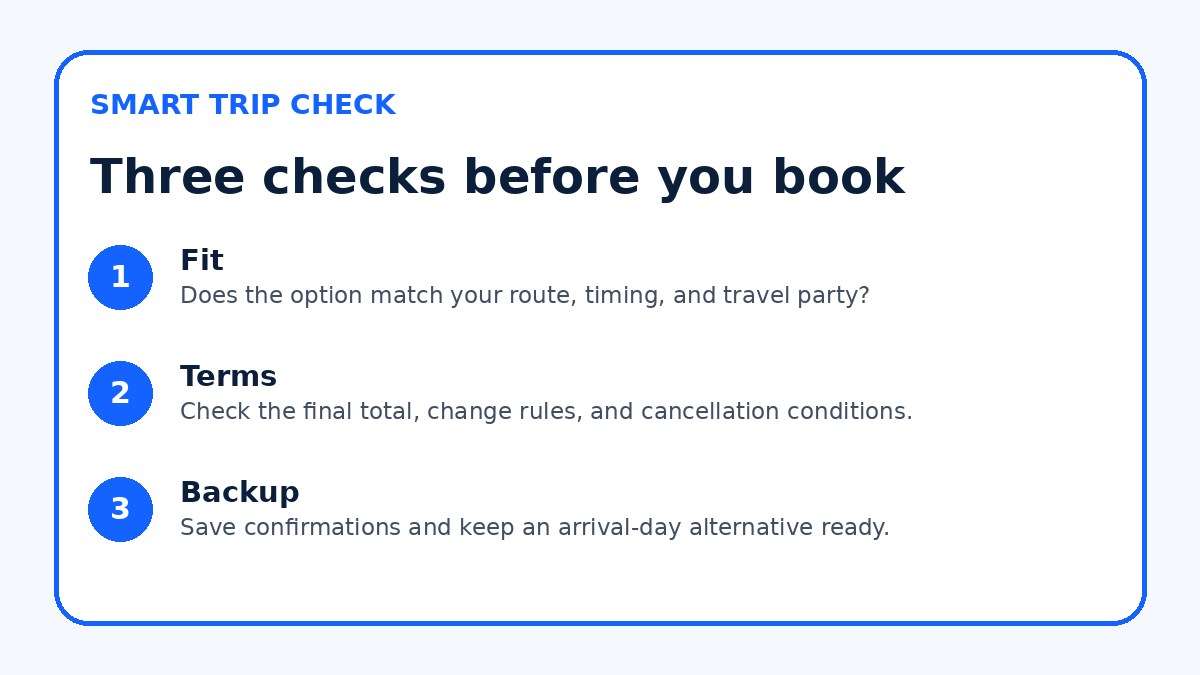
Hotel booking check before payment
- Shortlist three neighborhoods based on your daily plan (beach, riverfront, local streets) before comparing individual hotel listings.
- On each hotel page, read the full cancellation policy and note the deadline for free cancellation.
- Confirm whether the rate is refundable, requires full prepayment, or only a deposit and who processes refunds (hotel or booking platform).
- Ask the hotel in writing about card pre-authorizations, deposit amounts, and how long holds will remain on your account.
- Verify late arrival and check-in window policies; request written confirmation if you expect to arrive after normal desk hours.
- Save screenshots or PDFs of the booking terms and the confirmation email so you have proof of the agreed flexible conditions.
Final booking terms: what to compare on the provider page
When you open live inventory, compare these specifics before you click purchase: cancellation window (how long before check-in you can cancel free), refund timeline (how long the provider promises to return funds), whether a full prepayment is required, and if a deposit or card pre-authorization will be applied at check-in. Also check whether the flexible rate is offered by the hotel directly or through a third-party platform — that affects who processes refunds and how disputes are handled. If information is ambiguous, use the provider’s contact method to get a written clarification and save a screenshot of any promises.
Pay attention to special clauses that commonly surprise solo travelers: non-refundable breakfast add-ons, third-party tour cancellation policies bundled into a package, limits on date changes, and fees for adding a late check-out. If you plan to change dates, compare the credit policy (some hotels issue a voucher rather than a monetary refund). Verify who covers processing fees on refunds, and confirm whether ID or passport scanning is part of check-in. Trip.com can be a quick place to compare current availability, but always verify the final terms on the hotel’s own booking page or confirmation email before relying on them.
Hotel Guide questions travelers ask
How do I compare refundable and non-refundable rates when booking hotels in Da Nang?
Look for three things on the booking page: the cancellation deadline (how long before check-in you can cancel for free), whether a refund will be credited or returned to your card and how long refunds take, and if any processing fees apply. Non-refundable rates are cheaper but offer no recovery; refundable rates normally allow cancellation up to a set hour before arrival. If you need flexibility, prioritize refundable rates with explicit refund timelines and confirm whether the booking intermediary or the hotel will handle refunds.
What should solo travelers check about deposits and card holds at check-in?
Confirm whether the hotel will place a pre-authorization hold on your card, require a cash deposit, or take an imprint. Ask for the exact amount or percentage and how long the hold will remain after checkout. If you book through a platform, verify who reverses the hold — the hotel or the booking service — and request written confirmation of the deposit policy. Knowing this prevents unexpected blocked credit and helps you manage a limited card balance while traveling.
If I book a flexible rate and need to change dates, what steps should I follow?
First, review the booking terms to confirm the allowed change window and any fees. Contact the hotel or booking platform as early as possible and request the date change in writing; keep a copy of email or chat confirmations. Verify whether the change results in a rate difference or a new prepayment; ask how refunds or credits will be handled if the new rate is lower. If the policy is unclear, request a written amendment to your confirmation so you have proof of the new arrangement.
Final decision note
For solo travelers in Da Nang, the right area determines how much flexible booking you actually need. Pick the neighborhood that fits your daily rhythm first — beach, riverfront, local streets, or pier area — then evaluate specific hotel terms: cancellation windows, refunds, card holds, and late-arrival rules. Prioritize written confirmations and screenshots when a hotel offers verbal flexibility. Shortlisting areas before opening live inventory helps you compare like-for-like policies and avoid surprises. Finally, check whether refunds are processed by the hotel or the booking platform and confirm timelines on the final booking page.
Continue planning
Check current options and final conditions
Use the provider page to confirm live availability, the final total, cancellation terms, and every condition that matters to your trip.
This evergreen planning guide was created with AI-assisted drafting and a structured quality review. It does not display live prices, schedules, availability, visa guidance, or provider rankings. Verify current details before booking. Some links are affiliate links; we may earn a commission at no additional cost to you.