If you’re visiting Tokyo for the first time, using flexible travel dates is one of the most effective ways to find better value without sacrificing convenience. Practically: start searches with a ±3–7 day window for flights and hotels, compare bundled packages against separate bookings for the same dates and travelers, and always inspect the provider’s final booking page for change and cancellation terms. Flexible dates reveal cheaper weekday flights, lower hotel rates outside local event windows, and alternative routing options. They also help you spot false savings—bundles sometimes look cheaper until you match the exact inclusions and fees. This article gives the quick decision path up front, then walks through inclusions, flexibility, traveler-specific value, and final terms so you can confidently choose what to book for your Tokyo trip.
Test package value fairly
| Booking approach | Best for | Tradeoff to check |
|---|---|---|
| All-in-one package (flight + hotel) | Travelers who want single-point support and simplified checkout. | Less flexibility; changes to one component can affect the whole booking and fine-grained options may be limited. |
| Book flight and hotel separately | Visitors who want control over airlines, timing, and hotel neighborhood. | You manage multiple vendors and contacts; coordinating changes may be more work but offers flexibility. |
| Bundle flight + hotel with refundable fare | Travelers who value flexibility but prefer package convenience. | Higher upfront cost; verify refund and change policy details for each component on the final booking page. |
| Use flexible-date search then lock individual bookings | Savvy planners who want to discover low-date options and then select exact suppliers. | Requires time to research; savings depend on matching the same dates, passengers, and inclusions across providers. |
Check current package and separate options
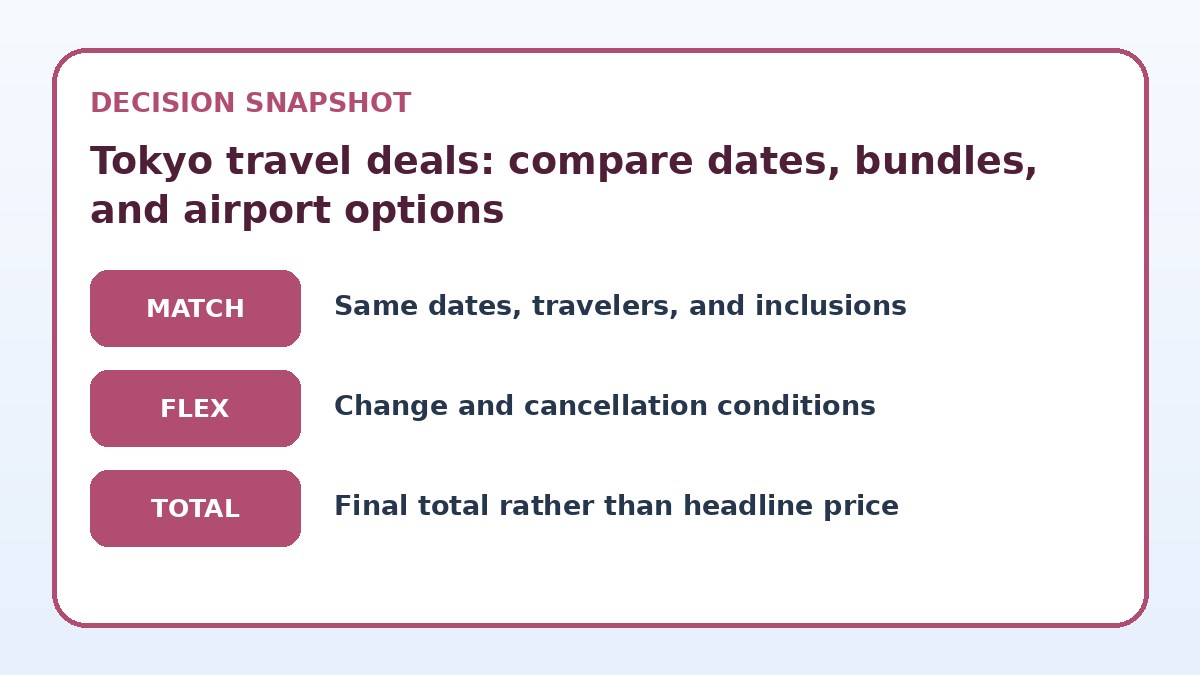
Use identical dates, travelers, room needs, baggage, and flexibility so the comparison stays meaningful.
What to compare first: the essentials before judging a bundle
Before assuming a bundled package is the best deal, line up the items you must compare: same travel dates, same number of travelers, identical flight routing (direct versus connecting), checked-baggage allowances, and the exact hotel room type and board basis. Bundles can hide differences—one package might quote a flexible fare while another includes a restrictive basic economy ticket. If your search tool lets you toggle date ranges, record the single set of exact dates you would accept and force each quote to match them when doing a final apples-to-apples comparison.
Also check airport arrival and departure airports, transfer options to central Tokyo, and whether the hotel rate includes taxes or resort fees. For rail or airport transfers included in bundles, confirm the provider’s description against the operator’s published terms: does the transfer operate on specific days or require minimum group size? Practically, make a spreadsheet or notes comparing inclusions line by line so hidden exclusions don’t turn an apparent bargain into a frustrating extra expense.
Inclusions: what matters most for first-time Tokyo visitors
For first-time visitors, inclusions that reduce friction often matter more than marginal price differences. Priority items include checked baggage (if you plan to travel between regions), airport transfer or clear instructions for reaching central Tokyo by train, and a hotel in a neighborhood that suits your itinerary. Free breakfast matters if you prefer to start early for sightseeing; some hotels list ‘breakfast included’ but restrict it to specific rates—confirm the exact room rate being quoted.
Extras that can feel valuable but add little real convenience should be weighed: guided tours, sim cards, or rail passes. These may be useful if they match your planned itinerary, but if they force you into fixed-day activities they can reduce flexibility. When a bundle includes a rail pass or guided day trip, verify the validity dates, refund rules, and whether alternate dates or vouchers are allowed. Cross-check inclusions against what you would purchase separately so you can judge true incremental value.
Look past the headline total
Compare inclusions and change conditions before deciding whether a package is genuinely useful for this trip.
Deal comparison checklist
- Search flights and hotels with a ±3–7 day flexible window to identify lower-cost weekday options.
- Match the exact dates, passenger count, baggage allowances, and room type when comparing bundle versus separate quotes.
- Click through to the provider’s final booking page and copy key change and cancellation rules for each option.
- Verify airport transfer details and alternative public-transport instructions before assuming transfers are included.
- Confirm neighborhood suitability for your itinerary and check hotel check-in/out times relative to arrival and departure.
- If booking separately, save supplier contact details and reservation codes in one accessible document for quick changes.
Flexibility and change rules: the decisive tradeoff
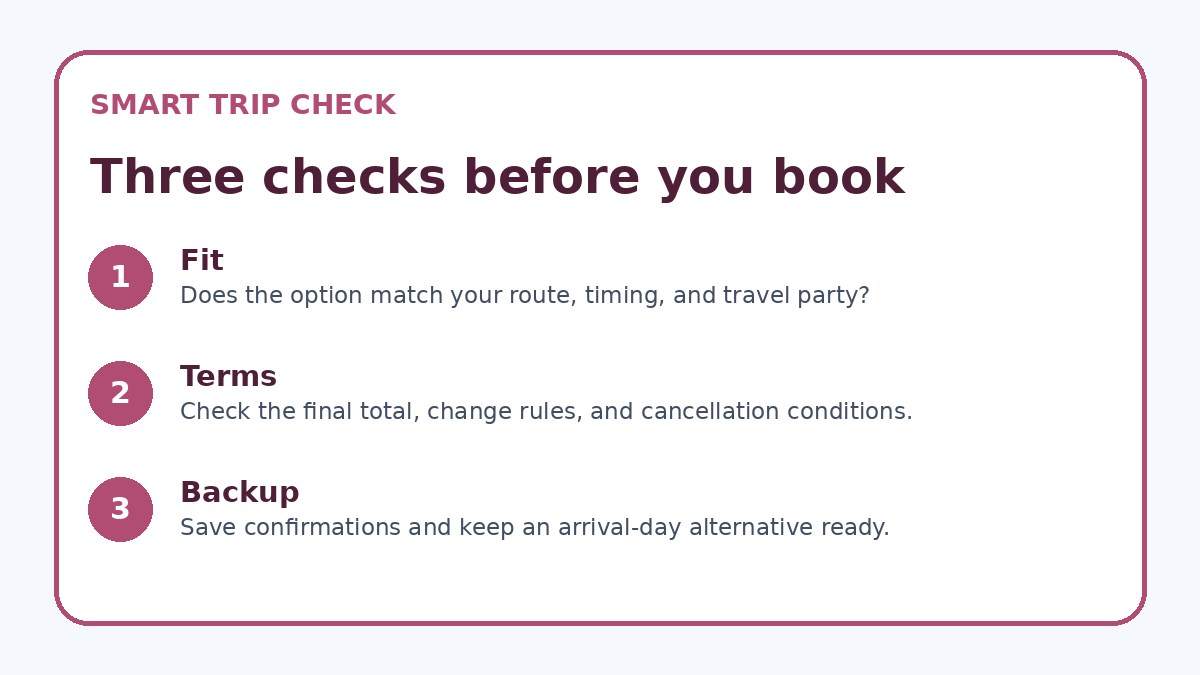
Flexible dates are most powerful when paired with flexible change and cancellation terms. Low fares often have strict rules and hefty change fees, while a slightly higher flexible fare can save money if your plans shift. When comparing options, always click through to the final booking page to read the exact change and cancellation policy for each fare class and room rate. Pay special attention to deadlines (how many days before departure) and whether refunds are credited as vouchers only.
If a bundle includes both flight and hotel, check whether changes to one component affect the other. Some packages treat the booking as a single unit—changing a flight may trigger re-pricing or cancellation of the hotel segment. Decide if you need separate, independently changeable bookings. For many first-time travelers who value peace of mind, paying a bit more for independently changeable flight and hotel reservations is worth the flexibility.
Traveler-specific value: pick the approach that fits your priorities
Your personal travel priorities—comfort, budget, schedule certainty, and mobility—should guide whether to favor bundles or separate bookings. If you want simplicity and a single support contact, a package may be appealing. But if you need a specific neighborhood, particular airline timing, or assured baggage allowances, booking components separately often gives finer control. Consider mobility needs: accessible rooms or transfers are easier to verify and guarantee when you book directly with hotels and transport providers.
Language support and customer service responsiveness also matter. Packages sometimes include multilingual support which can be helpful on arrival, but the responsiveness and scope vary widely—verify hours and contact methods. If you book separately, keep confirmations and supplier contact details handy; many hotels and airlines will accept direct requests for early check-in, late check-out, or seat assignments when contacted before arrival. Balance convenience against control based on how comfortable you are managing multiple reservations.
Travel Deals & Booking Strategy questions travelers ask
How much can flexible dates help when searching Tokyo travel deals?
Flexible dates can reveal lower-cost options by shifting travel by a few days—weekday flights and hotel nights outside local events usually cost less. The key is to compare identical traveler counts, baggage, and room inclusions when evaluating those lower dates. Flexible-date searches are a discovery tool: once you find an attractive window, rerun exact-date quotes for both bundled packages and separate bookings so you compare like with like. This prevents misleading savings caused by different fare classes or omitted fees.
If I find a cheap bundle, what final checks should I do before booking?
Don’t buy the bundle before checking the final booking page. Verify whether the quoted fare includes checked baggage, seat selection rules, and exactly what hotel room type and taxes are included. Read cancellation and change terms for both flight and hotel segments, and confirm whether modifying one component will reprice or cancel the other. Also confirm airport transfer specifics or alternative transport guidance. If any term is unclear, contact the seller for written clarification before completing payment.
Should first-time visitors to Tokyo prefer packages or separate bookings?
There’s no one-size-fits-all answer—choose based on priorities. Packages simplify logistics and provide a single support contact, which many first-timers appreciate. But separate bookings offer finer control over flight times, carriers, neighborhoods, and baggage policies. If minimizing hassle matters most, a well-vetted package can be a good fit; if you need specific timings or have mobility needs, separate bookings are often safer. Use flexible-date searches to test both approaches and compare exact inclusions before deciding.
Final decision note
Using flexible dates is a practical, low-effort strategy for first-time visitors to Tokyo to uncover better flight and hotel value. Start by widening your search window to see weekday and off-peak opportunities, then perform disciplined, like-for-like comparisons between bundled packages and separate bookings. Verify inclusions, change and cancellation policies, and transfer arrangements on the provider’s final booking page before committing. If you want a fast place to compare live availability after your initial research, you can optionally check Trip.com, but always rely on the supplier’s terms for final decisions. With a clear checklist and the right comparisons, you’ll pick the option that matches your comfort level and travel priorities.
Continue planning
Check current options and final conditions
Use the provider page to confirm live availability, the final total, cancellation terms, and every condition that matters to your trip.
This evergreen planning guide was created with AI-assisted drafting and a structured quality review. It does not display live prices, schedules, availability, visa guidance, or provider rankings. Verify current details before booking. Some links are affiliate links; we may earn a commission at no additional cost to you.