If you’re weighing whether to drive in Hong Kong with extra luggage, the practical answer is: often you don’t need a car for inner-city travel, but renting one can make longer, luggage-heavy itineraries far easier—provided you check fuel and mileage rules first. Driving helps when your plan includes overnight stays outside central Kowloon and Hong Kong Island, bulky gear for activities, or flexible early/late departures from the airport. But cars introduce extra steps: understanding the fuel policy, mileage allowance, and how additional drivers and overloaded trunks affect insurance. Before you book, decide if the convenience of a vehicle outweighs traffic, parking, and collection/return friction. Read on to compare when driving truly improves travel, what precise rental-page terms to verify, and a fallback set of mobility options if you decide not to drive.

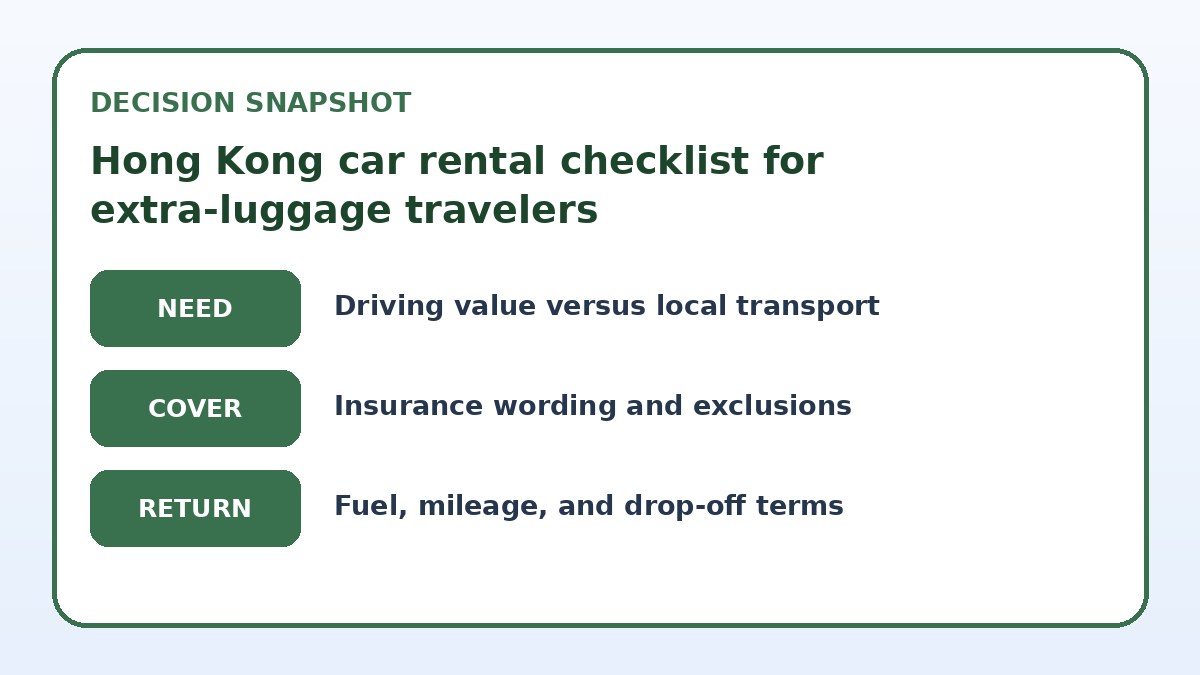
Deciding whether to drive: route value and luggage tradeoffs
Driving in Hong Kong is most useful when your itinerary includes heavy or bulky luggage—musical instruments, sports equipment, or multiple large suitcases—and multiple stays across New Territories or Lantau Island. Consider door-to-door convenience versus the time spent finding parking, which can be scarce and costly in central areas. If your plan is a single base in Central, Tsim Sha Tsui, or Causeway Bay with day trips by public transport, the hassle and parking expense usually outweigh the benefit. But for early ferry/airport trips, family groups, or multi-point departures where taxis would multiply costs and trips, a car becomes attractive.
To decide, map typical legs where carrying luggage would be most awkward: airport-to-Airbnb transfers, inter-island equipment haul, or long late-night returns. Estimate how many times you’ll load/unload heavy items—each transfer favors driving more. Also factor route accessibility: some tourist sites, trailheads, or rural guesthouses are much easier to reach by car. If most destinations are well served by MTR, buses, or ferries, those public options might still be preferable, especially when you factor in fuel rules and mileage caps that could add unexpected costs.
Decide whether driving earns its place
| Mobility strategy | Best for | Cost or friction to check |
|---|---|---|
| Rent a car | Large groups or heavy/awkward luggage on multi-stop itineraries. | Higher parking hassle, fuel and mileage rules to monitor, and insurance wording to verify. |
| Airport/private transfer van | Direct airport-to-accommodation transport with bulky gear and minimal handling. | Useful for single long transfer but more expensive per trip than taxis for short hops. |
| Taxis and ride-hailing | Short city legs with occasional bulky bags; no refuel or mileage concerns for renters. | Can multiply costs for many intercity transfers and may struggle with very large items. |
| Public transport plus luggage storage | Sightseeing-focused trips where most destinations are transit-accessible. | Requires splitting heavy items or using luggage storage; not ideal for oversized or many pieces. |
Check live rental choices only after the route test
Use the exact driver, dates, pickup point, and return plan to compare current conditions.
Insurance wording to check when you have extra luggage
Insurance terms can change whether an incident is covered if luggage contributes to damage or obstructs view. On the provider’s booking or final rental page, verify whether the policy mentions load limits, unsecured cargo exclusions, and coverage for items inside the vehicle. Many basic packages cover collision damage waiver (CDW) with an excess but exclude damage caused by overloading or carrying unsecured bulky items on the roof or rear. If you’ll mount a roof box or bike racks, confirm those accessories are covered or available as insured extras.
Also check liability and personal effects coverage: some contracts limit reimbursement for personal baggage or require you to buy separate loss/damage insurance. Confirm exactly how claims are filed in Hong Kong, what documentation is required, and whether roadside assistance is included for incidents that arise from luggage-related mechanical strain. When provider-specific facts could change, always verify these policy details on the rental company’s final booking page before you pay.
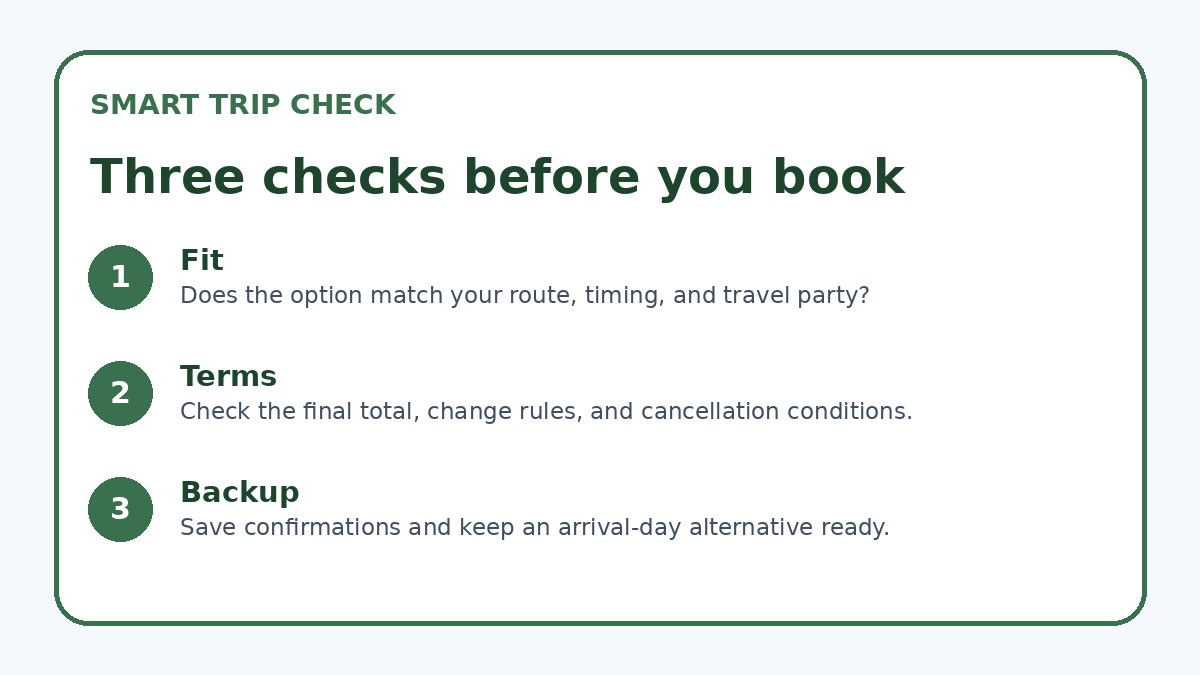
Compare the full rental conditions
Confirm insurance wording, exclusions, deposit, fuel, mileage, and return terms on the final page.
Pickup and return friction: fuel, clock, and late penalties
Pickup and return procedures can add time and stress if you travel with lots of luggage. Confirm whether airport counters offer porter service or an express collection lane; if you must move many suitcases through busy terminals, factor in extra handoff time. Fuel policy matters here: full-to-full lets you refill locally before return, but you must plan stations, opening hours, and receipts. Prepaid fuel or ‘return empty’ policies shift the responsibility—and potential extra fees—onto you, so understand how the company calculates refuel charges and rounding.
Also check after-hours returns, grace periods for late drop-off, and the measurement method for fuel level (visual check, electronic gauge, or photographed proof). For late returns, clarify whether daily rates apply by the hour and if luggage-caused delays (difficulty closing hatch, inaccessible parking) could be treated as customer negligence. On the booking page, look for explicit wording about fuel refill charges, late return penalties, and photographic or electronic fuel status proofs to avoid surprises.
Car rental terms to verify
- On the rental booking page, confirm the fuel policy—exact terms (full-to-full or prepaid) and how refuel charges are calculated if returning underfilled.
- Verify mileage limits (kilometers or daily caps), the excess-mileage rate, and whether measured distance includes round trips or trunk-mounted equipment runs.
- Read insurance and excess wording to confirm whether overloaded trunks, roof racks, or unsecured cargo affect cover and whether roadside assistance is included.
- Check airport pickup and after-hours return procedures, including required photos, fuel level proof, and penalties for late drop-off.
- Confirm whether roof boxes, bike racks, or child seats are available as insured extras and what documentation or fees they require.
- If not driving, prebook a transfer van or confirm taxi luggage limits and ferry/shuttle baggage rules for specific legs of your itinerary.
Non-driving fallback: efficient alternatives when a car isn’t worth it
If you decide not to drive, assemble a fallback mobility plan that handles extra luggage without relying on a rental car. Compare direct airport taxis that allow large suitcases—many taxis accept luggage in the trunk for a straightforward per-trip fare—and private transfers that can be booked with larger vehicles and meet-and-greet service. For island hops or remote sites, check scheduled ferries and local shuttle services that permit bulky gear; some operators allow advance notice for oversized equipment.
Combine options where useful: use a short-term taxi or private transfer for the airport-to-base leg and then public transport for sightseeing, or book a single-day van hire for equipment-heavy excursions. If you’re flexible, consider hotels or guesthouses offering luggage storage and guided transfer services so you can travel light on public transport. On any provider’s page—private transfer, taxi company, or ferry—verify allowed luggage dimensions, extra-item fees, pick-up/drop-off windows, and cancellation terms before you confirm.
Car Rental & Road Trip questions travelers ask
How does ‘full-to-full’ fuel policy work, and why is it often best for luggage-heavy trips?
A full-to-full policy means you collect the car with a full tank and return it full; if you refill locally before return, you avoid refuel service charges. For luggage-heavy trips this is helpful because you control where and when to refuel, and you can top up near the return location to match the provider’s expectations. On the rental page confirm whether the company inspects fuel visually or electronically, what receipts they accept, and any minimum acceptable fill level to avoid a refuel penalty.
Will extra luggage affect my insurance or create additional fees?
Yes—carriers often exclude damage caused by overloading or carrying unsecured cargo, and some require that roof-mounted loads be declared and insured as extras. Check the rental contract for wording about load limits, exclusions for personal effects, and whether liability excess increases if damage stems from improperly stowed luggage. Also verify whether claims require police or inspection reports in Hong Kong and what documentation the provider needs to process a claim.
What should I verify about mileage allowances before booking?
Confirm whether the rate is unlimited, a per-day cap, or a fixed-kilometer package, and how the company charges for excess distance. Understand whether mileage is tracked from pickup to return only, or if transfers to arranged parking count. For routes that include long island hops or multiple cross-harbour trips, an unlimited or high cap can prevent surprise charges. Always review the final booking page to see the precise wording and the unit of measurement used for excess fees.
Final decision note
Driving in Hong Kong can be a practical solution when you have bulky or numerous pieces of luggage, multiple stops outside central districts, or late/early transfers that public transport cannot cover comfortably. The deciding factor is whether the convenience outweighs the administrative and cost friction: fuel policy, mileage allowance, insurance exclusions for overloaded cargo, and pickup/return procedures. Before you reserve, compare the rental contract’s exact fuel and mileage wording, check insurance language about luggage, and evaluate pickup logistics. If driving doesn’t win on those checks, have a backup plan of transfers, taxis, and luggage-storage options that handle oversized items smoothly. When you’re ready to compare current availability, you can use Trip.com as one place to view offers, but always confirm the rental-company final page terms before you book.
Continue planning
Check current options and final conditions
Use the provider page to confirm live availability, the final total, cancellation terms, and every condition that matters to your trip.
This evergreen planning guide was created with AI-assisted drafting and a structured quality review. It does not display live prices, schedules, availability, visa guidance, or provider rankings. Verify current details before booking. Some links are affiliate links; we may earn a commission at no additional cost to you.