If you carry extra bags for work, hobbies, or family needs, using price alerts can help you find reasonable Hong Kong travel deals — if you avoid impulse booking. The practical answer: set alerts for both bundled packages (flight+hotel or flight+hotel+transfer) and the separate components, then compare the exact same dates, traveler count, and baggage allowances before committing. A bundle can simplify logistics and sometimes include checked baggage or airport transfers, but it can also lock you into restrictive change or cancellation terms. Before you act on any alert, pause, compare inclusions line-by-line, and verify the provider’s final booking page for baggage weight, permitted pieces, carry-on rules, change fees, and refund conditions. That small verification keeps price alerts from turning into costly mistakes.
Test package value fairly
| Booking approach | Best for | Tradeoff to check |
|---|---|---|
| Bundled flight+hotel with baggage included | Travelers who want simple logistics and confirmed baggage allowance without separate bookings. | May lock you into stricter change rules and hide limits that appear only on the final ticket page. |
| Separate flight with generous fare + independent hotel | Travelers who prefer customizable baggage allowances and selective hotel choices. | Requires more time to compare components and may lose transfer convenience bundled packages offer. |
| Bundle with flights and transfers but minimal baggage | Travelers prioritizing door-to-door ease and who can travel light or buy extra baggage ahead. | Extra-baggage fees at the carrier can be expensive and flexible changes may be limited. |
| Buy flights on an alert, then monitor hotel deals separately | People who spot a favorable flight with included bags and want to shop hotels for better match or price. | You risk hotel availability mismatch and may pay more for transfers or face logistical friction on arrival. |
Check current package and separate options
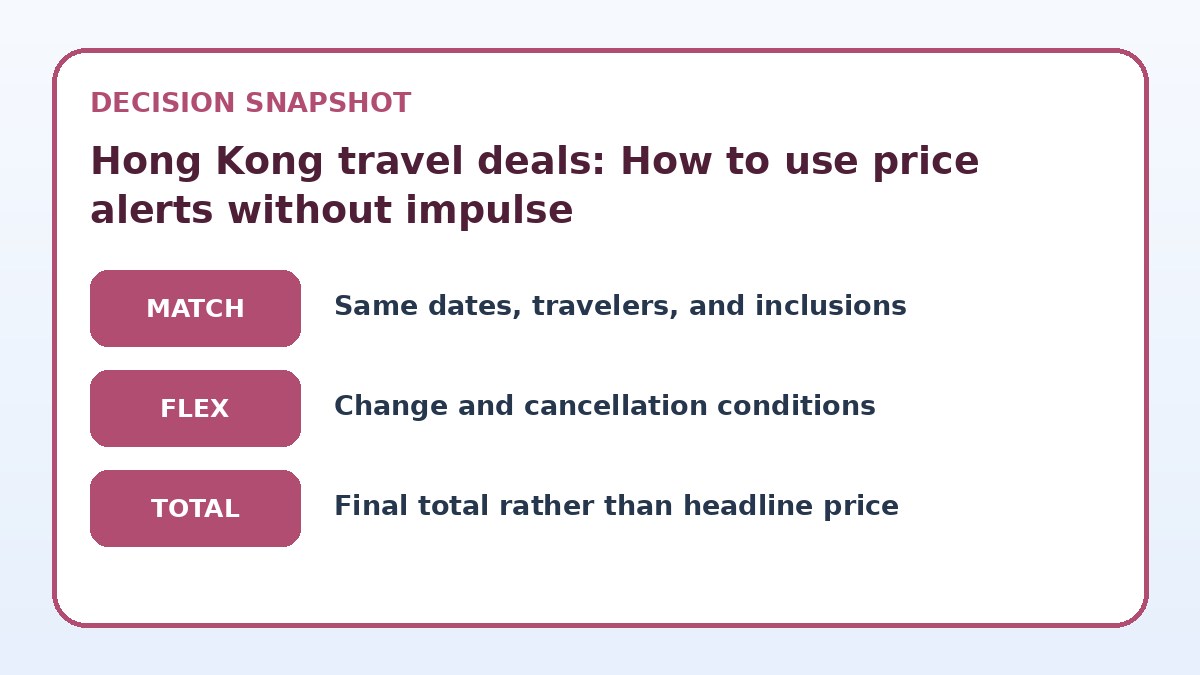
Use identical dates, travelers, room needs, baggage, and flexibility so the comparison stays meaningful.
What to compare before a bundle can be judged useful
Start by listing what matters for your extra luggage: number of checked pieces, maximum weight per piece, any included transfers that avoid lugging bags on public transit, and whether you’ll need hold luggage for equipment. On both bundled and separate options, match the same travel dates, exact passenger or room occupant count, and arrival/departure airports so you’re comparing identical itineraries. If a bundle advertises “baggage included,” verify whether that means one carry-on only, a single checked bag, or multiple pieces — promotional language can be vague and hide restrictions that matter to travelers with more luggage.
Next, map how each option handles changes, cancellations, and re-issuing tickets. Bundles sometimes combine terms for flights and hotel components, producing a stricter net policy. That matters if you expect itinerary shifts. Also check transfer inclusions and whether luggage assistance is provided at either end. Finally, line up the extra fees: overweight/oversize charges, local hotel luggage storage costs, and transport surcharges — these can erase any apparent bundle savings when you actually travel with more bags.
Inclusions: baggage, transfers, and traveler-specific value
A bundle can be valuable when it explicitly includes checked-baggage allowances that match your needs or offers airport transfers that save you the hassle and cost of moving many bags. For example, a package with two checked bags per passenger could beat buying a basic airfare plus a hotel, if the separate flight fare charges for each checked piece. But some packages include only basic baggage and charge extra at check-in. Always open the fare rules and room descriptions on the final booking page — not just the summary — to confirm exactly how many bags and what weight limits are included and whether transfers can accommodate oversized items.
Traveler-specific value is about convenience, not just money. If you’re carrying fragile equipment or sports gear, a package that offers private transfer or hotel handling might reduce stress and risk. Conversely, if you are flexible on departure times and can use a higher fare with generous luggage, separating flight and hotel might let you pick a flight that includes more baggage while choosing a cheaper, convenient hotel. Make a short two-column comparison of tangible inclusions — baggage pieces, transfer timing, and handling — to see which configuration aligns with your comfort and budget priorities.
Look past the headline total
Compare inclusions and change conditions before deciding whether a package is genuinely useful for this trip.
Deal comparison checklist
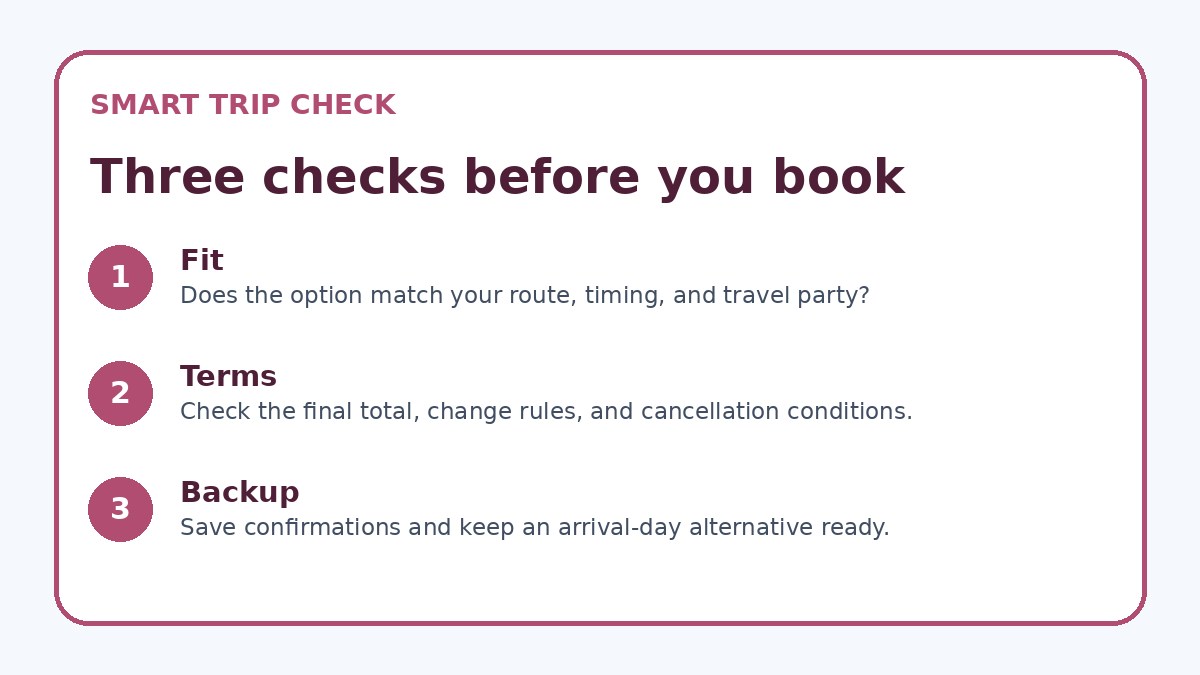
- Match the exact travel dates, number of passengers, and room occupancy before comparing bundle and separate prices.
- On the final booking page, confirm number of included checked bags, maximum weight per piece, and carry-on allowances.
- Verify change and cancellation fees listed in the fare rules or hotel booking conditions; screenshot or save them.
- Check transfer inclusions for luggage handling capacity and precise pickup/drop-off instructions on the provider’s terms.
- Estimate potential overweight or excess-piece charges and add them to the headline price for fair comparison.
- Set a personal cooling-off period (12–48 hours) after an alert triggers before completing the booking.
Flexibility and the danger of impulse booking from alerts
Price alerts are designed to trigger action, but that’s where impulse becomes costly, especially for travelers with extra luggage. A low headline price may omit baggage fees or show a fare class that cannot be upgraded easily. To resist impulsive clicks, create a checklist of non-negotiables before you book: minimum checked pieces, maximum allowed weight per piece, acceptable change fees, and required transfer arrangements. When an alert fires, immediately open the provider’s detailed fare rules and hotel booking conditions on the final checkout page and compare them to your checklist; if any item fails, the alert doesn’t represent a usable deal for you.
Also account for time windows. Some cheap fares in alerts are non-refundable and charge steep reissue fees; long-term travel plans or shifting meeting dates make that risky. If the bundled package looks attractive but locks you into strict terms, calculate potential rebooking costs should plans change. If you need maximum flexibility, favor fully refundable or changeable components even if the upfront price is slightly higher. Discipline — defined waiting periods and direct verification on the booking page — keeps alerts from becoming regrettable impulse buys.
Final terms to verify on the provider’s booking page
Never take marketing copy as final: verify baggage weight limits per piece, allowed number of checked bags, carry-on size rules, and how overweight or oversized fees are calculated on the final provider page. For hotels, confirm whether the rate is prepaid, refundable, or subject to taxes and city fees collected at check-in. If the package includes transfers, read the transfer terms: meeting points, wait times, and any limits on oversized items. These details often appear only in the detailed fare or booking conditions and can significantly change the out-the-door cost and convenience for travelers with more luggage.
Also check the change and cancellation process on the supplier’s final checkout and terms page. Look for how refunds are issued (credit card reversal, voucher, or travel credit), the timeframe for free changes, and any administrative fees. If you find ambiguous wording, contact the provider’s customer service and get a written clarification or screenshot of the exact terms before you book. Finally, when comparing results, make sure you match the same dates, traveler counts, and baggage inclusions — otherwise a lower headline price could be a false saving.
Travel Deals & Booking Strategy questions travelers ask
How do I set price alerts that won’t make me book impulsively when I need extra luggage?
Create parallel alerts: one for package deals and one each for flights and hotels separately, all using identical dates and traveler info. Add criteria in the alert title or notes for required baggage pieces and a reminder about your cooling-off period. When an alert fires, force a short wait (12–48 hours) and then compare the final booking pages for baggage allowances and change rules before purchasing. This structure separates signal from urge and keeps you focused on usable deals rather than headline fares.
If a package shows baggage included, what exact details should I verify before booking?
Open the provider’s fare rules on the final checkout page and look for the number of included checked bags, allowed weight per piece, and carry-on policy. Check whether bags are per passenger or per booking, and read the terms for overweight and oversized surcharges. Also confirm whether included transfers will accept oversized items or sports gear. If any wording is unclear, contact customer service and get written confirmation or a screenshot of the terms before you complete the booking.
Can separating flight and hotel save me money when I have excess baggage?
Sometimes. Separating components lets you choose a flight fare that includes the baggage you need while picking a hotel that fits your schedule or budget. This flexibility can avoid paying multiple baggage fees bundled into a package that doesn’t match your exact needs. However, factor in transfer costs and the time required to manage separate reservations. Always compare total out-the-door cost — including baggage, transfers, and potential hotel taxes — using the same dates and traveler counts so you’re comparing true costs.
Final decision note
For travelers bringing extra luggage to Hong Kong, price alerts are useful tools — but only when paired with discipline and careful verification. Always run alerts for both bundled packages and the standalone components, then compare the identical itinerary, passenger count, and baggage allowances. Verify baggage rules, transfer capabilities, and change/cancellation terms on the provider’s final booking page before you buy. Use a short cooling-off period to avoid impulse purchases triggered by alerts. When in doubt, prioritize confirmed baggage inclusions and flexible change terms; they often save money and stress on arrival more reliably than the lowest headline fare.
Continue planning
Check current options and final conditions
Use the provider page to confirm live availability, the final total, cancellation terms, and every condition that matters to your trip.
This evergreen planning guide was created with AI-assisted drafting and a structured quality review. It does not display live prices, schedules, availability, visa guidance, or provider rankings. Verify current details before booking. Some links are affiliate links; we may earn a commission at no additional cost to you.