Start by picking the neighborhood that matches how you’ll spend your days: sightseeing, work, nightlife, or calm downtime. For solo travelers in Singapore, this first choice matters more than brand names because it shapes daily commute friction, safety at odd hours, and how much flexibility you need from a reservation. If you plan many short trips around the island, prioritize proximity to an MRT interchange; if you’ll be in meetings or coworking, pick a hotel near central business districts and reliable transport links. Once you shortlist areas, look at the booking terms that matter most for solos: free cancellations, flexible check-in/out windows, refundable deposits, and whether you can modify dates without penalty. This article walks you through neighborhood fit, how each area affects daily routes, what room types and party setups make sense for one person, and the specific booking-terms tradeoffs to verify on the provider’s final page before confirming.

Check live stays in the areas that fit
Use your dates and party size to compare current rooms after you narrow the neighborhood fit.
Neighborhood fit: choose by daily rhythm, not by name
Deciding where to stay in Singapore starts with an honest take on your daily rhythm. If your days will be packed with museums, cafes, and walking tours, consider staying close to the Civic District and museums cluster so you waste less time commuting. If you’re here for nightlife, look toward Clarke Quay or Boat Quay surroundings—areas that remain lively after dark and reduce late-night ride needs. For business-focused itineraries, the Marina Bay and Downtown cores keep you near meeting venues and large coworking spaces, helping you shave transit time and stress when schedules shift.
Solo travelers prioritizing peace and lower costs may prefer neighborhoods slightly off the main tourist spine, like Tiong Bahru or Katong. These neighborhoods offer quieter streets, independent cafés, and shorter last-mile walks to MRT stations, which can be safer and more pleasant late at night. Remember that Singapore’s compact size means you’ll rarely be isolated, but the neighborhood decides whether you’ll spend spare hours exploring on foot or hopping on frequent transit. Match your typical day—active sightseeing, late evenings, or desk work—to a neighborhood before checking specific hotel offers.
Choose an area-selection strategy
| Area approach | Best for | Tradeoff to check |
|---|---|---|
| Stay in a central MRT interchange (e.g., Dhoby Ghaut/City Hall) | Solo travelers prioritizing minimal transit time and fast connections across the island. | Higher demand for flexible rates and busier streets; quieter, cheaper options may be farther away. |
| Stay in a vibrant nightlife cluster (e.g., Clarke Quay/Boat Quay) | Those who value late-night dining and evening socializing within walking distance. | Noise and busier streets at night; verify late check-in policies and safety measures for solo late returns. |
| Stay in quieter residential neighborhoods (e.g., Tiong Bahru/Katong) | Solo travelers wanting calmer streets, local cafes, and lower nightly bustle. | Longer MRT rides to major attractions; require reliable transit connections and flexible cancellation options for schedule shifts. |
| Stay near Marina Bay/CBD | Business travelers or those needing proximity to meetings, coworking, and formal dining. | Generally pricier and busier on weekdays; check refund windows and corporate booking adjustments carefully. |
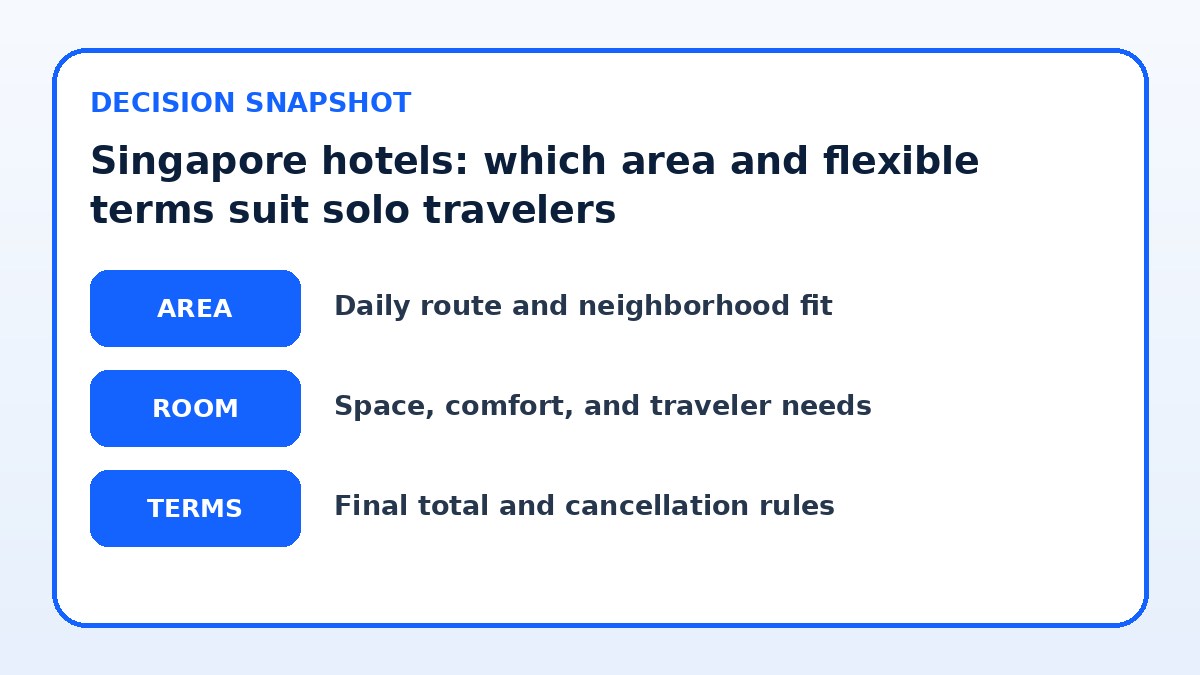
Daily-route friction: how area choice affects mobility
Think through a typical day’s route before comparing hotels: where you’ll start each morning, midday hops, and nighttime returns. Areas with MRT interchange stations (e.g., Dhoby Ghaut, City Hall) minimize friction when you plan multiple short trips across the island. If your itinerary involves airport transfers, pick a neighborhood with simple, frequent connections; if you prefer walking and local cafés, choose a compact neighborhood with most essentials within ten to twenty minutes on foot. Evaluate the last-mile options—walking paths, scooter availability, or reliable taxi stands—because those determine whether a slightly farther hotel actually costs you time and stress.
Travel friction also informs booking flexibility needs. If you expect to change neighborhoods mid-trip—perhaps an island day followed by a business day in the CBD—search for hotels that allow free modifications or partial refunds. For late arrivals, confirm 24-hour or flexible check-in policies to avoid penalties or long waits. Always cross-check any claim about shuttle services, check-in windows, or transportation links on the hotel’s final booking page, since these operational details change frequently and affect how workable an area will be for your solo schedule.
Now compare like with like
Keep the same dates, guests, room needs, and cancellation preferences while you compare the final choices.
Room and party needs: picking the right single-person setup
A solo traveler’s room needs are usually straightforward but important: comfortable bed, workspace, reliable Wi-Fi, and a safe for valuables. Decide whether you want a compact single room, a slightly larger studio for remote work, or a room with a balcony or kitchenette for longer stays. If you value social opportunities, consider hostels with private rooms or hotels with communal lounges and scheduled events; if privacy is paramount, prioritize quiet floors and soundproofing notes in the description. Also check whether the hotel allows late check-ins without extra fees—this is often crucial when traveling alone with variable arrival times.
When comparing room types, read the specific cancellation and modification rules tied to each rate rather than only the hotel-level policy. Some lower-rate rooms have strict non-refundable terms, while slightly higher flexible rates may allow same-day changes or free cancellations up to a certain window. For solo stays where plans might shift, a mid-tier flexible rate often delivers the best balance of cost and certainty. Confirm how many nights and which nights are refundable, whether modifications require a phone call, and whether any administrative or service fees apply to changes on the provider’s final booking page.
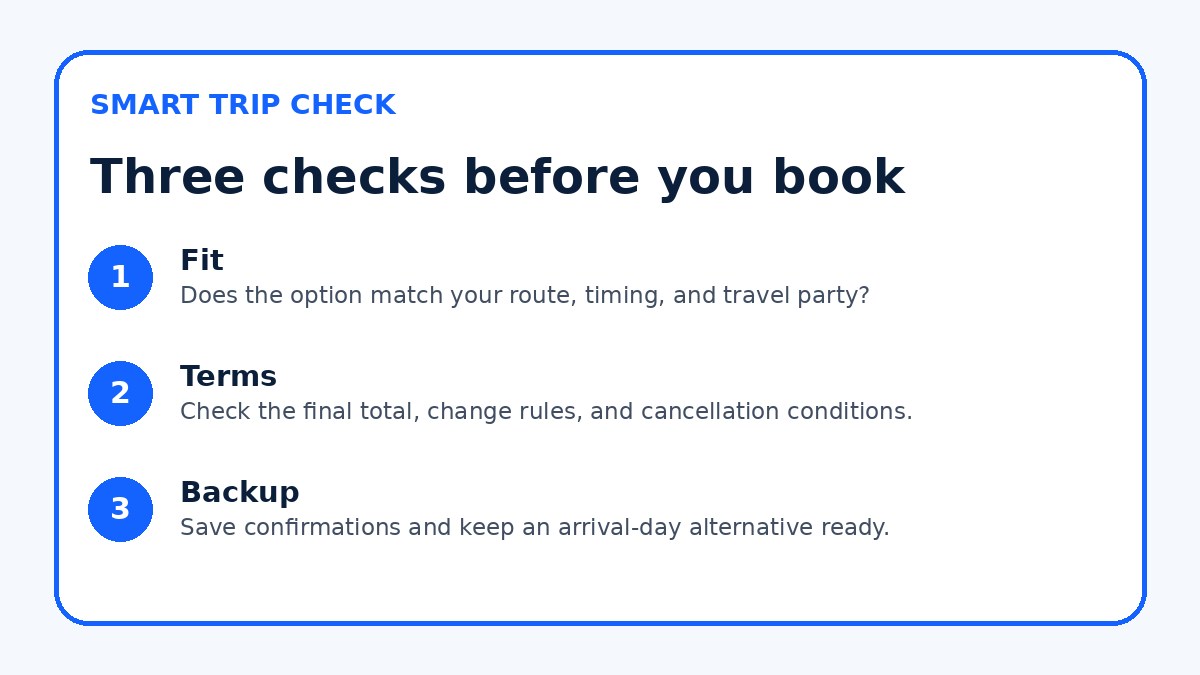
Hotel booking check before payment
- Identify your primary daily hub (sights, meetings, nightlife, or relaxation) and shortlist two neighborhoods within easy transit distance.
- Check the exact cancellation cutoff time (date and hour) and whether refunds return to your original payment method or require vouchers.
- Confirm modification fees and the process for date changes—online change, phone-only, or not permitted—and how quickly confirmations update.
- Verify arrival logistics: 24-hour front desk, late check-in process, and any ID or credit card holds required at check-in.
- Compare room-level rules so you know which rates are refundable, partially refundable, or non-refundable for your intended nights.
- If you need extras (late check-out, early check-in, airport transfer), confirm availability and fees on the hotel’s final booking page before payment.
Final booking terms: what to verify before you hit confirm
Before booking, verify the precise language on cancellation windows, modification fees, and deposit rules. Many booking summaries show a short phrase like “free cancellation” that hides conditions—exact cutoff times, whether refunds are processed to original payment only, and whether changes during high-demand dates carry penalties. If you plan a flexible arrival or departure, check late check-out and early check-in policies and whether those amenities are guaranteed or subject to availability. For non-refundable deals, understand what qualifies as an emergency for waivers if that matters to you.
Also confirm operational details that affect solo safety and convenience: 24-hour front desk availability, the method for key collection after late arrivals, and ID or credit card policies required at check-in. If you use an online travel agency, open the hotel’s own policy page as well—differences sometimes exist between OTA and hotel direct terms. Trip.com can be a quick place to compare current availability and summarized terms, but always read the provider’s final booking page and the hotel’s direct policy statements to be sure you’re comfortable with the restrictions and options offered.
Hotel Guide questions travelers ask
How far in advance should a solo traveler book a flexible-rate room in Singapore?
There isn’t a single right window; it depends on your tolerance for change and the certainty of your plans. If your itinerary is likely to shift, prioritize a flexible rate even if you book earlier. If you can only finalize dates shortly before travel, monitor flexible availability and book once you have basic travel confirmations. For popular event dates or public holidays, flexible rooms can get limited faster—so weigh the benefit of early booking against the possibility you’ll need to modify your stay. Always double-check the hotel’s specific cancellation cutoff and modification process on the booking page before completing the reservation.
Are refundable rates always better for solo travelers than non-refundable deals?
Not always—refundable rates offer peace of mind but come at a premium that may not pay off if your plans are fixed. For trips with a high chance of change, the extra cost of a refundable or flexible rate is often worth it. If your itinerary and travel dates are locked and you’re comfortable accepting less flexibility, a non-refundable deal can be a rational choice. Before choosing, compare the price difference to the potential cost of unexpected changes, and read the exact terms so you know what qualifies for refunds or date changes.
What specific booking terms should solo travelers prioritize for late arrivals?
Look for hotels that explicitly state 24-hour reception or a secure late check-in process, such as key pickup kiosks or after-hours instructions. Confirm whether the property requires you to notify them about late arrival times and whether failing to do so could trigger a penalty or cancellation. Also check if there are any extra fees for arrivals after a certain hour and how to retrieve keys if the front desk is closed. Always validate these operational details on the hotel’s final booking page or contact the hotel directly rather than relying solely on third-party summaries.
Final decision note
For solo travelers in Singapore, the best booking decision starts with the neighborhood that matches your day-to-day plans—minimize transit friction for packed itineraries, prioritize safety and walkability for late nights, or pick calm residential areas for quieter stays. Once you’ve shortlisted areas, treat booking terms as part of the arithmetic: compare room-level cancellation windows, modification procedures, and operational details like 24-hour check-in and deposit holds. Read the provider’s final booking page carefully to confirm exact cutoff times, refund methods, and any fees for changes. With a clear neighborhood choice and an eye on specific flexible terms, you’ll be able to shortlist viable hotels and book with confidence.
Continue planning
Check current options and final conditions
Use the provider page to confirm live availability, the final total, cancellation terms, and every condition that matters to your trip.
This evergreen planning guide was created with AI-assisted drafting and a structured quality review. It does not display live prices, schedules, availability, visa guidance, or provider rankings. Verify current details before booking. Some links are affiliate links; we may earn a commission at no additional cost to you.