If you're planning solo travel in Montreal, decide first whether a car genuinely improves your trip. For many downtown stays the city’s public transit, walking and rideshares cover most needs; for day trips to the Laurentians, Eastern Townships, or regional parks, driving can unlock flexibility. This article gives the practical answer up front: rent when your itinerary includes multiple day trips, remote sites, or flexible departure times that public transport cannot match; skip the car for a centered urban plan. The core of that decision is the pickup and return friction—office location, after-hours returns, inspection procedures, fuel policies, and documented damage rules. Read these terms carefully, confirm insurance language and coverage limits, and have a fallback plan if pickup or return fees, waiting times, or required documents make driving more hassle than freedom.
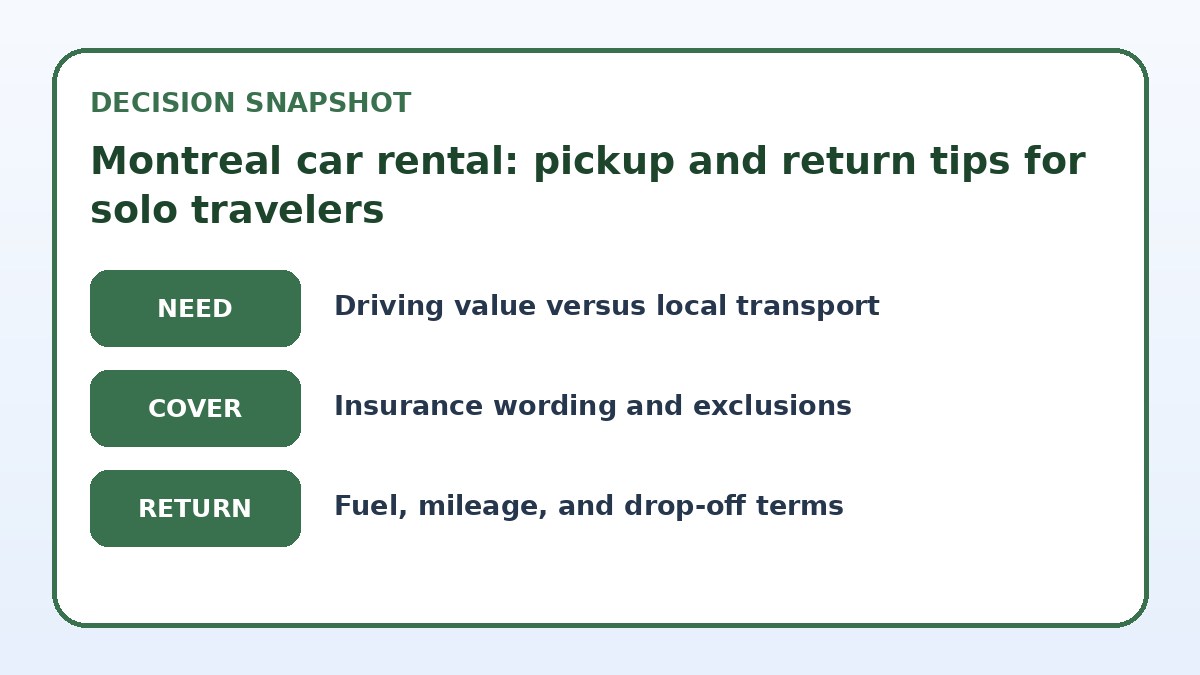
Does driving add value to a solo Montreal itinerary?
Start by mapping what you want to do: museums and neighborhoods in central Montreal, evening dining in Plateau or Mile End, and short city trips are easy without a car. Driving becomes valuable when your plan includes destinations outside the island—national parks, ski areas, wineries, or multiple small towns across Quebec—where public transit is infrequent, schedules are restrictive, or transfers add hours. Consider mobility at each stage: will a car save you time overall by reducing waits and complicated transfers, or will it mainly introduce parking, traffic, and urban navigation stress?
Factor in the type of solo traveler you are. If you prefer flexible stops, early departures, or carrying gear (bikes, photography equipment, or camping supplies), a rental can be liberating. If you want to explore the city on foot, sample nightlife without driving late, and avoid parking costs, relying on transit, walking and rideshares is often simpler. Make a short list of must-see places and check if public transport or day tours reach them; if several do not, that tilts the decision toward renting.
Decide whether driving earns its place
| Mobility strategy | Best for | Cost or friction to check |
|---|---|---|
| Rent a car for full trip | Solo travelers with multiple rural day trips or flexible schedules | Higher pickup/return friction and insurance complexity, plus parking worries in the city |
| Rent only for specific days | Travelers combining city stays with a few out-of-town excursions | Extra pickup/return steps and possible daily fees; need to sync rental windows with transit or hotel logistics |
| Public transit and commuter rail | Urban-focused itineraries and budget-conscious solo travelers | Limited reach for remote sites and fixed schedules that reduce spontaneity |
| Rideshare, taxis and guided tours | Nightlife, point-to-point transfers, and day trips to popular attractions | Can become costly for frequent long trips and depends on local availability and schedules |
Check live rental choices only after the route test
Use the exact driver, dates, pickup point, and return plan to compare current conditions.
Insurance wording and what to verify before booking
Insurance can make or break the value of a rental for solo travelers. Rental agreements often reference collision damage waivers (CDW), loss damage waivers (LDW), third-party liability minimums, and deductibles. Don’t assume broad coverage—read the exact wording on the booking page and your confirmation. Verify deductible amounts you would be responsible for after a claim, whether roadside assistance is included, and whether coverage applies to theft, glass, tires, and undercarriage. If you rely on a credit-card benefit, check the card’s eligibility rules, required documentation, and whether you must decline the rental company’s CDW to use it.
Ask the rental company or verify on the final booking page whether the insurance covers cross-provincial driving, authorized drivers, and named exclusions (for example, off-road or unpaved roads, driving under the influence, or using roof racks). Confirm if additional drivers add costs and whether age surcharges apply. For solo travelers the practical move is to screenshot the insurer’s coverage terms, print or save the rental agreement, and have emergency contact and claim procedures ready in case of an incident.
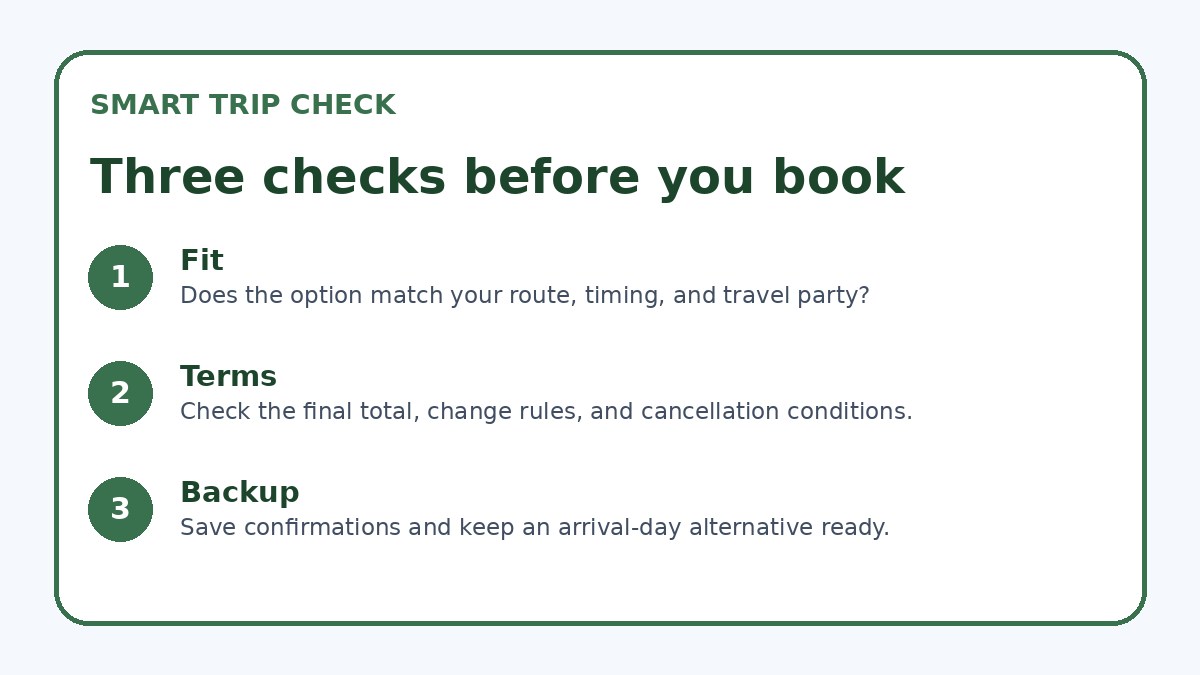
Compare the full rental conditions
Confirm insurance wording, exclusions, deposit, fuel, mileage, and return terms on the final page.
Pickup and return friction: what creates delays and fees
Pickup friction commonly comes from location and documentation. Airport counters may have long queues, mandatory shuttles, or limited after-hours service; downtown offices can require appointments or have seasonal hours. Bring the exact confirmation, your driving license (and an international permit if required by your home license), the card used for payment, and any proof of insurance coverage the company requests. Inspect the car with your phone: photograph existing scratches and the dashboard mileage during the walkaround and have the agent sign or timestamp the condition report when possible.
Return friction centres on fuel policy, inspection time, and after-hours procedures. Decide whether to refuel before return (compare station locations near the drop-off) or use the prepay/fill option if available. For after-hours returns, verify where to leave keys, how the company inspects vehicles overnight, and the timeline for post-return charges—some companies hold a security deposit for days. Know the exact return address and the expected check-out process so you can schedule travel to the airport or next destination without surprises.
Car rental terms to verify
- Confirm exact pickup and return addresses, opening hours, and available after-hours procedures on the rental company’s final booking page.
- Photograph the vehicle inside and out at pickup, note mileage and fuel level, and email or upload the images to your confirmation record.
- Verify deductible amounts, CDW/LDW terms, and whether your credit card or third-party insurer requires you to decline the company’s coverage.
- Check the fuel policy and map nearby fuel stations for the return route to avoid inflated refueling penalties.
- Ask whether cross-provincial travel, additional drivers, or young-driver surcharges affect your reservation and get any exceptions in writing.
- Plan a non-driving fallback (specific transit routes, rideshare pickup points, or a pre-booked tour) and save contact details for each option.
Non-driving fallback: practical alternatives for solo travelers
If you opt out of renting, assemble a reliable set of alternatives. Montreal has an extensive STM network (metro, buses, and commuter trains) within the city and nearby suburbs; intercity buses and regional rail links reach many towns and parks, though schedules may be limited outside weekdays. Rideshare and taxi services plug gaps, especially for late-night returns or destinations poorly served by transit. For single-day excursions to popular sites, look for guided day trips that include pick-up/drop-off from central locations, which save you the hassles of navigation and parking.
Plan logistics ahead: check transit schedules for your planned departure and return times, locate taxi stands and rideshare pickup points near your accommodation and attractions, and reserve guided tours that match your dates. Keep an eye on luggage and gear limits for public options and set aside contingency time for delays. Having a fallback keeps you flexible—if a rental option proves too costly or complicated at pickup, you can shift to a pre-planned non-driving approach without losing key experiences.
Car Rental & Road Trip questions travelers ask
Will my personal car insurance or credit card coverage protect me in Montreal?
Coverage varies widely. Many personal auto policies and some credit cards offer rental car protections, but they differ by country, damage types covered, and whether they cover deductibles. Before relying on them, read the exact policy wording and the rental company’s requirements on the booking page. Confirm whether the card requires you to decline the rental company's CDW, whether it covers loss and theft, and whether any exclusions (such as driving on unpaved roads) apply. Keep electronic and printed proof of coverage while traveling.
What should I expect during the vehicle inspection at pickup and return?
At pickup, inspect exterior panels, bumpers, tires, mirrors, windshield, and the interior for stains or damage; note fuel level and mileage. Photograph all sides and the odometer. Ask the agent to record any pre-existing damage. At return, allow time for a joint inspection when possible and get a written or stamped return confirmation. For after-hours returns, follow the company’s documented process (drop keys in a secured box, take timestamped photos) and retain evidence in case of later disputes about condition or charges.
How do I avoid surprise fees related to pickup and return?
Read the rental terms on the final booking page to find fees for airport pickups, one-way returns, mileage limits, young-driver surcharges, cleaning fees, and late returns. Check the fuel policy and whether a security hold will block available funds on your card. Plan returns within office hours when possible, refuel beforehand if cheaper than the company's prepay option, and document the vehicle condition at both handover moments. If anything is unclear, ask the company to confirm fees in writing before you accept the reservation.
Final decision note
For solo travelers in Montreal the right choice depends on your itinerary: prioritize a rental if you need flexibility for multiple regional day trips or will carry equipment; skip it if your plan stays within the city and you prefer simple logistics. The decisive factors are pickup and return friction, insurance coverage and deductible amounts, and the time cost of inspections and possible queues. Before you book, verify pickup locations and hours, insurance wording and exclusions, the fuel policy, and after-hours return procedures on the final booking page. If anything seems unclear, get confirmation in writing and prepare a non-driving fallback so you can adapt without losing time or experiences.
Continue planning
Check current options and final conditions
Use the provider page to confirm live availability, the final total, cancellation terms, and every condition that matters to your trip.
This evergreen planning guide was created with AI-assisted drafting and a structured quality review. It does not display live prices, schedules, availability, visa guidance, or provider rankings. Verify current details before booking. Some links are affiliate links; we may earn a commission at no additional cost to you.