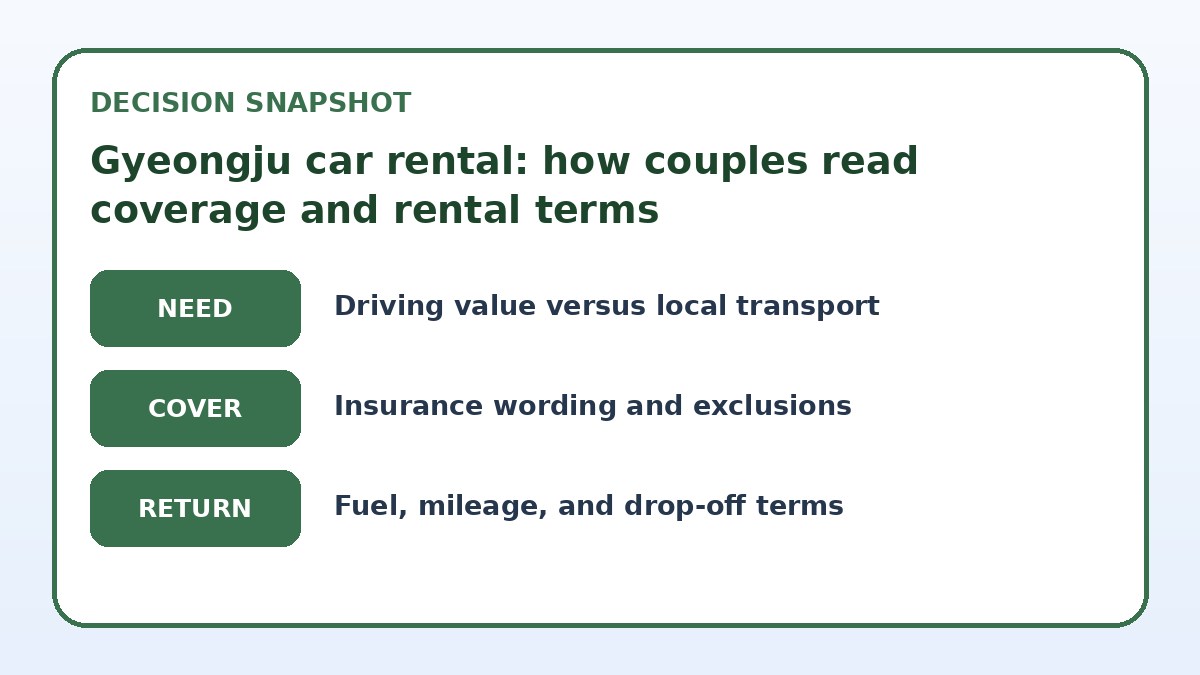
If you and your partner are weighing whether to drive around Gyeongju, the short answer is: driving is worth it if your plan includes scattered cultural sites, rural coastline detours, or a flexible pace—provided you both understand the insurer’s wording. Couples often underestimate how small clauses change liability, excess, and cross-border limits. This article gives a clear decision: when driving improves your itinerary, which insurance words to watch, how pickup and return can add friction, and what to do if you decide not to drive. Read this as a practical checklist and decision tool: it tells you what to compare on the rental company’s final booking page and how to translate policy language into real-trip tradeoffs so you and your partner can book with confidence.
Decide first: does driving truly improve this Gyeongju itinerary?
Start by comparing specific locations you want to see. Gyeongju’s main archeological sites, museums, and central hanok areas are walkable or reachable by short bus and taxi rides. Drive if your couple’s plan includes outlying temples, coastal drives, or a schedule with early starts or late returns where public transit is limited. Driving gives privacy and flexibility—useful for photographers, those carrying luggage, or travelers who want spontaneous detours to quiet scenic spots.
Consider driving tradeoffs. Traffic, parking and narrow local roads are part of the experience; if either partner prefers to avoid navigating unfamiliar streets, the stress cancels the convenience. Also weigh the cost and paperwork of insurance against taxi fares or guided tours. If your route crosses provincial borders or goes well beyond Gyeongju’s core, check whether the rental policy allows those trips and whether extra fees or different coverage levels apply.
Decide whether driving earns its place
| Mobility strategy | Best for | Cost or friction to check |
|---|---|---|
| Self-drive rental with basic insurance | Couples who want freedom and are comfortable accepting a higher excess to lower upfront cost. | Lower daily cost but larger out-of-pocket risk and possible unclear coverage for certain damages or drivers. |
| Self-drive rental with full-coverage waiver | Couples prioritizing peace of mind and minimal financial exposure after minor incidents. | Higher rental cost; verify exactly what the waiver excludes and whether it covers tires, windows, and rooftop damage. |
| Public transport plus taxis | Couples who prefer to avoid rental paperwork, parking, and insurance complexities entirely. | Less flexibility for remote sites and earlier/later schedules; may cost more for multiple day trips or flexible pacing. |
| Hire a private driver or guided day trip | Couples who want a stress-free, flexible itinerary without learning Korean road rules or reading policy wording. | Higher per-day cost than self-drive but removes all rental insurance responsibility and navigation stress. |
Check live rental choices only after the route test
Use the exact driver, dates, pickup point, and return plan to compare current conditions.
Translate insurance wording: the phrases every couple must understand
Insurance titles can be misleading, so focus on definitions. Collision damage waiver (CDW) often limits your financial responsibility for damage but does not eliminate it; the policy should state whether CDW removes total liability or only reduces it to a residual excess. Third-party liability specifies how much the insurer pays for damage to others; read the limits and whether they meet local legal minimums or your comfort level as a couple sharing risk.
Watch for exclusions and required actions. Common exclusions include off-road driving, unlisted drivers, driving under influence, and failure to report damage within a specified window. Also confirm deductible or excess amount you would pay after a claim, whether roadside assistance is included, and which documentation the rental company requires at pickup and after an incident. Always verify these specifics on the final booking page before payment.
Compare the full rental conditions
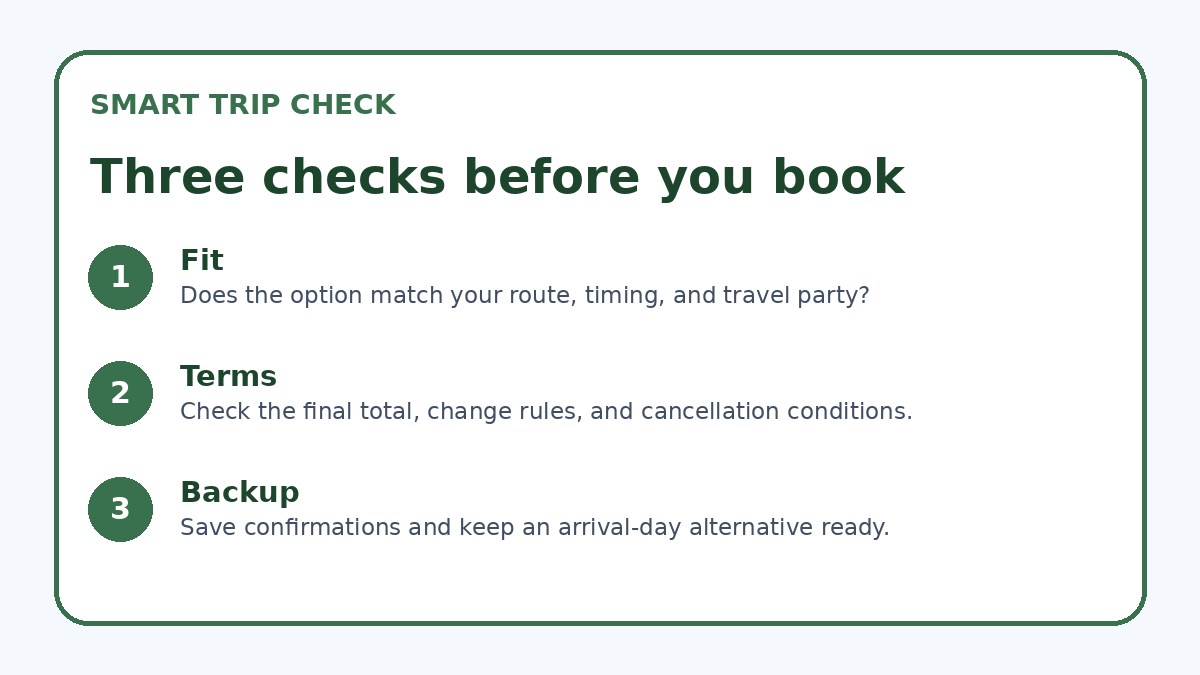
Confirm insurance wording, exclusions, deposit, fuel, mileage, and return terms on the final page.
Pickup and return friction: timing, inspection, and extra charges
Pickup and return processes create the most friction for couples who want a smooth start and finish. Inspect the car together with the agent and photograph all panels, tires, and the interior; get any existing damage noted on the rental agreement. Ask what proof the company requires on return to avoid disputed damage claims: time-stamped photos, an in-person inspection, or a return receipt. If the office has restricted hours or is off-airport, consider whether coordinating transfers adds more hassle than it’s worth.
Extra charges often arise from fuel policies, cleaning fees, late returns, and additional driver or young-driver surcharges. Confirm whether the car must be returned with a full tank, whether the company charges a premium fuel replacement fee, and what constitutes a chargeable cleaning level. If baggage, child seats, or navigation devices are needed, note whether they’re insured by the main policy or only covered by separate waivers and what the associated fees are on the final page.
Car rental terms to verify
- Read the insurance definitions on the rental company’s final booking page and screenshot the key clauses (CDW, third-party liability, excess, and exclusions).
- Confirm who is an authorized driver and add your partner if not automatically included; get this recorded in the rental agreement.
- Photograph the car from multiple angles at pickup and keep time-stamped images; insist the agent signs a damage report before you leave.
- Ask the provider to explain deductible/excess and whether you can buy a waiver that reduces it; record the exact payable amount in writing.
- Verify fuel and cleaning return rules on the booking page and note any late return penalties or off-hour drop-off fees.
- Check roadside assistance coverage, contact procedures for incidents, and what documents the company needs for a claim before you depart.
If you decide not to drive: reliable non-driving plans for couples
Public transport in and near central Gyeongju covers many highlights; buses, local shuttles, and taxis can stitch together an easy two-day plan. Book a centrally located place to stay so most walking and short-distance taxis cover your sightseeing. For longer side trips—coastal viewpoints or distant temples—consider single-day guided excursions that include pickup and drop-off to avoid the insurance and parking headaches of a rental vehicle.
Combine modes to keep flexibility: use train or bus to move between cities, then local taxis for short hops. If spontaneity matters, pre-book a private driver for a day; this often costs less hassle than dealing with rental insurance wording and lets both partners relax. Always compare current options on the final booking pages and, optionally, check Trip.com for a quick look at availability—but verify coverage details directly with the provider.
Car Rental & Road Trip questions travelers ask
What’s the difference between CDW and liability coverage, and which matters more for couples?
Collision Damage Waiver (CDW) typically limits your financial responsibility for damage to the rented vehicle, while liability coverage pays for damage to other people or property. For couples, both matter: CDW protects your shared trip budget against repair bills, and liability covers costs if you injure others or damage another vehicle. Read the exact monetary limits and any exclusions on the final booking page, especially whether CDW still leaves a deductible or excludes certain parts like tires or glass.
If we both plan to drive, how do we ensure coverage for each of us?
Many companies require every driver to be named on the rental agreement and validated with a license check at pickup. Verify the booking page for additional driver fees, whether each driver must meet age or license-history requirements, and whether the insurance applies equally to all authorized drivers. Photograph the ID pages and record the agent’s confirmation of covered drivers to avoid surprise denials later.
How do I know if a waiver actually removes my financial responsibility after a claim?
The waiver’s wording will state whether it reduces the deductible to zero or lowers it to a specified amount; look for language like “zero excess” or an explicit excess number. Also check exclusions and required claimant behavior—failure to report within a time window or driving on excluded roads can void the waiver. Always save the exact waiver description from the final booking page and, if uncertain, ask the provider in writing to confirm the practical outcome after a typical accident or theft.
Final decision note
For couples visiting Gyeongju, driving can be a clear win when your plans include dispersed sites, coastal detours, or a desire for flexible timing. The choice comes down to how comfortable you are with the insurer’s wording: read definitions, excess amounts, exclusions, and driver rules on the final booking page before you commit. If the rental policy is unclear or adds significant potential out-of-pocket exposure, opt for a non-driving plan using public transport, taxis, or a private driver. Take the checklist with you at pickup and photograph everything—those simple steps protect both of you and let the trip stay focused on the places and moments that matter.
Continue planning
Check current options and final conditions
Use the provider page to confirm live availability, the final total, cancellation terms, and every condition that matters to your trip.
This evergreen planning guide was created with AI-assisted drafting and a structured quality review. It does not display live prices, schedules, availability, visa guidance, or provider rankings. Verify current details before booking. Some links are affiliate links; we may earn a commission at no additional cost to you.