Before you judge a package as a good deal, first line up the exact dates, traveler count, and the same set of inclusions—flights, checked bags, transfers, and room occupancy—so you can compare like for like. For families planning Seoul, set price alerts for package and separate-booking options, but pair alerts with a short decision checklist so you don’t book on emotion. Use alerts to monitor trends, not to force a purchase the moment an email arrives. Practical discipline—confirming cancellation policies, change fees, and what’s actually included for each person—turns alerts into planning tools rather than impulse triggers.
Test package value fairly
| Booking approach | Best for | Tradeoff to check |
|---|---|---|
| All-in-one package (flight + hotel + extras) | Families who value convenience and want bundled transfers or prepaid activities. | May have stricter change/cancellation rules and hidden extras; always compare final checkout terms. |
| Book flights and hotel separately | Families who want maximum flexibility to mix carriers, fare classes, or hotel room types. | Requires more time to track separate alerts and verify combined costs for the same dates. |
| Hybrid: flight with one-stop transfers or refundable hotel) | Families seeking a balance of convenience and flexibility, working around school schedules. | Can be more expensive than strict nonrefundable bundles but reduces disruption risk. |
| Package with refundable/change-friendly fare add-on | Families who want package simplicity but plan for potential date changes or disruptions. | Adds to upfront cost; verify whether the add-on fully covers all travelers and change scenarios. |
Check current package and separate options
Use identical dates, travelers, room needs, baggage, and flexibility so the comparison stays meaningful.
What to compare before judging a package
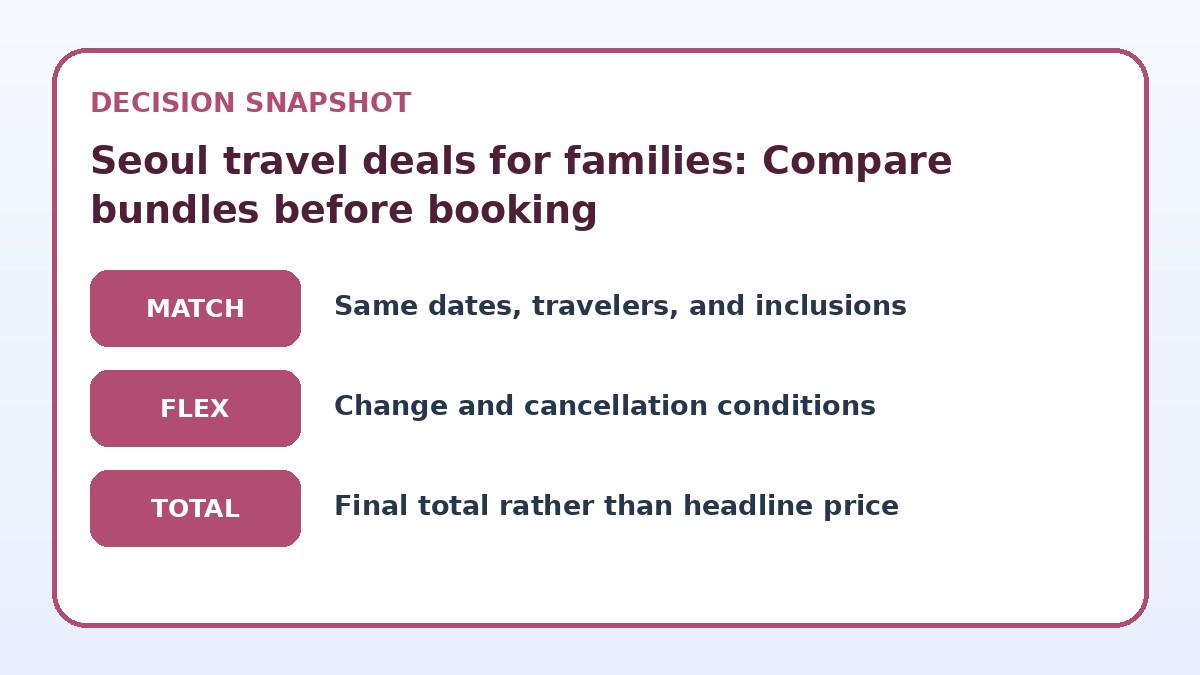
Compare the same travel dates, the exact number and ages of travelers, and identical inclusions when you evaluate a bundled package against separate bookings. Families often see an advertised package price and assume it covers two adults and two children; verify how children are counted, whether family rooms or connected rooms are offered, and whether any fees for extra beds apply. For flights, line up baggage allowances, seat selection rules, and whether infants or lap children incur fees. These baseline checks ensure you’re comparing apples to apples rather than being misled by headline prices.
Next, map the unseen extras: airport transfers, local taxes, resort fees, breakfast, and attraction tickets. A package may appear cheaper until mandatory extras are added at checkout. Check whether the package holds a block of seats or rooms with fixed change penalties; providers sometimes sell a low headline price but attach strict change or cancellation rules. If the package uses third-party components—such as a charter flight or partner hotel—note where you will need to contact for changes so you know the practical flexibility available to a traveling family.
How to set effective price alerts without rushing
Create alerts for both package options and separate flight-plus-hotel searches across at least two vendors so you see relative movement. Opt for alerts that show a recent price history or allow you to view trend charts; an isolated low alert is less meaningful without context. Pair each alert with a simple rule: if a price drops by X% and flexible terms exist, mark it for a family review window. Choose X based on your comfort with change—some families use 5–10% for small savings and 15% or more to trigger immediate consideration.
To prevent impulse booking, introduce a mandatory cooling-off period: wait 24–72 hours after an alert before making decisions. During this time, gather full terms from the provider’s final booking page: confirm cancellation rules, change fees, refund timelines, and any child-specific limits. Put the alert into a shared planning note or family chat with pros and cons, so decisions are collaborative rather than emotional. This process converts alerts into information rather than a prompt to click buy immediately.
Look past the headline total
Compare inclusions and change conditions before deciding whether a package is genuinely useful for this trip.
Deal comparison checklist
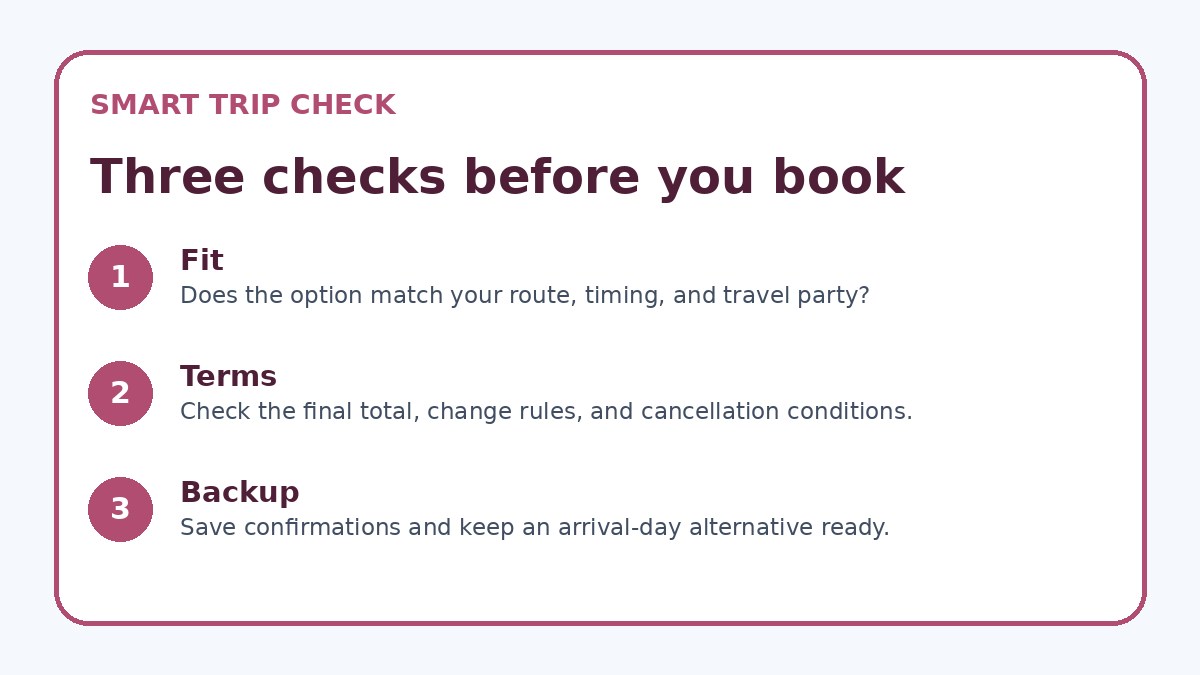
- Match the exact travel dates, traveler names, and ages across all price alert comparisons before drawing conclusions.
- Open the provider’s final booking page to confirm baggage, seat selection, and child occupancy rules for the quoted price.
- Confirm cancellation and change fees, including how refunds are handled—cash refund, voucher, or credit—before committing.
- Add a 24–72 hour cooling-off window after any alert triggers and use it to compare full terms rather than headline numbers.
- Calculate practical value: quantify transfers, breakfast, and family-room convenience versus monetary savings to guide your choice.
- Save screenshots or written confirmations of quoted terms and customer-service replies in case you need to contest a booking later.
Evaluating inclusions, flexibility, and traveler-specific value
Inclusions matter more for families because small items compound—checked bags, stroller allowances, breakfast for kids, and airport transfers reduce stress. When comparing a bundle to separate bookings, list every inclusion and assign a practical value: would a private transfer save you time and two taxis? Does included breakfast mean fewer meals to plan after a long flight? Put realistic time and convenience values next to monetary figures; sometimes the convenience of an included transfer or early check-in justifies a higher headline price, especially after arriving with young children.
Flexibility is often the deciding factor. A slightly higher fare with free changes or low penalties can save far more than the cost difference when a child falls ill or a school event shifts travel dates. Confirm on the provider’s final booking page how refunds are processed, whether change fees are per traveler or per booking, and whether vouchers are nonrefundable. If a package combines a nonrefundable flight with a refundable hotel, understand how the combined supplier handles partial changes so you aren’t surprised at checkout.
Final terms, verification, and booking discipline
Before you hit confirm, verify the final terms: the exact cancellation timeline, any per-person fees, baggage rules as shown on the final booking page, and whether seat assignments are guaranteed. When a price alert recommends a package, open the provider’s checkout and read the fine print. Check whether the booking is refundable, transferable, or issued as vouchers; note any deadlines for free cancellation and the steps needed to make changes. If the provider’s pages are unclear, contact customer service and save the response for reference.
Keep your family’s booking discipline straightforward: decide in advance which tradeoffs you’ll accept—nonrefundable savings vs. change flexibility—and set a maximum outlay for emergencies. If a package equals or beats your pre-agreed flexibility threshold, proceed; if not, either continue monitoring alerts or assemble flights and hotels separately to maintain control. You can also use one alert to trigger a price-match review on a separate supplier, but always verify the final booking conditions directly with the seller. Trip.com can be one comparative place to check current availability and terms, but confirm details on the seller’s final checkout.
Travel Deals & Booking Strategy questions travelers ask
How long should I wait after a price alert before booking for a family trip to Seoul?
Wait at least 24 to 72 hours after an alert triggers. Use that time to verify the provider’s full terms on the final booking page—cancellation windows, change fees, baggage rules, and child occupancy details. Discuss the alert with other family decision-makers and check whether similar alerts exist for separate flight and hotel searches. The waiting window reduces impulse decisions and gives you time to compare whether the alert represents a genuine saving or a short-term fluctuation tied to restrictive terms.
Are package deals usually better for families than booking separately in Seoul?
Packages can be better for families when they include meaningful conveniences like airport transfers, family-room availability, or prepaid activities that would otherwise need coordination. However, they can also attach stricter change or cancellation terms, which is a critical downside for family travel. The right choice depends on whether you value convenience over flexibility. Always compare the same dates, traveler count, and inclusions side-by-side—what looks cheaper in a headline may cost more once you add mandatory extras or accept limited change options.
What specific terms should parents verify on the provider’s final booking page?
Parents should verify cancellation and change policies, how refunds are issued, whether child rates are automatically applied, baggage allowances per passenger, and the exact room type or bedding configuration allocated to the booking. Also check whether any included transfers or activities have age limits or extra fees. If a package combines multiple suppliers, confirm which supplier you must contact to make changes and whether separate components have different rules. Keep copies of the final terms and any customer-service confirmations.
Final decision note
Price alerts are a powerful planning aid for families heading to Seoul, but they work best with rules and routines. Treat alerts as signals to investigate, not as automatic buy triggers. Always line up like-for-like comparisons—same dates, passenger counts, and inclusions—then verify final cancellation and change terms on the provider’s booking page. Use a short cooling-off window to discuss and confirm family priorities: convenience, flexibility, or raw cost. With pre-set decision rules, alerts give you timing advantage without the downside of impulse bookings—helping your family book Seoul travel deals that actually fit your needs.
Continue planning
Check current options and final conditions
Use the provider page to confirm live availability, the final total, cancellation terms, and every condition that matters to your trip.
This evergreen planning guide was created with AI-assisted drafting and a structured quality review. It does not display live prices, schedules, availability, visa guidance, or provider rankings. Verify current details before booking. Some links are affiliate links; we may earn a commission at no additional cost to you.