Practical answer up front: for most business travelers moving between Osaka and Hiroshima, prioritize the shinkansen or express rail options if you need predictable door-to-door timing and minimal luggage handling; choose coach or ferry only when you value lower perceived friction of large checked bags or when rail connections force inconvenient transfers. The right choice depends on where you start in Osaka, where you need to end in Hiroshima, how many bags you have, and how rigid your schedule is. This guide walks through terminal fit, luggage and transfer friction, timing flexibility, and realistic disruption backups so you can compare options end-to-end. It also highlights what to confirm on a final booking page—baggage allowance, onboard storage rules, station transfer logistics, and any advance reservation requirements—so your journey supports work commitments and arrival readiness.
Choosing the best mode for your itinerary and luggage
Begin by matching door-to-door needs to transport attributes. If your meeting is in central Hiroshima and you need quick, reliable transit from central Osaka, priority should go to options that minimize transfers and walking with luggage. Trains often deliver the most consistent urban-to-urban timing with platform-level access to taxis and hotel shuttles. If you have one medium suitcase plus a carry-on, trains usually work well. However, if you travel with multiple large suitcases or equipment cases, coaches or ferries can reduce the physical hassle because boarding procedures and luggage compartments differ from rail and sometimes allow easier stowing.
Next, factor where you start and end. If your first or last mile includes narrow streets, multiple escalators, or distant stations, the apparent travel time advantage of a fast train can evaporate when you add transfers and luggage hauling. Evaluate the total trip: apartment or hotel door to final meeting address. Also consider luggage forwarding or hotel-to-station delivery as a way to combine a fast passenger service with minimal load-bearing. That hybrid approach often gives you both speed and hands-free convenience, but it adds planning and a confirmation step before departure.
Choose the end-to-end journey plan
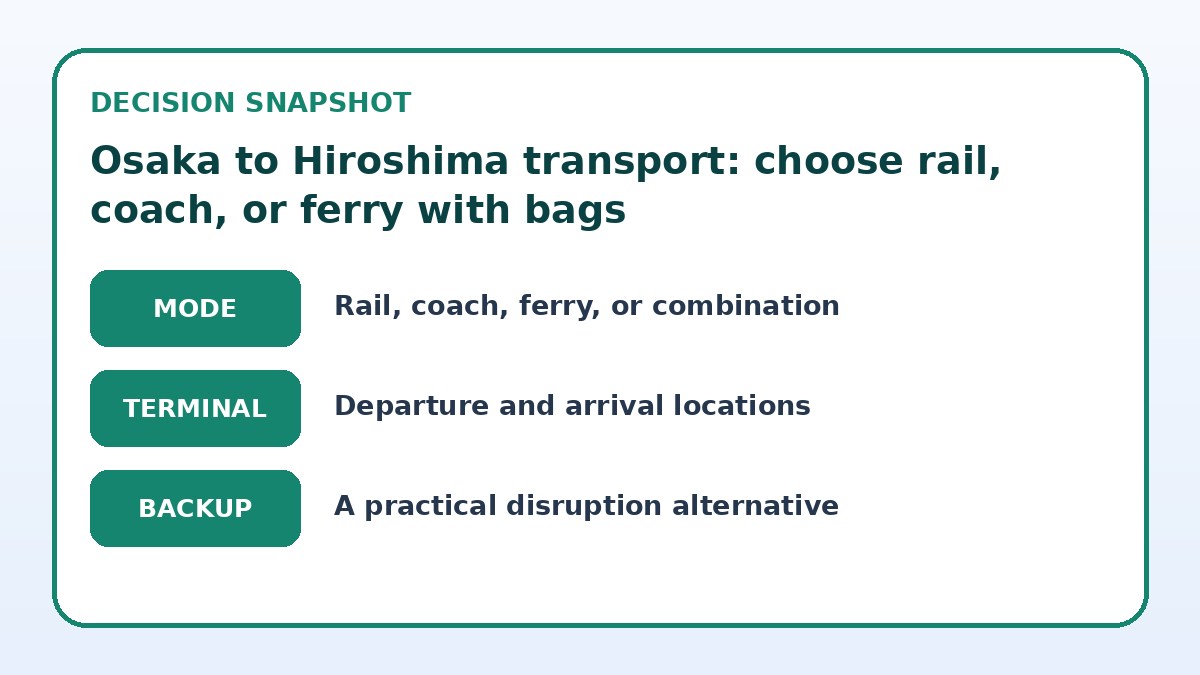
| Journey approach | Best for | Friction to check |
|---|---|---|
| Fast rail focused | Time-sensitive travelers with carry-on plus one checked bag who need predictable city-center arrival times. | May be uncomfortable with multiple large cases and requires confirming onboard and station storage rules. |
| Coach or ferry with large-luggage friendliness | Travelers carrying oversized equipment or multiple suitcases who prefer simplified loading procedures. | Longer or more variable door-to-door times and fewer departure frequencies reduce schedule flexibility. |
| Hybrid — rail plus luggage forwarding | Business travelers wanting the speed of rail while avoiding hauling large bags between meetings. | Adds coordination and lead time to arrange pickup or delivery; verify tracking and drop-off details on the provider page. |
| Private car or shared ride | Teams traveling together or door-to-door pickup needs where direct routing and luggage stowage matter most. | Potentially higher cost and exposure to road delays; check vehicle size limits and cancellation rules before booking. |
Check live intercity options
Look beyond the ride itself and compare terminals, transfers, luggage, and arrival fit.
Terminal fit and luggage transfer friction
Inspect station layouts and terminal transfer options before you book. Major Osaka stations have multiple exits and interchanges; moving between lines or taxi ranks with luggage can take ten minutes or more if elevators are not nearby. Hiroshima’s main city station links conveniently to urban transport and taxis, but the distance to specific hotels or meeting venues varies. Consider whether your luggage fits overhead or under-seat on trains, and whether you prefer station luggage storage or baggage forwarding. For bus or ferry terminals, check whether luggage is handled by staff or requires self-loading—this affects how much assistance you’ll need when boarding or changing modes.
Account for friction points like escalator-only passages, platform stairs, and ticket barriers. If you must catch a tight connection, plan extra padding for moving between platforms with bags. Choose routes with elevators, level access, or step-free connections when possible. At terminals where staff-managed luggage compartments exist, confirm dimensions and any required claim procedures so you don’t waste time at arrival. When you're booking, look on the provider's final page for explicit baggage rules and station maps, and, if uncertain, contact customer service to confirm elevator locations and transfer times.
Timing flexibility and business commitments
Decide how much schedule slack you need. If you have fixed meeting times or presentations, prioritize services with frequent, reliable departures or an easily booked backup. Trains often provide many departures across the day; coaches and ferries might run fewer times and therefore require more precise planning. For on-the-day flexibility—last-minute schedule changes, extra meetings, or delayed flights—favor options that allow easy rebooking or have multiple departures. Also consider travel time variability: road conditions can affect coach door-to-door times, whereas rail tends to be more consistent except during major disruptions.
If your workday in Hiroshima spans multiple sites, think about where to leave luggage during meetings. Hotel concierge services, station lockers, and luggage forwarding can free you to move quickly between appointments. Also plan arrival buffer to check in at the hotel, freshen up, and arrive at the meeting room prepared. When aligning connections, map transfer walk times and the locations of elevators or taxi stands so you can realistically estimate how early you must depart Osaka to meet your schedule in Hiroshima without risking last-minute stress.
Compare the practical alternatives
Use the final page to confirm what is actually offered on your dates and save a workable fallback.
Intercity travel checklist
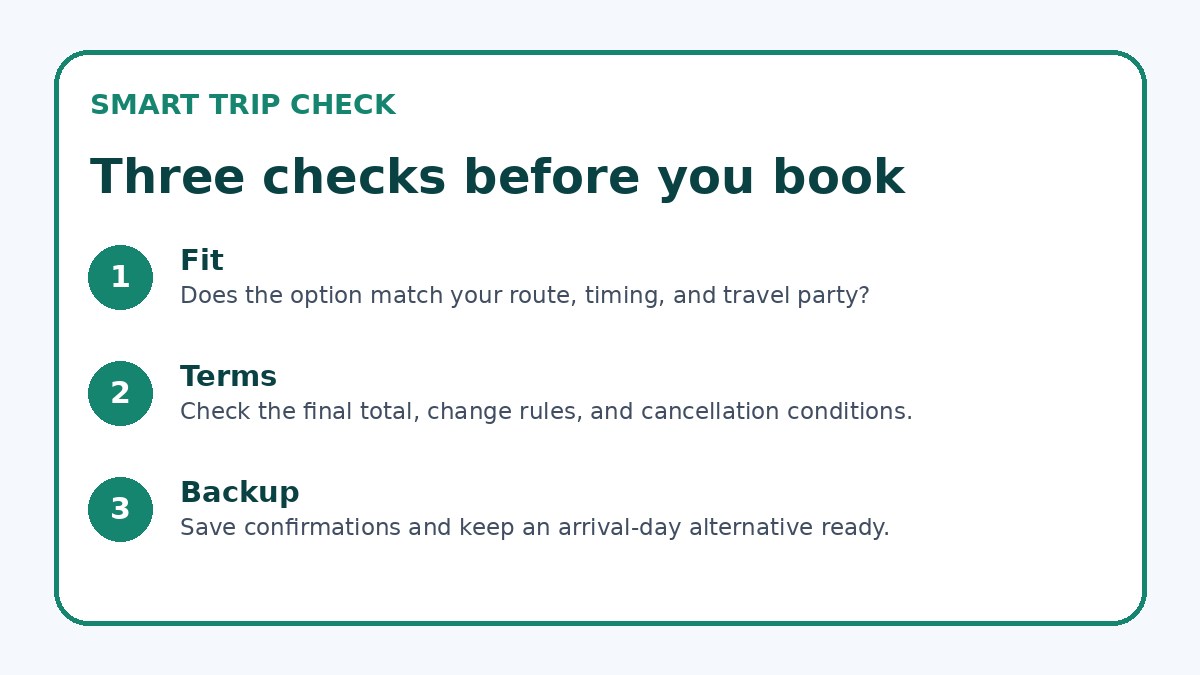
- Confirm total door-to-door travel time by mapping origin address to departure terminal and arrival terminal to final destination.
- Verify baggage size, weight, and quantity limits on the final booking page of your chosen provider before purchasing tickets.
- Identify elevators, step-free routes, and taxi ranks at both departure and arrival stations using station maps or provider information.
- Plan a backup departure or a feasible alternative mode and note its baggage rules and rebooking policy.
- Arrange luggage forwarding or hotel delivery if you want to travel hands-free, and confirm pickup/drop-off windows and tracking.
- Pack a compact essentials bag with work materials and toiletries to access if checked luggage is delayed or forwarded.
Disruption backup plans and end-to-end practicality
Prepare at least two viable backup plans. If your primary rail option suffers a delay, a coach or car service could still get you to Hiroshima though with variable travel time. Conversely, if roads are congested or coaches are delayed, rail could be the reliable fallback. Identify a backup departure you can reach without excessive rush and confirm luggage policies for that alternative. Also plan a contingency for luggage—if a forwarded suitcase is delayed, make sure you can access essentials from carry-on or arrange a quick pick-up at a convenient location.
From a door-to-door perspective, rehearse the last-mile details: how to get from the arrival terminal to a taxi rank, hotel shuttle, or meeting venue, and how luggage will be handled on that segment. Keep digital copies of booking confirmations, receipts required for luggage claims, and hotel contact details. If you rely on third-party services—luggage forwarding, private drivers, or hotel pickups—verify their cancellation and change policies so you can adapt without losing crucial time before a business engagement.
Rail & Intercity Transport questions travelers ask
Is it better to bring luggage onto the train or send it ahead using a forwarding service?
Choosing to carry luggage onto the train keeps you in control and avoids coordinating third-party pick-up times, which is helpful for unpredictable schedules. Forwarding services reduce the physical burden and let you travel lighter between meetings, but they require advance arrangement and a clear delivery window at the destination hotel or station. Verify the forwarding provider's delivery times, claim procedures, and tracking on their booking page; consider forwarding only when you have a reliable delivery window and a minimal set of essentials in your carry-on.
How much extra time should I budget for station transfers with luggage?
Budget additional padding for transfers that involve escalators, ticket barriers, or platform changes—often 10 to 30 minutes more than a simple timetable shows. If elevators or step-free routes are required, allow extra time to locate and use them, particularly in larger stations with multiple exits. When planning tight business itineraries, add at least one extra departure opportunity as a buffer, and verify station layout and taxi stand locations beforehand so you can move purposefully rather than scrambling with heavy bags.
What should I check on the provider's booking page before I finalize my trip?
Look specifically for baggage allowance and dimension rules, reservation requirements for seats and luggage, conditions for extra or oversized pieces, and any required claim procedures at arrival. Also check transfer guidance—station exit maps, elevator availability, and recommended arrival times before departure. If using a hybrid plan (train plus forwarding or car transfer), confirm pickup windows, contact numbers, and the provider's change or cancellation policies on their booking confirmation page so you can adapt if your schedule changes.
Final decision note
For business trips between Osaka and Hiroshima, think in terms of door-to-door practicality rather than just a single ride. Fast rail options usually give the best balance of predictable timing and urban access if you can manage your luggage within train limits. Coaches or ferries may simplify the handling of oversized items but introduce variability in arrival times. Hybrid plans—combining rail with luggage forwarding or a short private transfer—often deliver the most professional result for packed schedules. Before booking, map every transfer, verify baggage policies on the provider’s final booking pages, and have a concrete backup to protect the most important part of your trip: arriving ready and on time.
Continue planning
Check current options and final conditions
Use the provider page to confirm live availability, the final total, cancellation terms, and every condition that matters to your trip.
This evergreen planning guide was created with AI-assisted drafting and a structured quality review. It does not display live prices, schedules, availability, visa guidance, or provider rankings. Verify current details before booking. Some links are affiliate links; we may earn a commission at no additional cost to you.