Practical answer up front: if you’re staying inside central Seoul and moving between hotels, museums, and subway-accessible neighborhoods, public transport usually wins for speed, reliability, and avoiding parking hassles—even with extra luggage. If your trip includes off-center stays, multiple day trips to distant attractions, late-night arrivals, or a group with several large suitcases, renting a car will likely save time and make door-to-door transfers simpler. Your decision should weigh how many bags you have, whether your accommodations have elevators or luggage storage, how comfortable you are driving in a dense city, and whether you need flexible timetables. Below I explain the main tradeoffs and provide decision criteria and practical checks to help you choose confidently before you book Seoul car rental or rely on buses and subways.
See current options before you compare the details
Availability and final conditions change. Open Trip.com now or keep reading for the practical comparison.
When public transport is the smarter choice
Seoul’s subway and bus network is extensive, punctual, and generally the fastest way to cross central neighborhoods during the day. If your itinerary stays inside the main districts—Jongno, Myeongdong, Gangnam, Hongdae, Itaewon—subway stations are often within walking distance of attractions and many hotels. With one or two medium suitcases, use station elevators, plan on less crowded times, and choose accommodations that advertise ground-floor or elevator access. Also consider combining transit with short taxi hops: a quick taxi from a station to your hotel can eliminate heavy carrying without committing to a car rental.
For single travelers or couples with compact or wheeled luggage, public transit keeps costs lower because you avoid rental daily rates, parking uncertainties, and fuel. Peak-hour crowds are the main downside: moving multiple large bags on jam-packed trains is uncomfortable and can slow you down. To reduce hassle, identify the station exits closest to your hotel in advance, and look for trains with larger cars or end-carriage exits that sometimes have extra space for luggage. Carry a simple collapsible trolley or protective luggage cover to ease transfers on and off transit.
When renting a car makes sense
Choose Seoul car rental if your plan includes late-night arrivals, trips to distant or rural sites, or traveling with several oversized suitcases or equipment. A car gives you reliable door-to-door transport and room to stow belongings without juggling bags through many station transfers. If you’re moving between multiple hotels or visiting family with larger belongings, the flexibility of a vehicle can reduce physical strain and schedule constraints. For groups of three or more with large baggage sets, per-person transport cost and convenience often favor a rental.
Driving in Korea means navigating dense traffic in central Seoul and finding parking at hotels and attractions. Factor in time to locate and pay for parking and the stress of one-way streets or restricted lanes. For trips outside central Seoul—day trips to coastal towns or mountainous areas where public transit is infrequent—a rental’s value increases. Before booking, check whether your planned lodging provides on-site parking and whether nearby attractions have accessible parking bays or drop-off points.
| Approach | Best for | Tradeoff to check |
|---|---|---|
| Public transport (subway + bus + occasional taxi) | Solo travelers, couples with one or two wheeled bags, urban-only itineraries | Less door-to-door convenience and crowded trains during peak hours |
| Short-term car rental within Seoul | Groups with multiple large suitcases or late-night itineraries | Parking stress, city driving complexity, and potentially higher per-day costs |
| Rent car for day trips and use transit in the city | Travelers combining rural/ distant excursions with central urban stays | Requires planning start/end points and managing two transport modes in one trip |
| Taxi or private transfer for specific legs | Heavy luggage on arrival/departure or short last-mile needs | Costs add up for many journeys compared with unlimited transit fare |
Ready to check the option that fits your plan?
Use your exact dates and traveler details so the provider page can show the current total and conditions.
Key decision criteria to compare options
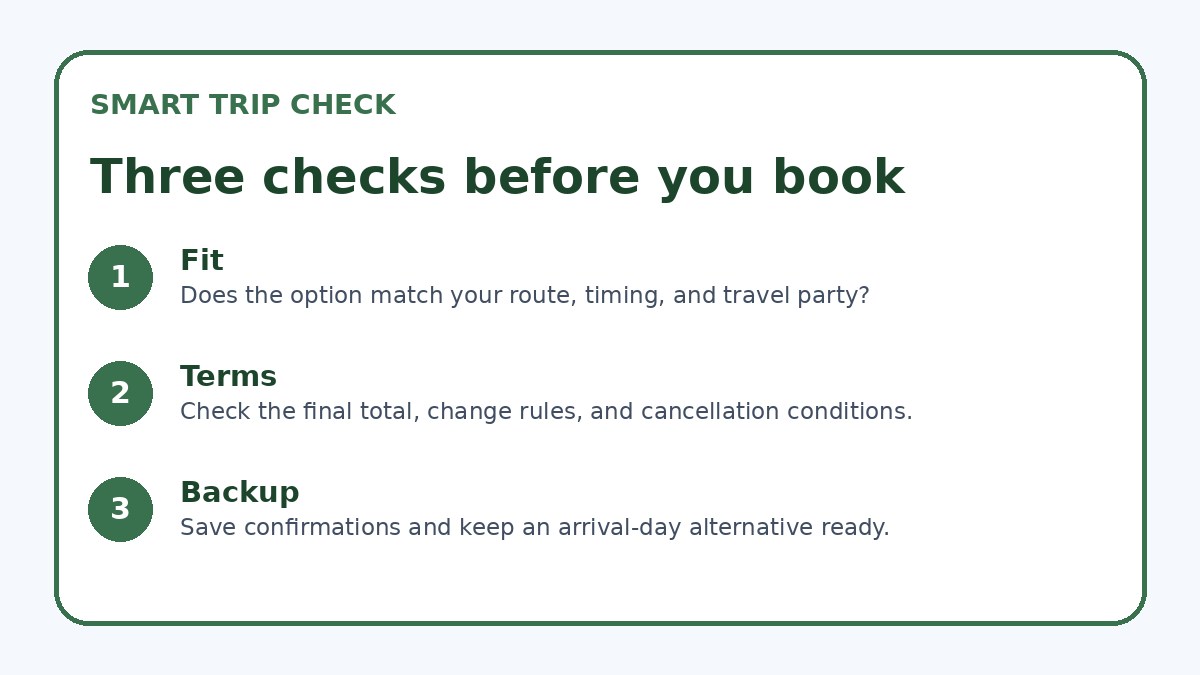
Start by listing your itinerary: where you will sleep, what you will visit, and whether those places are subway- or bus-accessible. Count bags and estimate how many door-to-door transfers you’ll need. If most points lie along subway lines and your accommodations include elevator access or luggage storage, public transport typically requires less effort and fewer unknowns. If you have multiple late-night legs, visits that require long walks from stations, or activities that begin before transit runs, lean toward a car.
Also compare convenience factors: the amount of walking between station exits and hotels, the presence of stairs or escalators, and whether your group prefers carrying luggage or watching time. Check whether your chosen hotels allow early check-in or luggage hold so you are not hauling bags. Finally consider language and comfort: if you’re uncomfortable driving in an unfamiliar language environment, and taxis are available for occasional hops, public transport plus taxis can be an easier compromise than a full rental.
Before you book
- List every accommodation and check elevator access and the nearest subway exit before booking.
- Count suitcases and measure or note whether they fit in a car trunk or require multiple taxi trips.
- If renting, confirm trunk size, driver license rules, and insurance options on the rental provider’s booking page.
- Ask your hotel about on-site parking, drop-off zones, and whether luggage storage is available before you arrive.
- Map each day’s route to see how many transfers and stairs are required when using public transport.
- Compare estimated door-to-door travel time for transit+taxi versus driving for at least two representative days.
Practical checks before you book anything
Verify elevator access and nearest station exit for every accommodation directly with the hotel or host. Don’t rely solely on third-party listings—ask staff whether typical subway exits require stairs and whether there is a porter or luggage storage. If you plan on renting a car, confirm on the rental provider’s booking page the vehicle’s trunk size (or model options) and any required driver documentation. Also ask your hotel about on-site parking availability, whether it needs reservations, and where you may legally drop off passengers late at night.
When using public transport, check the official subway or bus provider pages for station maps and elevator locations; confirm whether stations on your planned lines offer barrier-free access. For long day-trips or airport transfers, compare taxi or private airport transfer options versus car hire by confirming pick-up convenience and drop-off locations. If you intend to compare live availability and conditions, Trip.com can be used as one place to check listings, but always verify final booking details and terms on the provider’s official page before you commit.
Frequently asked questions
Can I use Seoul car rental for airport pickup if I have several large suitcases?
Yes, renting a car for airport pickup can be convenient when you arrive with many large suitcases, as it provides immediate door-to-door transport and protected luggage space. Before booking, confirm the rental provider’s airport pick-up points, allowed pick-up times, and where they park at the terminal. Also check whether the car’s trunk can handle your bags and whether the rental includes an assistant for loading. If you have a single heavy container, compare the rental option with a pre-booked private transfer or a large taxi—ask both providers about exact pick-up/drop-off procedures on their booking pages.
How do I plan if part of my trip is outside Seoul and part inside the city?
A common approach is to rent a car only for the days you will travel outside Seoul and rely on public transport for city days. To decide, map the out-of-city destinations and calculate the driving hours and parking requirements, then compare those with public transport schedules for the same routes. If you choose mixed modes, arrange a central hotel with secure luggage storage so you can leave heavy bags while using the subway. When switching to a rental, verify where you pick up and drop off the vehicle—airport collection versus downtown offices affects convenience and may change whether a car makes sense overall.
Are taxis a good middle ground for luggage-heavy trips in Seoul?
Taxis are often the practical middle ground: they provide door-to-door service and more space than crowded trains, without the commitments of a full-day rental. For arrivals, departures, and short hops with heavy bags, a taxi can save time and physical strain. If you need many consecutive taxi trips, costs add up, so compare a rental’s daily rate for longer multi-stop plans. Always confirm taxi capacity for multiple large suitcases before piling all luggage into one car, and when possible request or flag a larger vehicle in advance through your hotel or a ride app.
Final planning note
There’s no one-size-fits-all answer for Seoul car rental versus public transport when traveling with extra luggage. If your schedule keeps you within well-served central neighborhoods and hotels offer elevator or luggage services, public transit with occasional taxis usually reduces hassle and cost. If you expect late arrivals, long rural day trips, or you travel with multiple oversized cases, renting a car gives you control and comfort despite the city’s parking and driving challenges. Use the decision criteria here—route mapping, luggage count, elevator access, and parking checks—to weigh your options, and always verify vehicle trunk specs, hotel parking, and station accessibility on provider pages before booking.
Continue planning
Check current options and final conditions
Use the provider page to confirm live availability, the final total, cancellation terms, and every condition that matters to your trip.
This evergreen planning guide was created with AI-assisted drafting and a structured quality review. It does not display live prices, schedules, availability, visa guidance, or provider rankings. Verify current details before booking. Some links are affiliate links; we may earn a commission at no additional cost to you.