
If you and your partner are deciding how flexible to make New York City to Boston transport tickets, focus first on how certain your plans are. For a solid, defined itinerary—fixed departure times and no likely changes—a lower-flex fare can be fine and reduces upfront cost and complexity. If either of you expects schedule shifts, wants freedom to switch trains, or values easy refunds, buy a flexible or refundable ticket. Also consider mixed strategies: one flexible ticket and one lower-cost ticket, or flexible outbound and fixed return, to balance price and peace of mind. Below I explain the tradeoffs couples commonly face, what to verify on a provider’s booking page, and a simple checklist so you can book with confidence.
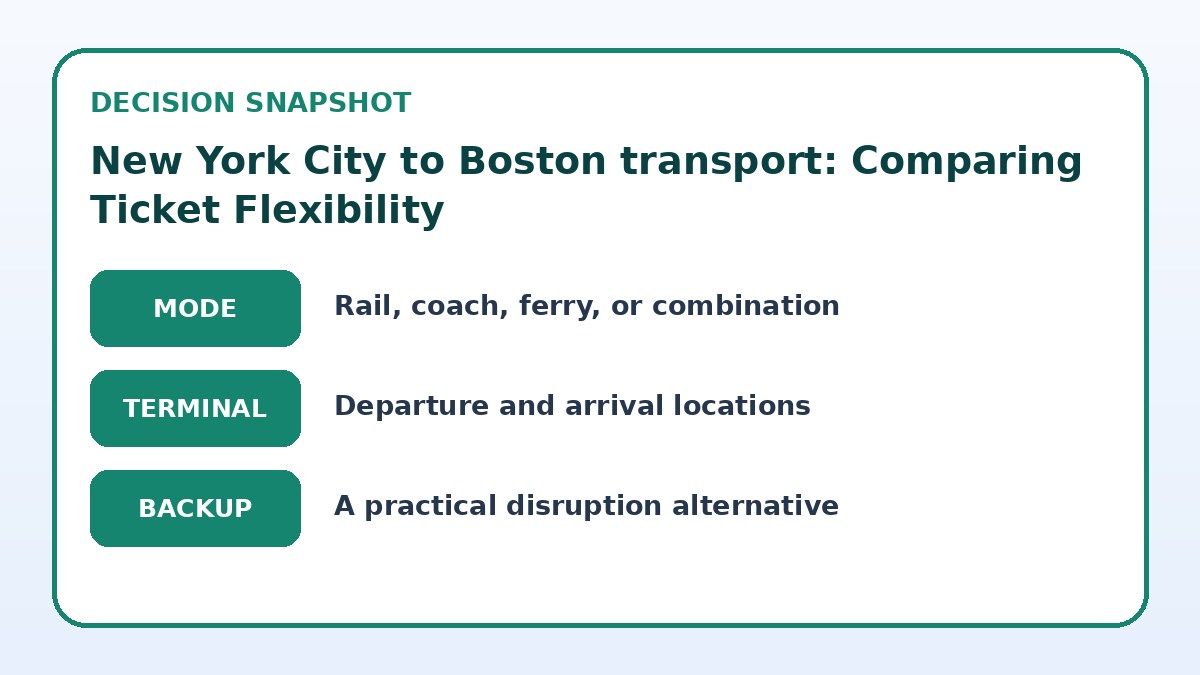
See current options before you compare the details
Availability and final conditions change. Open Trip.com now or keep reading for the practical comparison.
What ticket flexibility actually covers
Ticket flexibility can mean several things: free or paid changes to travel dates/times, partial or full refunds, and the ability to pick or change seats. For many rail and coach operators, flexibility is sold as fare classes—nonrefundable budget fares, refundable flexible fares, and intermediate options that allow changes for a fee. Couples should identify which aspects matter: do you need the right to cancel and receive a refund, the ability to change departure within the same day, or simply the option to move to an earlier or later service without penalty?
When you look at a booking page, read the fine print for each fare column: allowed change window, whether a fare difference applies, whether you pay a flat change fee, and how refunds are calculated. Also confirm whether refunds are issued to the original payment method, as vouchers or credits are common for less flexible fares. If you’ll be mixing suppliers—for example a private coach to a hub and then a national rail service—verify each leg’s rules since one restrictive segment can limit your options.
How couples should weigh risk vs. cost
Couples tend to travel on different timelines: a romantic weekend, a family visit, or a business blend. If your plans are firm—fixed dates, set departure time, and no expected changes—opting for a lower-cost, less flexible ticket often makes sense. The tradeoff is vulnerability: any adjustment (flight delay, illness, or a change of heart) could incur fees or forfeit the ticket. Ask yourselves: how painful would a fee or rebooking be versus the money saved by booking the cheapest fare?
If one partner prefers spontaneity while the other needs certainty, consider asymmetric booking: one flexible and one lower-cost ticket. This preserves the option to change without doubling the expense. For trips where arrival or departure timing is critical—tight onward connections or events—prioritize flexibility on the segment that matters most. Couples traveling with luggage, pet policies, or special seating needs should also confirm whether cheaper fares restrict these options.
| Approach | Best for | Tradeoff to check |
|---|---|---|
| Both tickets fully flexible | Couples with unpredictable schedules or important timing needs | Higher upfront cost but minimal change penalties and easier seat management |
| One flexible, one low-cost | Pairs where only one traveler may need to change plans | Balances cost and flexibility but leaves one passenger exposed to strict rules |
| Flexible outbound only | Trips where arrival time is critical but return can be flexible | Saves money on the return while protecting the crucial leg |
| Both low-cost fares | Highly certain plans and travelers prioritizing savings over flexibility | Lowest price but high risk of fees or nonrefundable losses if plans change |
Ready to check the option that fits your plan?
Use your exact dates and traveler details so the provider page can show the current total and conditions.
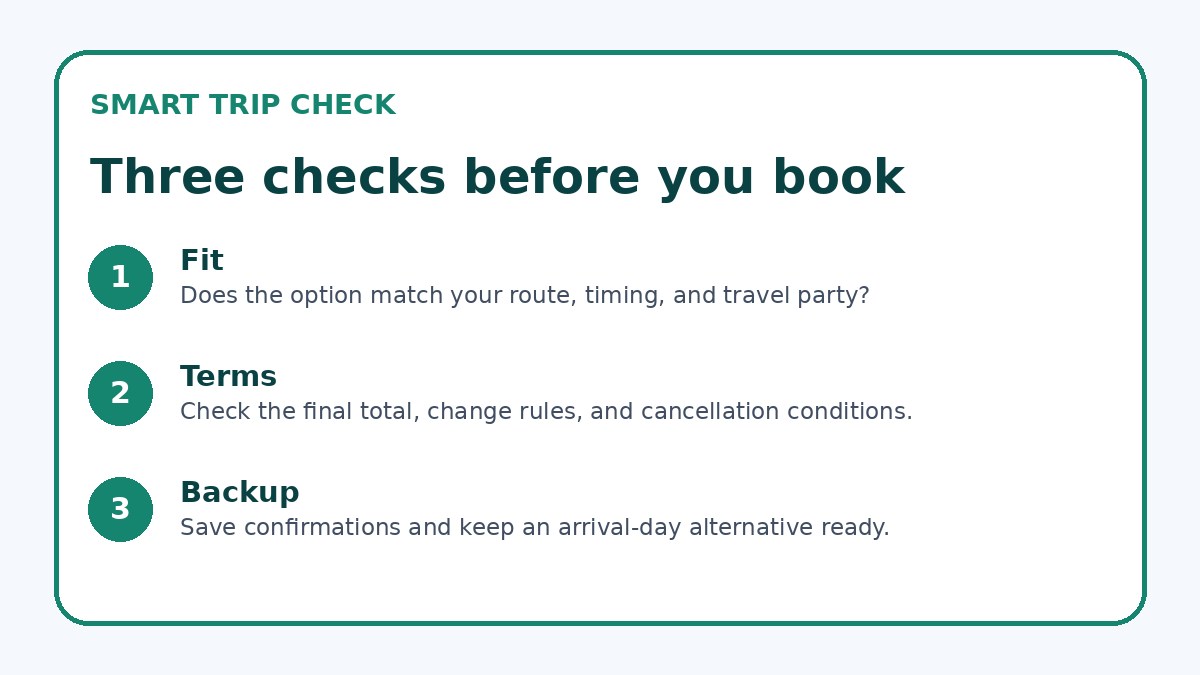
Practical checks before you book
On the provider’s final booking page, verify change and cancellation windows, the exact fees, and whether seat changes are permitted. Don’t rely on summary labels like “flex” without the details: find the line items that state whether changes are free, whether a fare difference applies, and how refunds are processed. If the booking page allows insurance or a “flex upgrade,” compare its cost to the potential change fee of the base ticket—sometimes buying the upgrade is cheaper than paying an unexpected amendment.
Also check how the operator handles missed connections: will they rebook you on the next service if an earlier leg is delayed or canceled? Confirm identification requirements for name changes if you expect to transfer a ticket, and whether mobile tickets or printed receipts are required. For peace of mind, note contact options for customer service and keep screenshots of the fare rules at purchase; these often resolve disputes more quickly than memory alone. Trip.com can be used as one place to compare availability and terms, but always verify terms on the supplier’s own booking page.
Before you book
- Confirm change fees, allowed change window, and whether fare differences apply on the final booking page before paying.
- Decide if one partner needs flexibility and consider booking asymmetric fares to balance cost and freedom.
- Verify seat assignment policies for each fare class if sitting together is important to you.
- Check how refunds are issued (credit, voucher, or original payment) so you’re comfortable with the outcome of cancellations.
- Note the operator’s missed-connection and delay rebooking policy if your trip includes connections.
- Take screenshots of fare rules and the booking summary when you complete purchase for quick reference in disputes.
Couples’ booking strategies to balance flexibility and cost
Strategy 1: both flexible—choose this if both partners need freedom to change plans. It costs more but removes friction: free changes, straightforward refunds, and easier seat reassignments. Strategy 2: one flexible, one fixed—useful if only one person’s schedule is uncertain. This halves the flexibility cost while providing at least one easy fallback. Strategy 3: time-based flexibility—buy a flexible outbound where arrival time matters, and a cheaper return when you can be more flexible with departure. Each approach balances risk exposure and budget differently.
When seats together matter for the experience, weigh whether cheaper fares allow advance seat selection; if not, the value of that cheaper ticket drops for couples. Consider booking with the same provider for both travelers and both legs to simplify changes—some operators handle modifications more smoothly when one booking contains both passengers. Finally, factor in extras like onboard amenities and luggage allowances since adding those later can reduce the initial savings of a low-fare ticket.
Frequently asked questions
Can I split flexibility so one person can change travel plans without affecting the other?
Yes—most operators allow you to buy different fare types for each passenger in a single booking. That means one person can hold a flexible fare while the other uses a lower-cost, nonrefundable ticket. Before booking, confirm whether the operator charges a fee for splitting fares or for separate seat assignments. Also check how refunds or changes are processed when only one passenger modifies the reservation, because some systems treat the booking as a whole and may require adjustments to both fares.
If my train or coach is delayed, will a flexible ticket let us catch a later service without penalty?
Flexible fares generally make rebooking easier, but policies vary: some operators automatically rebook affected passengers on the next available service, while others require you to contact customer service or present a delay notice. Flexible tickets often remove the need to pay a change fee, but you may still be charged any difference in fare. Always check the specific operator’s delay and rebooking policy on the booking page so you know whether assistance is automatic or manual in the event of disruptions.
Is travel insurance a substitute for buying flexible tickets for couples?
Travel insurance can cover some unexpected events—illness, certain travel interruptions, or cancellations—depending on the policy, but it typically won’t waive standard change fees for voluntary itinerary changes. Review the policy’s covered reasons and claim process carefully: insurance can be helpful as a safety net for covered emergencies but is not a direct replacement for flexible fare benefits like free same-day changes or simple refunds. Compare the insurance premium with the price difference between flexible and nonrefundable fares to decide which approach makes more sense.
Final planning note
For couples traveling New York City to Boston, the right ticket flexibility depends on how fixed your plans are and how much you value simplicity versus upfront savings. If both partners need freedom or the timing is crucial, choose fully flexible fares for peace of mind. If only one traveler is uncertain, asymmetric booking often hits the sweet spot between cost and adaptability. Always verify change, refund, and seat assignment details on the provider’s final booking page before you pay, and keep a clear record of the fare rules. With a little advance checking you can protect your trip without paying for unnecessary flexibility.
Continue planning
Check current options and final conditions
Use the provider page to confirm live availability, the final total, cancellation terms, and every condition that matters to your trip.
This evergreen planning guide was created with AI-assisted drafting and a structured quality review. It does not display live prices, schedules, availability, visa guidance, or provider rankings. Verify current details before booking. Some links are affiliate links; we may earn a commission at no additional cost to you.