
If your trip to Jeju is driven by meetings rather than sightseeing, plan around the island’s shoulder seasons to balance lower crowds and reasonable service levels. The practical approach: target arrival and departure dates just outside peak holiday weekends, compare both early-week and late-week fares, and use flexible cancellation or change policies that match corporate approvals. For accommodations, prioritize locations near your meeting venues and check transport links rather than purely chasing lower nightly rates. When evaluating deals, always confirm the refund/change rules, included breakfasts, shuttle availability, and whether the rate requires prepayment. Do this on the provider’s final booking page before you confirm. A well-timed shoulder-season trip can reduce airport congestion and give you steadier in-city logistics, but it requires deliberate comparison and verification to avoid service gaps.
See current options before you compare the details
Availability and final conditions change. Open Trip.com now or keep reading for the practical comparison.
When shoulder-season timing helps business travel
Shoulder seasons on Jeju typically mean fewer tourists than peak summer or holiday weeks, which can smooth hotel service and reduce delays at busy points like rental counters. For business travelers, that translates into faster check-ins, easier restaurant reservations for client dinners, and more predictable local transfers. Scheduling meetings in the middle of a shoulder period—avoiding festival weekends and national holidays—lets you benefit from these quieter conditions while still enjoying reliable tourism infrastructure that may be scaled down during true low season.
The tradeoff is that some leisure-focused services (guided tours, niche restaurants) may run reduced hours or close on certain days, so you should verify availability that directly affects your trip. That matters most if your schedule includes client entertainment or time-sensitive site visits. Ask suppliers about regular weekday operations, and confirm whether the hotel provides business amenities like meeting rooms, reliable Wi-Fi, and airport transfer at the rate you’re booking. These are the service elements that change most between peak and shoulder months.
How to compare flight and ferry options for reliability
Business travel requires punctuality. When comparing options to Jeju, evaluate both direct and connecting flights where available, and look at typical departure times, layover lengths, and frequency rather than just the headline fare. Connecting itineraries can be cheaper or more convenient on certain days, but they increase exposure to delay risk. If multiple airports serve your origin city, compare schedules across them, and consider evening flights only if you have contingency plans for last-minute delays that could affect morning meetings.
If your plan includes arriving by ferry or combining a mainland meeting with island travel, treat ferry schedules like a second flight: verify the carrier’s timetable, check typical seasonal frequency, and confirm their policy for missed connections. On any booking page you use, read the transport provider’s terms about check-in windows and boarding requirements. These operational details are more variable than advertised prices and are the items that can derail a tight corporate itinerary if overlooked.
| Approach | Best for | Tradeoff to check |
|---|---|---|
| Book earliest available nonrefundable deal | Travelers with fixed dates who prioritize lowest headline cost | Hard to change if meetings shift; may incur corporate process for reimbursements |
| Choose refundable or flexible corporate rate | Teams that expect schedule changes or need quick approvals | Higher upfront cost but reduces administrative friction when altering plans |
| Mix direct flights with local car service | Minimizing travel time between airport and meetings | May raise budget and requires confirming driver/transfer windows in shoulder months |
| Fly into alternate mainland city and ferry | When flight options to Jeju are limited or costly | Adds complexity and dependence on ferry timetables and weather conditions |
Ready to check the option that fits your plan?
Use your exact dates and traveler details so the provider page can show the current total and conditions.
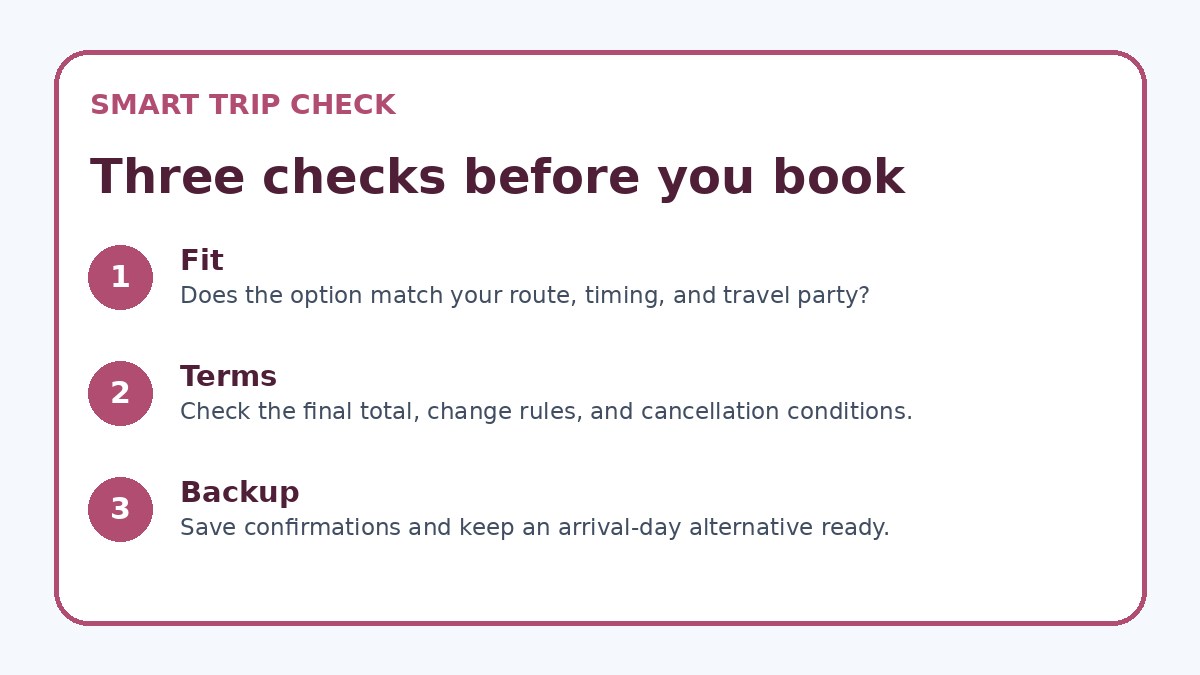
Choosing hotels and locations for efficiency
When prioritizing efficiency over leisure, choose accommodations close to your meeting venues or main transport nodes rather than the most eye-catching resort. Jeju’s island geography means travel times can be longer than mainland city hops; a ten-kilometer difference can matter during rush periods or if weather affects roads. Look for hotels that offer express breakfast options, reliable Wi-Fi, available workspaces, and flexible early-check-in or luggage-hold policies. For reservations made during shoulder seasons, confirm whether those conveniences are included in your chosen rate.
Also evaluate hotel cancellation and amendment policies against your company’s approval process. A nonrefundable corporate rate may be cheaper but harder to alter if meetings change. If your team often needs last-minute adjustments, a rate with flexible modification terms can be worth the premium. Always verify which amenities are guaranteed at the time of booking—business travelers should check, on the provider’s final page, the listed meeting-room availability, shuttle service windows, and whether breakfast times suit your schedule.
Before you book
- Confirm meeting dates and candidate travel days with all attendees before searching fares to avoid change fees.
- On the provider’s final booking page, verify cancellation and modification terms, including any corporate invoicing options.
- Compare direct and connecting flights for total door-to-door time and delay exposure, not just price.
- Check hotel proximity to meeting venues and confirm business amenities like meeting rooms, Wi‑Fi speed, and breakfast hours.
- If using ground transfers or ferries, confirm pickup procedures, operating days, and check-in windows on carrier pages.
- Document flexible-rate options and prepayment rules in your expense report to streamline approvals if plans change.
Corporate booking tactics and what to verify before confirming
Leverage your company’s preferred booking channels for invoicing and expense rules, but use consumer sites as a cross-check for availability and alternative schedules. Many corporate tools do not show every fare class or ferry option, so searching broadly helps you spot workable itineraries. When you find a promising option, don’t finalize it without opening the provider’s final booking page to confirm the exact cancellation policy, baggage allowances, included meals, and any prepayment requirements—these are the terms that most often differ between booking engines.
If you’re booking multi-component trips (flight plus car rental or ferry), ensure change and cancellation policies align across all segments; mismatched rules create risk if one segment must change. For car rentals, confirm insurance and age-related rules on the supplier page. For airport transfers, check whether the listed shuttle runs year-round and what the pickup procedure is. Mention Trip.com only as a tool for scanning availability; always trust the official supplier page for final contract terms and service confirmations.
Frequently asked questions
How far in advance should a business traveler book Jeju during shoulder seasons?
For shoulder seasons, a practical window is to start monitoring fares and availability several weeks ahead rather than months. This lets you capture schedule patterns without locking into a rigid nonrefundable option. Book once you’ve confirmed meeting dates with participants and after comparing refundable and nonrefundable options. Before finalizing, open the supplier’s booking page to read the exact change and cancellation policies, since corporate approvals and last-minute shifts can make flexibility more valuable than a marginally lower fare.
Are transfers and local transport reliable in Jeju’s shoulder months for tight corporate schedules?
Transfers and local transport are generally reliable, but some services reduce frequency outside peak season. For time-sensitive itineraries, prioritize providers that publish year-round schedules and confirm pickup times directly on the operator’s site. If meetings require strict arrival times, consider booking a private transfer or allocating extra buffer time. When using car rentals, verify insurance and pickup procedures on the rental company’s final page to avoid surprises that could delay your schedule.
Should I prioritize hotel rate savings or location when choosing accommodation for business?
Prioritize location and business amenities over marginal rate savings when your schedule is tight. Staying closer to meeting venues reduces commute unpredictability, especially on an island where traffic and weather can alter travel times. Check that the hotel’s Wi‑Fi, breakfast hours, and meeting-room availability match your needs and verify these items on the provider’s booking page. If your company allows, a slightly higher rate for convenience often saves time and reduces the risk of missed appointments.
Final planning note
Planning Jeju business travel around shoulder seasons can yield steadier service and quieter logistics, but it demands deliberate comparison and verification. Focus on syncing meeting dates before booking, prioritize proximity and business amenities over the lowest headline price, and confirm cancellation and transfer rules on each provider’s booking page. Use corporate tools alongside consumer searches to spot alternatives, but rely on the supplier’s final terms for contract details. Doing this work up front keeps your schedule flexible and your trip predictable—key priorities for any successful corporate visit to Jeju.
Continue planning
Check current options and final conditions
Use the provider page to confirm live availability, the final total, cancellation terms, and every condition that matters to your trip.
This evergreen planning guide was created with AI-assisted drafting and a structured quality review. It does not display live prices, schedules, availability, visa guidance, or provider rankings. Verify current details before booking. Some links are affiliate links; we may earn a commission at no additional cost to you.