Short answer: a rental car is often helpful for families who want flexible schedules, easy access to spread-out sites, and child-seat convenience, but it isn’t essential for every family trip to Gyeongju. If your plans center on the compact historic center, major museums, Bulguksa and nearby tumuli, public transport plus short taxis can work and reduce stress. Conversely, if your family wants to add rural temples, seaside villages, or late-evening meals far from bus routes, a car makes logistics easier and gives you more control over nap times and suitcase stowage. This guide helps you weigh the practical trade-offs—time, comfort, cost, parking, driving confidence, and what to verify before booking—so you can choose the option that keeps your family relaxed and the itinerary realistic.
See current options before you compare the details
Availability and final conditions change. Open Trip.com now or keep reading for the practical comparison.
How to match your family itinerary to transport needs
List the places you expect to visit and cluster them by location before deciding. Gyeongju’s attractions spread between the historic downtown, the Bulguksa/Bulguk/Grotto area, Daereungwon tumuli park, and coastal sites; if your plan mixes distant rural temples or seaside towns and you prefer fixed nap and meal times, driving shortens transfers and keeps small travelers comfortable. Conversely, if your stays and activities concentrate near Tumuli Park, Cheomseongdae, and the central museum cluster, you’ll find most sites reachable by short buses or taxis, which can save you from navigating unfamiliar roads and parking.
Families should also factor in travel rhythm: how many long drives versus short hops, whether you want to leave early or return late, and whether strollers or car seats will be used. If you’ll be shuttling large luggage or carrying a stroller frequently, a vehicle with flexible storage is appealing. But remember that buses and taxis eliminate the need to park and allow adults to relax during travel, which can be valuable after a full day of sightseeing.
Practical trade-offs: driving comfort, parking, and safety
Driving in a foreign country adds cognitive load—signs, lanes, tolls, parking, and local driving style. For families, this can either be a manageable task if one adult is confident and rested or a stressor that undermines the trip if both parents are anxious. Consider whether you’re comfortable with night driving and narrow local roads; also check whether the driver holds any required international permit. If you decide to rent, choose a vehicle size that fits child seats and luggage comfortably and prioritize features like automatic transmission and simple navigation.
Parking availability varies: central historic areas may have municipal lots and paid street parking, while rural attractions sometimes have dedicated lots but limited official spaces near small temples. Factor in the time needed to find parking and walk to sites—sometimes a short walk from a lot is unavoidable. Finally, road conditions around major routes are generally fine but always allow buffer time on single-lane country roads where overtaking and local traffic can slow progress.
| Approach | Best for | Tradeoff to check |
|---|---|---|
| Rent a car for the whole stay | Families wanting full flexibility for multiple day trips and firms schedules for kids | Higher responsibility for driving, parking, and extra costs like fuel and insurance |
| Use public transport and taxis | Families with compact, downtown-focused itineraries or those who prefer not to drive | Less flexibility for remote sites and potential wait times with young children |
| Rent only for select day trips | Families balancing cost and convenience—drive only on longer or remote excursions | Extra planning to pick up and drop off the car and coordinate child seats for short rentals |
| Private transfers or guided day tours | Families who want door-to-door service without driving or parking responsibilities | Can be pricier than self-driving for larger groups and offers less spontaneous stopping ability |
Ready to check the option that fits your plan?
Use your exact dates and traveler details so the provider page can show the current total and conditions.
Cost, convenience, and alternatives to a full rental
Compare the total cost of a rental with alternatives: multiple taxi journeys, private transfers for long-day excursions, and occasional short-term rentals only for specific days. For many families, a hybrid approach works—rely on public transport for the first days in town, then pick up a car for a day-trip to outlying attractions. This reduces time spent driving in unfamiliar traffic while letting you keep the flexibility you need for longer excursions. When assessing cost, include fuel, parking, and optional insurance add-ons, and plan how frequently you’d actually use the car.
If you prefer not to drive, private day tours and chartered minivans can replicate the convenience of a rental without navigation and parking responsibilities. Local taxis and ride-hailing for shorter runs are straightforward; some families find booking single long transfers (for example, to a seaside village) provides most of the benefits of a car without full-time rental costs. When possible, obtain quotes for these alternatives and compare them to a short-term rental to see which suits your budget and comfort level better.
Before you book
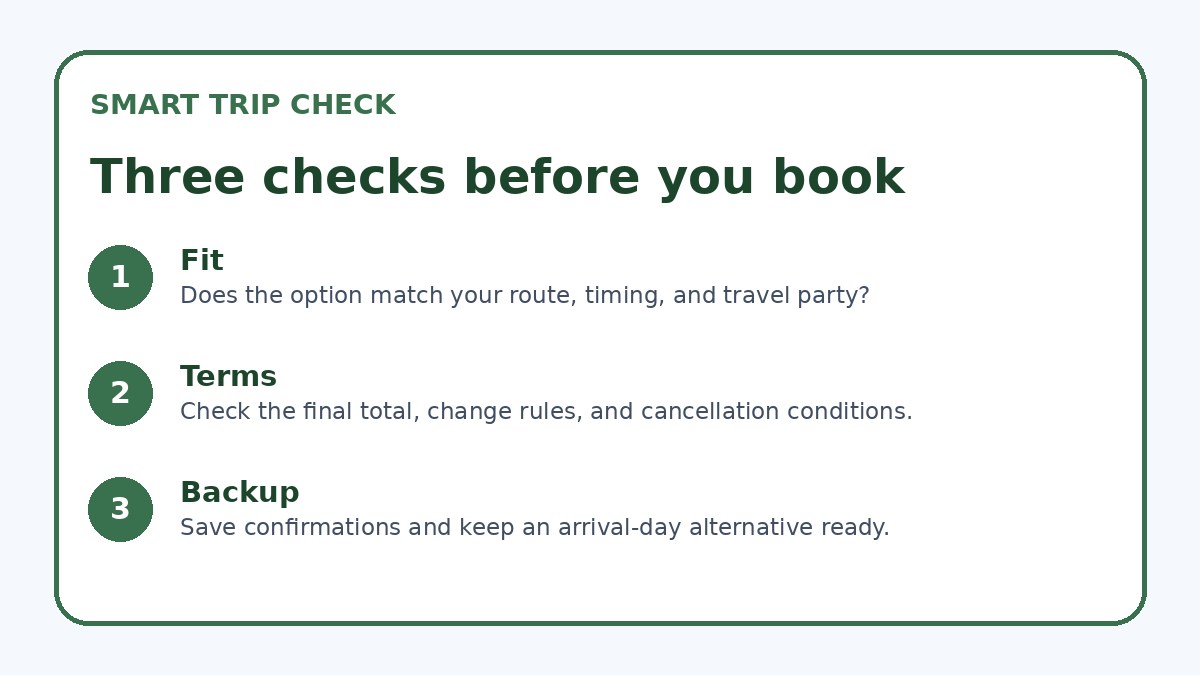
- List every major stop with estimated arrival times and mark which are hard to reach by public transport.
- Check driver eligibility: confirm license acceptance, whether an International Driving Permit is needed, and what documentation to carry.
- Request child seats in advance and verify they fit your children’s ages and weights; get confirmation in writing from the rental provider.
- Compare total costs including base rate, fuel, parking, tolls, insurance options, and any additional driver fees before deciding.
- Scout parking options near your top sites and choose accommodations with on-site or nearby parking if you plan to drive.
- Have a fallback plan: identify taxi stands, local transfer contacts, or a trusted tour operator in case driving becomes impractical.
What to verify and book before you go
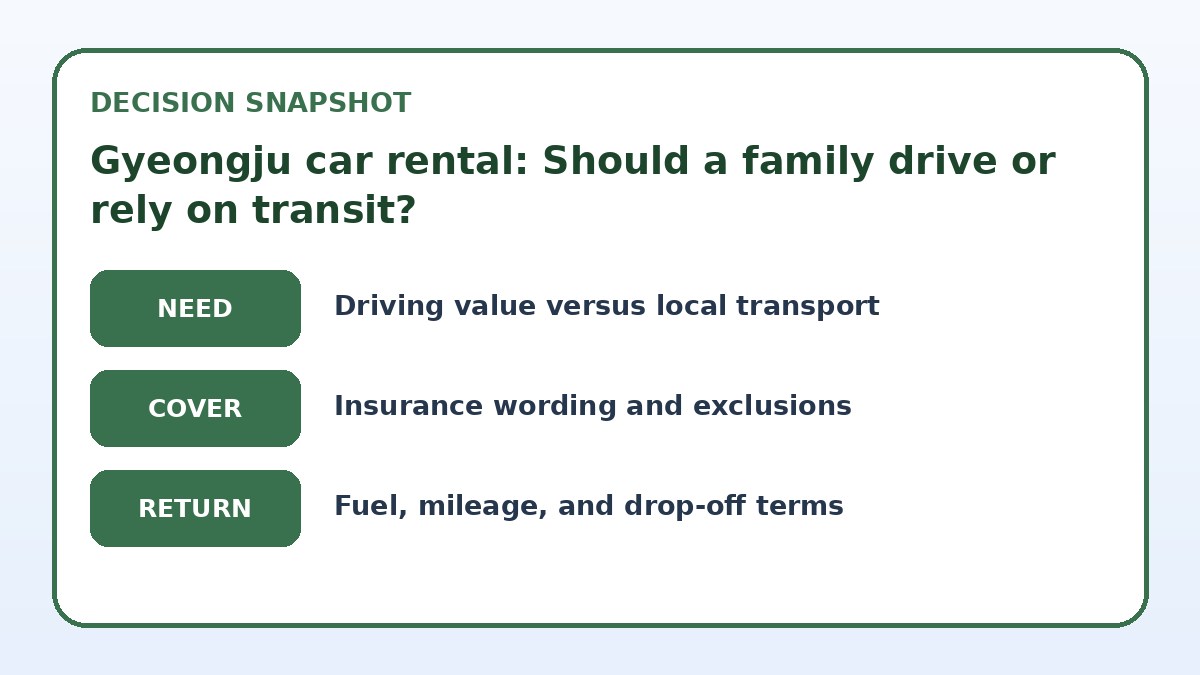
Before confirming anything, check the driver-eligibility rules, required permits, and insurance coverage for a rental in Korea. Verify whether your driver’s license is accepted or if an International Driving Permit or translated document is required. Read the rental company’s final booking page carefully: confirm pick-up/drop-off location flexibility, fuel policy, mileage limits, additional driver fees, child-seat availability, and how to handle roadside assistance. If you use a third-party site, cross-check terms on the provider’s own confirmation to avoid surprises.
Also confirm practical details that affect family comfort: whether car seats or booster seats can be fitted and whether they meet your safety standards. Ask about navigation options that support English and offline maps, and confirm where and how to return the car at your final location. If you plan to rely on public transport some days, check bus frequencies and taxi availability near your chosen stay, and use one comparison site such as Trip.com to review current availability and pick-up options before booking.
Frequently asked questions
Is driving in Gyeongju difficult for visitors who have never driven in Korea?
Driving in and around Gyeongju is manageable for cautious drivers but can require adjustment. Main roads connecting cities are straightforward, yet local streets near historic sites and coastal lanes may be narrow or busy. Familiarize yourself with signage, lane markings, and parking norms beforehand. If one adult will handle all driving, consider whether they are comfortable with longer stretches and night driving; otherwise plan for taxis or guided transfers. Always confirm license and permit rules with the rental company and carry documents while driving.
Will a rental car save time compared with buses and taxis for a family?
A rental car can save time for families visiting multiple dispersed sites in a single day, especially when public transport requires connections or long waits. It offers direct door-to-door travel and easier management of naps, stroller storage, and meal breaks. However, for compact itineraries focused on the central historic area, buses and taxis are often quicker overall because you avoid parking searches and unfamiliar traffic. Weigh how many long trips you have planned and how much you value schedule control versus relaxing between stops.
How should families choose the right vehicle size and extras for a Gyeongju trip?
Opt for a vehicle that comfortably fits everyone plus luggage and a stroller, with room for child seats and grocery or souvenir bags. An automatic transmission simplifies city driving. Request child seats or boosters in advance and confirm they meet safety standards and can be properly installed. Consider a vehicle with easy access (e.g., hatchback or SUV) if you’ll be loading strollers frequently. Also check for navigation with English support and whether the rental includes roadside assistance suitable for family peace of mind.
Final planning note
Deciding whether to rent a car in Gyeongju comes down to your family’s itinerary, driving confidence, and tolerance for added logistics. Choose a rental if your plan includes multiple distant sites, flexible nap-and-meal scheduling, or heavy luggage and stroller needs; the car reduces transfers and gives you control. If your stay is centered on the compact historic core and museums, public transport and taxis reduce stress and parking hassle. For many families the best solution is a hybrid: rely on buses and taxis for town days, then book a car for one or two long outings. Whatever you choose, verify driver permit rules, child-seat availability, insurance options, and return logistics on the rental provider’s final booking page to avoid surprises and keep the trip smooth.
Continue planning
Check current options and final conditions
Use the provider page to confirm live availability, the final total, cancellation terms, and every condition that matters to your trip.
This evergreen planning guide was created with AI-assisted drafting and a structured quality review. It does not display live prices, schedules, availability, visa guidance, or provider rankings. Verify current details before booking. Some links are affiliate links; we may earn a commission at no additional cost to you.