If you and your partner are deciding how to travel from London to Paris, the practical choice usually comes down to three priorities: total door-to-door time, comfort and convenience, and cost. A direct flight (or single-train ride if you consider rail) minimizes the stress of changing planes and gets you downtown faster, while a connecting option can reduce cash outlay or open a more convenient schedule. For couples, the added variables include luggage, mobility, and whether you want a relaxed journey or to save money for experiences in Paris. This article compares the tradeoffs and gives clear criteria to help you make the right booking decision for your relationship, itinerary, and travel style. If you need to check current connections and final booking conditions, compare options on provider pages or a comparison site like Trip.com before confirming.
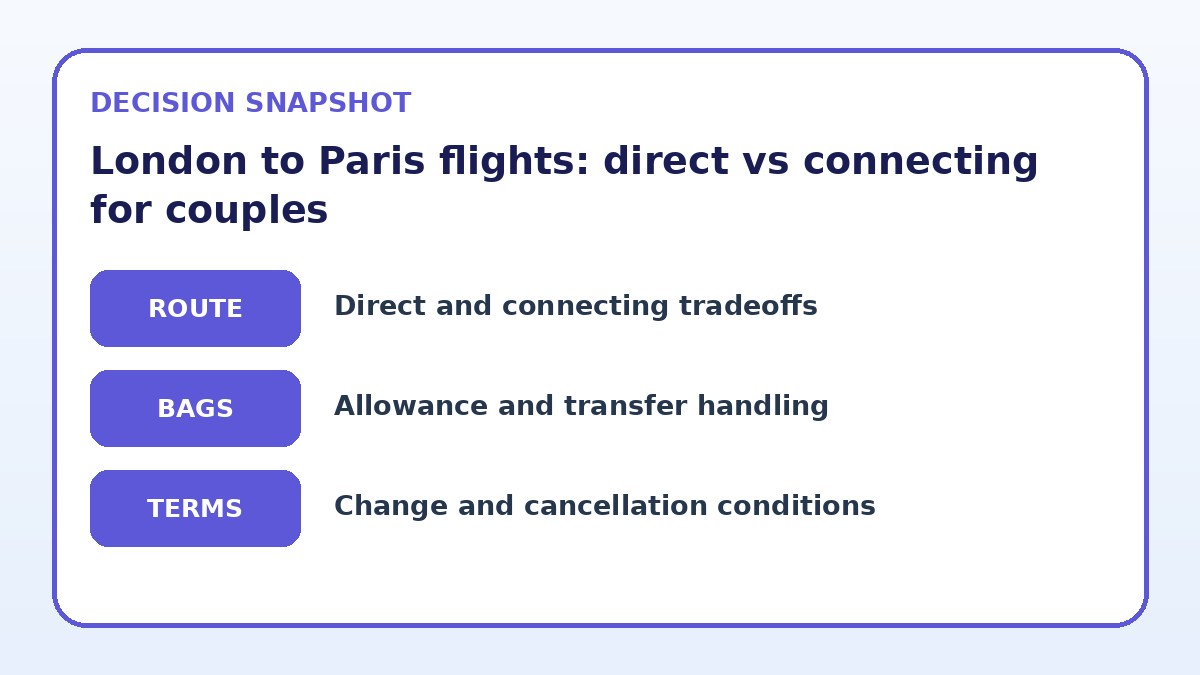
See current options before you compare the details
Availability and final conditions change. Open Trip.com now or keep reading for the practical comparison.
Time and convenience: how transfers change the clock
When you compare direct and connecting London to Paris flights, measure door-to-door time, not just airborne minutes. A direct flight often has fewer moving parts: you check in, pass security, board, and arrive. Connecting itineraries can shave off fare or fit awkward schedules, but each transfer adds waiting time, possible queueing, and the mental load of moving between gates or terminals. For couples, this means deciding whether you prefer a straightforward morning together or are willing to split the day with transit to save money or match flight windows.
Also consider airport transfers at each end. A direct flight to an outlying airport might require longer ground transfers, erasing some airborne savings. Similarly, a connecting route with a short layover can feel rushed, especially with luggage or picky connections. When planning, estimate total transit times (home to airport, security, transfer, and onward travel in the destination) and discuss with your partner what pace you want: relaxed and predictable, or flexible and potentially cheaper but with more logistic steps.
Comfort, privacy, and relationship-friendly travel choices
Couples often value the travel experience itself: time to chat, plan, or nap together. Direct flights generally provide uninterrupted travel time and fewer interruptions, which can be precious for reconnecting or starting a romantic trip smoothly. If you prefer private time en route, pick an option with your preferred seating configuration and fewer disruptions. For long waits during a connection, airport lounges or quiet spaces can help, so check lounge access and arrival/departure terminal layouts when you compare itineraries.
On the other hand, a connecting option can break a longer journey into manageable parts, which some couples enjoy as a mini-adventure—perhaps a quick coffee in a new airport lounge or a short walk together between gates. Consider physical comfort too: tight layovers encourage rushing and can amplify stress between travelers. Discuss mobility, health, and luggage needs beforehand, and choose transfers with reasonable layover buffers to keep the trip comfortable and avoid turning a romantic start into a logistical headache.
| Approach | Best for | Tradeoff to check |
|---|---|---|
| Direct flights | Couples who prioritize simplicity, shorter door-to-door time, and fewer stress points. | Often higher headline fares and fewer flexible scheduling options compared with multi-leg itineraries. |
| Connecting flights | Couples willing to trade convenience for lower fares or a preferred departure/arrival time. | More transfers increase the risk of delays, lost luggage, and longer total travel time. |
| Direct to a farther airport | Couples focused on cheaper tickets who don’t mind a longer ground transfer at one end. | Ground transfers can erase savings and add complexity when arriving tired or late. |
| Short connecting legs with long layovers | Couples who want to split the trip or add an impromptu stop without separate tickets. | Long layovers extend travel time and may require lounge access or extra spending for comfort. |
Ready to check the option that fits your plan?
Use your exact dates and traveler details so the provider page can show the current total and conditions.
Cost, flexibility, and hidden trade-offs
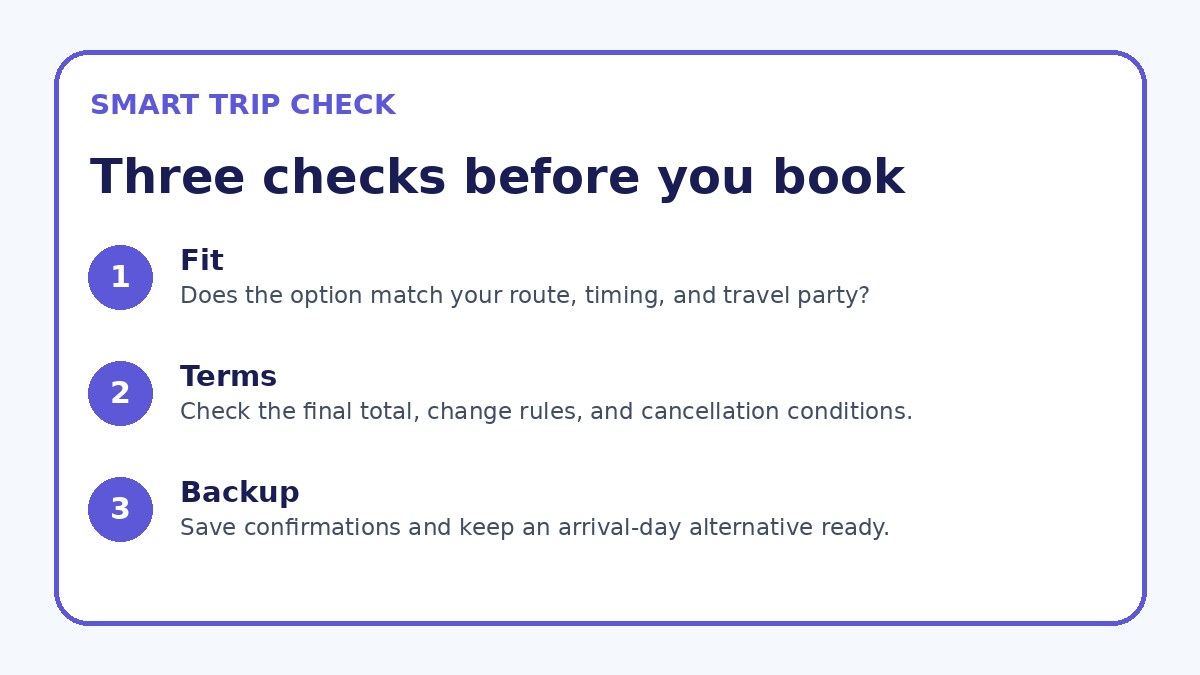
Price differences between direct and connecting options can be meaningful, but don’t treat the ticket price as the whole story. Factor in the potential cost of extra transfers: train or bus fares to distant airports, checked-bag fees that change by leg, and the value of your time. If one partner wants flexibility, prioritize refundable or changeable fares, and compare the rebooking rules on the provider’s final booking pages. Make sure you verify baggage rules, seat assignment fees, and change penalties before booking—these often differ between direct and multi-leg tickets and materially affect value.
Also think about the hidden convenience costs. A cheaper connecting itinerary that arrives late at night may require a taxi or an extra night’s accommodation in Paris; a direct daytime option might let you reach your hotel using public transport. If your schedule is tight because of reservations or tours booked in Paris, the small premium for a direct option can be worth avoiding the anxiety of tight connections. Use a comparison site like Trip.com only as an initial filter, then check the operating carrier and fare conditions on the provider’s page to confirm final terms.
Before you book
- Estimate door-to-door time for each itinerary, including home transfer, security queues, and ground transport at both airports.
- Compare total cost of travel by adding baggage fees, airport transfers, lounge access, and any overnight needs to the base fare.
- Confirm whether both legs are on one ticket; if not, plan for missed-connection risk and insurance options.
- Check exact terminals and minimum connection times on the carrier’s final booking page before selecting a connecting itinerary.
- Request assistance or special seating in advance if either partner needs mobility help, and verify the service applies for each leg.
- Pack essentials (meds, phone chargers, a change of clothes) in carry-on luggage in case checked bags are delayed on a connection.
Safety, risk management, and booking nitty-gritty for couples
Connecting itineraries introduce additional points of failure: missed connections due to delays, lost luggage during transfers, or unclear minimum connection times between terminals. For couples traveling together, decide in advance who will handle logistics like checking airport monitors, confirming gate changes, and moving luggage—clear roles reduce stress during a tight schedule. Verify whether connections are on the same ticket; single-ticket itineraries often protect you if one leg is delayed, while combining separate tickets can increase risk if delays cause you to miss a subsequent leg.
Before you click confirm, check practical details on the operating carrier’s final booking page and note exact airport terminals, minimum connection times recommended by the airline, luggage policies, and any transfer procedures. If assistance is needed (wheelchair, wheelchair-adjacent mobility help, or priority transfer), request it in advance and confirm that the service applies for each leg. Finally, build a small buffer in your schedule for unforeseen delays and pack essential items in your carry-on to avoid a missed connection turning into a lost-romance moment.
Frequently asked questions
Are direct flights always faster between London and Paris for couples?
Not always. Direct flights remove the transfer step but you should compare total door-to-door time, not just flight duration. A direct flight to a farther airport or one that departs at an inconvenient time can end up taking as long as a connecting option that uses closer airports and efficient transfers. For couples, consider how tired you’ll be on arrival and whether a longer pre- or post-flight transfer undermines the benefit of a non-stop sector. Always check ground transfer durations and the full itinerary before choosing.
How should couples decide if a cheaper connecting flight is worth the risk?
Weigh savings against added complexity and emotional cost. Calculate monetary savings after accounting for potential extra transfers, baggage fees, and late-night transport. Discuss with your partner how you handle travel stress—if tight schedules or extra steps provoke arguments, the cheaper ticket may not be worth it. Also check whether both legs are on a single ticket (which offers more protection for missed connections) and read the provider’s change and cancellation policies on their final booking page before booking.
What practical tips help couples stay relaxed during connecting itineraries?
Agree roles ahead of time—who watches boarding times, who moves the luggage, and who keeps documents handy. Build a sensible layover buffer: avoid extremely short connections and allow time for security checks, possible re-screening, or terminal transfers. Keep essential items in carry-on bags, and download boarding passes and arrival maps before you travel. Consider paying for lounge access if layovers are long; a quiet place to regroup together can transform waiting into a pleasant pause rather than a stress point.
Final planning note
For couples traveling between London and Paris, the decision usually hinges on whether you value simplicity and shared comfort or are willing to accept more moving parts to save money or match a schedule. Direct options reduce stress and total travel complexity, which makes them a strong choice for short trips, special occasions, or when either partner prefers a low‑hassle start. Connecting itineraries can be a sensible alternative when they offer real savings or better timing, but require more planning, clear role-sharing, and verification of ticketing and baggage rules. Before booking, compare total door‑to‑door time, all ancillary costs, and the provider’s conditions on the final booking page—then pick the option that keeps your travel energy focused on enjoying Paris together.
Continue planning
Check current options and final conditions
Use the provider page to confirm live availability, the final total, cancellation terms, and every condition that matters to your trip.
This evergreen planning guide was created with AI-assisted drafting and a structured quality review. It does not display live prices, schedules, availability, visa guidance, or provider rankings. Verify current details before booking. Some links are affiliate links; we may earn a commission at no additional cost to you.