If your family is planning ground travel between Sydney and Melbourne, start by deciding the trip shape: single long transfer, staged multi-city route with stops, or a home-base plus day trips. Practicality matters more than novelty—consider how much time you have, how well the kids tolerate long drives or rail journeys, and whether you want to break the trip into shorter legs to explore regional towns. This article gives an actionable plan: how to compare direct versus multi-stop ground options, how to balance travel time with family needs, and what to check on booking pages before committing. Use these steps to build a route that fits naptimes, activities, and luggage realities, and verify current schedules and seat/berth availability on the provider’s final booking page (you can compare options on Trip.com if you like).
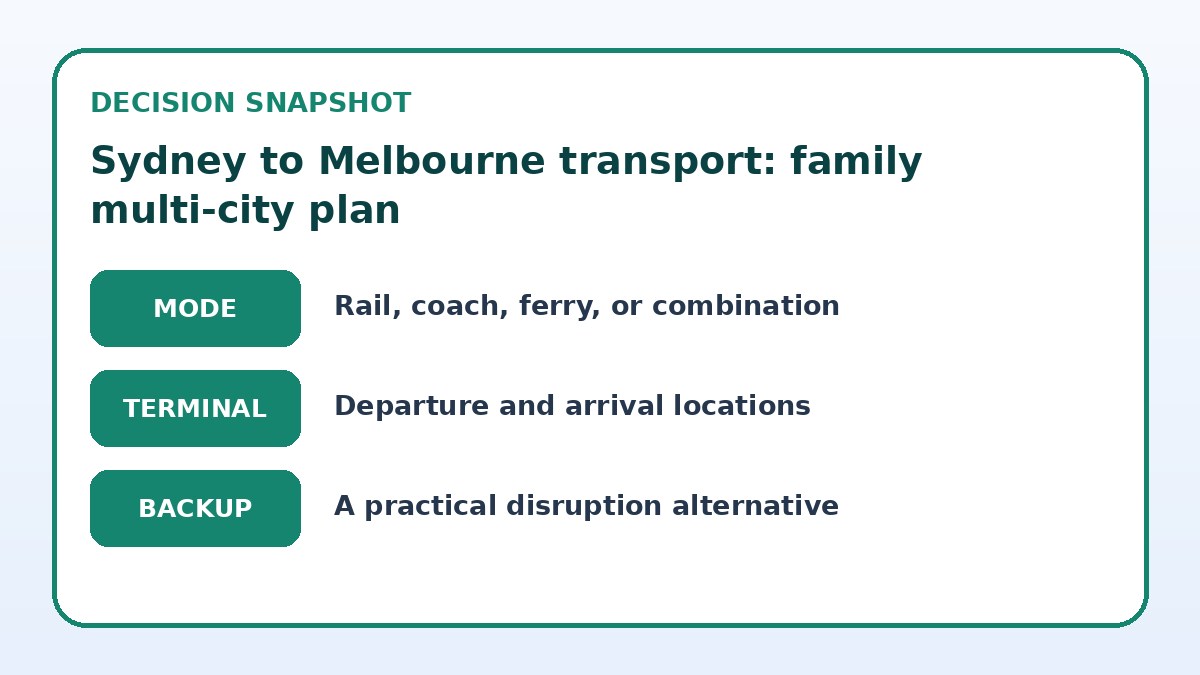
See current options before you compare the details
Availability and final conditions change. Open Trip.com now or keep reading for the practical comparison.
Choose the route shape that fits your family
Start by selecting the overall route shape: direct transfer, multi-stop corridor, or hub-and-spoke day trips. A direct ground transfer minimizes planning complexity and the number of embarkations and disembarkations—helpful when you’re managing young children and lots of luggage. A multi-stop corridor breaks the journey into manageable daily distances so kids have time to burn off energy in between travel legs. Hub-and-spoke suits families who want a stable base (for example in a coastal town) and shorter day excursions rather than moving hotels every night.
When choosing route shape, weigh your family’s tolerance for packing and unpacking, driving or sitting time per day, and interest in local stops. Multi-day legs let you book family-friendly accommodation with kitchen facilities and laundry, which can reduce stress. If any traveler has mobility needs or you rely on a stroller, fewer transfers and direct transfers reduce the number of times you must lift luggage and fold equipment. Make the route match the youngest traveler’s routine first—meals and naps dictate acceptable travel windows.
Decide between train, coach, or car legs
Compare the main ground modes—rail, long-distance coach, and private car—on the family criteria you care about: space, flexibility, onboard facilities, and how interruptions affect children. Trains typically offer more room to move, restrooms, and the ability to walk around, which helps restless kids. Coaches can be more economical and may serve towns not on the rail line, but they usually have less space for moving around. Driving gives you maximum schedule control and easier access to remote stops, but it requires someone to stay alert and can be tiring over long distances.
Think in terms of mixed-mode itineraries: a train for the longer intercity stretch plus a rental car for regional exploring, or driving one day and taking rail on another to reduce fatigue. For each candidate leg, list what matters most: leg length, likely departure/arrival times relative to family routines, luggage transfer complexity, and whether you need child seats. If you plan to rent a car at a stop, verify child-seat availability and installation rules before you commit to that leg.
| Approach | Best for | Tradeoff to check |
|---|---|---|
| Direct long leg (train or coach) | Families seeking fewer transfers and simpler logistics | Long time on board can be hard for restless children; fewer local stops |
| Multi-stop staged route | Families who prefer shorter daily travel and local exploration | More hotel changes and planning required; higher chance of delays affecting multiple legs |
| Drive-only road trip | Families needing schedule flexibility and remote stop access | Driver fatigue risk and more hands-on responsibility for navigation and safety |
| Mixed-mode (train plus rental car) | Families wanting comfortable long legs and flexible local mobility | Requires coordination at transfer points and verification of car-seat and luggage rules |
Ready to check the option that fits your plan?
Use your exact dates and traveler details so the provider page can show the current total and conditions.
Plan stops and overnight stays strategically
When mapping multi-city stops between Sydney and Melbourne, prioritize towns with services families need—supermarkets, medical centres, playgrounds, and family-friendly accommodation. Aim for daily driving or travel legs that fit children’s awake windows: late mornings or early afternoons often work better than long overnight transfers for small kids who sleep unpredictably. Choose at least one longer stop where you can unpack for two nights; this reduces the churn of hotel transitions and gives everyone time to recover.
Use local attractions as natural break points rather than packing the schedule with long sightseeing lists. Allow buffer time for delays, toilet stops, and unexpected rests. If you’re booking accommodation, look for family rooms, self-catering units, or adjoining rooms so everyone has space. Confirm amenities that matter—washer/dryer access, kitchen facilities, and quiet rooms away from busy roads—on the provider’s booking page before finalizing.
Before you book
- Sketch your desired trip shape (direct, staged, or hub-and-spoke) and pencil in realistic daily travel windows for kids’ meals and naps.
- For each leg, write down three must-have criteria (seat space, luggage allowance, stroller policy) and verify them on the booking page.
- Identify at least one two-night base stop to reduce hotel changes and make bookings that offer kitchen or laundry access.
- If renting a car, reserve an appropriate child seat in advance and confirm installation instructions with the provider.
- Save screenshots or PDFs of booking pages showing seat assignments, cancellation terms, and contact numbers for on-trip assistance.
- Map fueling or service stops if driving, and note local emergency numbers and nearest medical facilities for every overnight stop.
What to verify before booking each leg
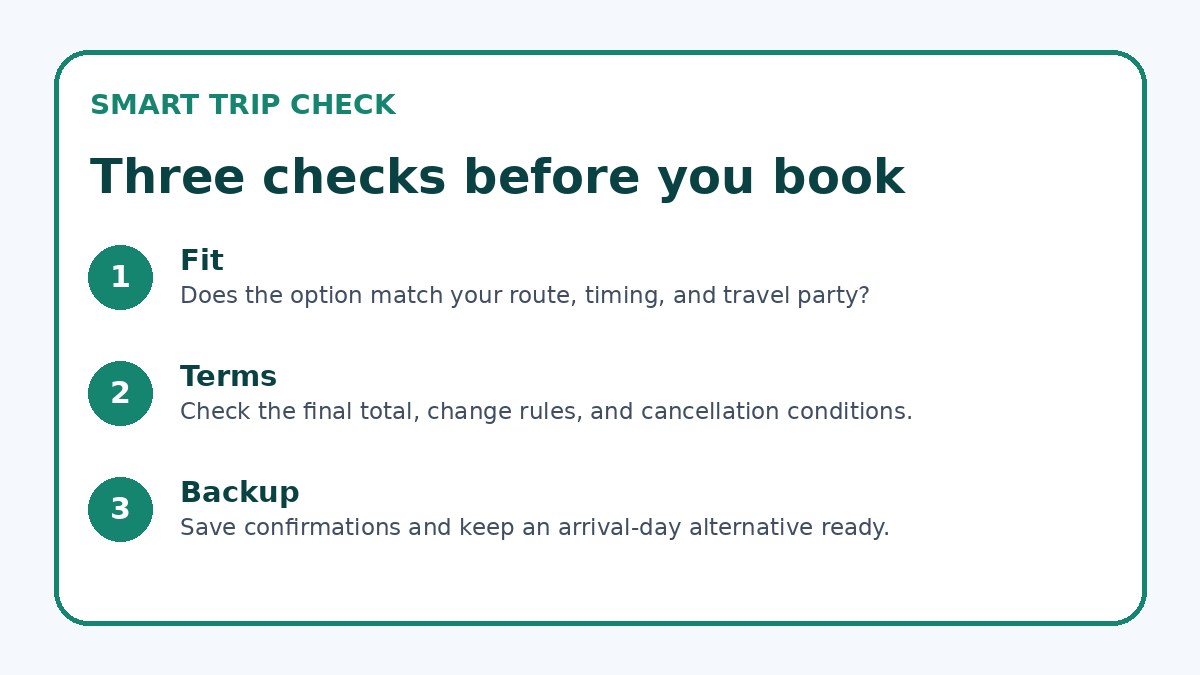
On every provider’s final booking page check the exact seat/berth allocation process, stroller and pram policies, luggage limits, refund and change terms, and boarding procedures. For trains and coaches confirm whether you receive assigned seats, how many carry-on items and large bags are allowed, and if there are family or child fares that require proof. For rental cars verify child-seat fit, additional driver rules, mileage limits, and drop-off fees if you plan a one-way journey.
Also check pickup and drop-off locations carefully—stations versus coach terminals versus rental-car depots can be in different parts of a town. Confirm how transfers between modes work, such as whether luggage is transferred for you or must be collected and rechecked. If you need assistance—mobility help, baby buggies, or on-board meals—contact the provider directly to get written confirmation and retain screenshots or booking references.
Frequently asked questions
How do I choose between taking a train or driving with kids between Sydney and Melbourne?
Decide by weighing control versus comfort: driving gives schedule control, door-to-door flexibility, and easier access to remote stops, but it places burden on the driver and can be tiring on long days. Trains reduce driving fatigue and often allow kids to move around and use restrooms freely, yet you’ll be constrained by timetables and station locations. Consider the ages of children, how well they sit for extended periods, luggage needs, and whether nearby stops are reachable without a car. Compare those factors on actual provider pages before booking.
Is it better to stop overnight or do day trips from a single base between Sydney and Melbourne?
Stopping overnight in several towns reduces single-day travel time and can make schedules easier for families, particularly with young children who benefit from predictable routines. Using a single base with day trips offers packing simplicity and less hotel switching, but it increases daily travel to attractions and may mean longer time in the car each day. Choose an approach that matches your children’s tolerance for time-on-the-move and your desire for deep exploration versus a relaxed rhythm.
What documentation and preparations help reduce stress on ground transfers?
Bring printed or offline copies of bookings, confirmations of seat assignments, and photos of car-seat instructions or special assistance arrangements. Pack a well-organized travel kit: snacks, water bottles, activity packs, spare clothes, basic first-aid, and a compact blanket. Check and document luggage allowances and stroller rules before you travel. If any family member needs medical care or mobility assistance, contact the provider in advance and keep emergency contact information and local medical addresses handy.
Final planning note
A useful Sydney to Melbourne ground-transport plan for families starts with the right trip shape: direct transfer, multi-stop corridor, or a hub-and-spoke base. Match that shape to how your kids tolerate travel, how much luggage and equipment you must move, and which stops will give you the services you need. Decide on modes by comparing comfort, flexibility, and whether staff or infrastructure will help with strollers and child seats. Before you book, verify seat assignments, luggage limits, stroller policies, and change/cancellation terms on each provider’s final booking page. Use the checklist above to lock down practical details and keep backup plans for delays or sudden needs.
Continue planning
Check current options and final conditions
Use the provider page to confirm live availability, the final total, cancellation terms, and every condition that matters to your trip.
This evergreen planning guide was created with AI-assisted drafting and a structured quality review. It does not display live prices, schedules, availability, visa guidance, or provider rankings. Verify current details before booking. Some links are affiliate links; we may earn a commission at no additional cost to you.