
If you want a quieter, more romantic Osaka trip for two without gambling on specific discounts, plan for the shoulder months—late March to early April and mid-October to November—and prioritize refundable or changeable flights and centrally located hotels with easy train access. Practically, search fares for weekday travel windows, favor hotels near a major station (Namba, Umeda, or Tennoji) to cut transit time, and book refundable rail passes or low-penalty fares when available. These steps give you flexibility and the best chance to secure deals without losing sanity over sold-out dates or sudden schedule changes.
The tradeoff is simple: traveling in shoulders usually means steadier availability and more comfortable weather, but fewer mass promotions than deep off-season. You’ll need to balance slightly higher base demand in peak-adjacent weeks against the benefits of better daylight and milder temperatures. Below I’ll walk through how couples should compare flight timing, neighborhood vibes, hotel cancellation rules, and local activities so you can choose the combination that fits your rhythm and budget priorities.
See current options before you compare the details
Availability and final conditions change. Open Trip.com now or keep reading for the practical comparison.
When shoulder seasons make sense for couples
Shoulder seasons work well for couples who value a more relaxed pace, comfortable weather and reasonable availability without committing to deep off-season tradeoffs. Osaka’s shoulder periods offer fewer crowd pressure points at iconic spots like Dotonbori and Osaka Castle while still delivering pleasant temperatures for walking, café stops and evening riverside strolls. If you prefer to avoid jam-packed weekends and want better photo opportunities, choose midweek nights during shoulders and aim for shorter stays of three to five nights to keep plans manageable.
The couple’s tradeoff involves tempering expectations about rock-bottom discounts: while you often won’t see the steepest bargain-bin fares, you gain options—refundable fares, midrange hotels with flexible policies, and a simpler itinerary. Shoulder travel also reduces the chance of weather extremes interfering with outdoor plans and gives you breathing room to upgrade or reschedule without exorbitant penalties. Use the shoulder window to blend a few must-see attractions with slow, unprogrammed time together.
Choosing neighborhoods and the convenience tradeoff
Your neighborhood choice defines how you spend time. For couples seeking nightlife, food variety and neon-drenched walks, Namba puts Dotonbori, Shinsekai and many izakaya streets within walking distance. Umeda centers you on department stores, sky observatories and major rail links—handy if you plan day trips outside Osaka. Tennoji and nearby Shin-Imamiya offer a quieter, more residential feel and easy access to parks and museums. Decide whether you want lively evenings or calm mornings, and weigh that against the walkability and transit time to your top attractions.
The practical decision is a time-versus-atmosphere tradeoff: staying in the busiest districts shortens evening transfers but costs more and can be noisier; quieter neighborhoods save money and provide more intimacy but add 10–25 minutes on trains or subways. For shoulder-season travel, central districts often have more last-minute availability at reasonable rates, while quieter areas may show better long-term value. Look at two or three hotels near a station and compare total commute times for your planned activities rather than judging solely by nightly rate.
| Approach | Best for | Tradeoff to check |
|---|---|---|
| Flexible fares + central hotel | Couples who prioritize stress-free plans and walkable evenings | Usually higher base cost but minimal transfer time and easy day adjustments |
| Cheapest available fares + quieter neighborhood | Price-conscious couples willing to add short commutes | More transit time and less spontaneous evening flexibility |
| Direct flights + midrange hotel | Couples valuing short overall travel time and reliable arrival | Potentially higher airfare but simpler logistics and less travel fatigue |
| One-connection flights + refundable hotel rate | Couples balancing lower fares with booking flexibility | Longer door-to-door time but easier to change plans if needed |
Ready to check the option that fits your plan?
Use your exact dates and traveler details so the provider page can show the current total and conditions.
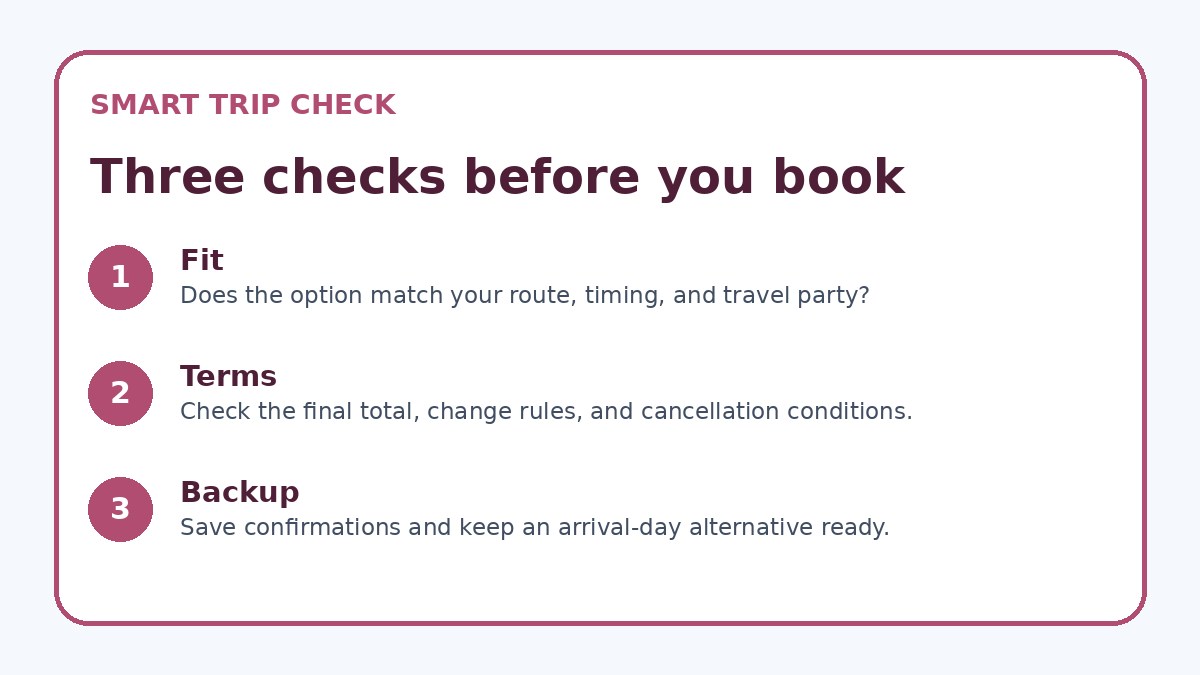
Flights, connections, and the flexibility checklist
When searching flights for shoulder travel, compare direct and one-connection options by total travel time, overnight comfort and the risk of tight connections. Couples usually prefer fewer transfers to reduce stress, but a well-timed connection may lower cost or unlock more convenient arrival times. Always check the provider’s final booking page for baggage allowances, change and cancellation penalties, and whether seats are assigned; those details often determine whether a cheaper ticket is truly suitable for a flexible couple’s itinerary.
If you’re willing to accept a mid-length layover for better fares, build in buffer time at each connection and avoid tight same-day connections when possible. Consider booking tickets with short, clear rules for changes rather than the absolute cheapest nonrefundable fares; the shoulder-season aim is flexibility. Before finalizing, verify which airports you’ll use for arrival and departure, transfer options between airports and the last public transit times, since late-night arrivals can add taxi costs or require a different hotel plan.
Before you book
- Compare refundable and nonrefundable flight fares and note exact change/cancellation rules on the airline’s final booking page.
- Pick two preferred neighborhoods and list travel times from each to your top three activities using local transit schedules.
- Reserve a hotel with at least 48–72 hour free cancellation or a flexible rate that fits your risk tolerance.
- Search flight arrival/departure times against last public transit runs and plan a backup transfer option for late arrivals.
- If taking day trips, check which train passes or local IC cards cover your planned routes and verify activation rules.
- Set a soft itinerary with one unplanned day for wandering, reservation-free meals, or sudden weather changes.
How to compare hotel cancellation policies and extras
For shoulder-season planning, prioritize hotels with clear, reasonable cancellation or modification terms rather than focusing only on the lowest rate. Many properties publish several rate types—nonrefundable, partially refundable, or fully refundable up to a set date—so compare the effective break-even: how much you save on a nonrefundable rate versus the cost of changing or canceling. Couples who want low-stress scheduling should favor at least 48–72 hour free cancellation for unforeseen shifts or to take advantage of last-minute deals safely.
Also compare what matters most to your couple’s comfort: breakfast included, room size, early check-in or late check-out policies, and proximity to convenient metro lines. If you plan day trips, look for hotels that hold luggage after checkout. When provider-specific facts matter—like shuttle schedules, breakfast times, or pet policies—verify those exact details on the hotel’s booking page before paying. Trip.com is one place to compare current availability, but always confirm final policies on the property’s or airline’s official booking channel.
Frequently asked questions
How far in advance should couples book Osaka travel deals during shoulder seasons?
Booking timing depends on your priorities. If you want a specific hotel room type or a Saturday-night stay in a compact central district, book earlier—about two to three months out—to lock availability and preferred room layouts. If your dates are flexible within the shoulder windows and you value refundable options, you can wait a few weeks to compare fares and short-term promotions. Always check the airline and hotel cancellation and change rules before committing, and remember that special events can shorten the typical shoulder-season window.
Should we prioritize location or hotel amenities when planning a romantic Osaka trip?
Prioritize location if your core plan is easy evenings together, quick access to restaurants and short walks after dinner. A central hotel reduces transit time and maximizes spontaneous evenings. If you and your partner value in-room privacy, on-site dining or a bigger room for downtime, prioritize those amenities. For shoulder-season trips, you often get more amenity choice without peak crowd premiums, so balance the tradeoff by narrowing to two must-have amenities and then choosing the best-located property that offers them.
What’s the best way to compare direct versus connecting flights for Osaka?
Compare total door-to-door time, the inconvenience cost of transfers, and the airline’s change/cancellation flexibility. Direct flights reduce connection risk and travel fatigue, which is useful for short trips, while one-connection itineraries sometimes lower fares or offer better departure times. Factor in the layover length, potential overnight connections, and whether you can realistically make a tight connection. Before booking, verify baggage transfer rules, minimum connection times the airline enforces, and check the final booking page for seat selection and change fees.
Final planning note
Planning Osaka travel deals around shoulder seasons gives couples a comfortable balance of milder weather, manageable crowds and better availability of flexible rates. The practical approach is to prioritize refundable or change-friendly flight options, pick a hotel location that matches your evening atmosphere priorities, and allow one unstructured day to enjoy Osaka at a relaxed pace. Compare direct and connecting flights by door-to-door time and risk tolerance, and read the provider’s booking page carefully for cancellation and baggage details. Small planning choices—central hotel vs. quieter neighborhood, refundable fare vs. lowest rate—determine whether your trip feels effortless or rushed, so choose the combination that matches how you like to travel together.
Continue planning
Check current options and final conditions
Use the provider page to confirm live availability, the final total, cancellation terms, and every condition that matters to your trip.
This evergreen planning guide was created with AI-assisted drafting and a structured quality review. It does not display live prices, schedules, availability, visa guidance, or provider rankings. Verify current details before booking. Some links are affiliate links; we may earn a commission at no additional cost to you.