If you’re flying solo from Seoul to Bangkok, the practical choice is to prioritize flexibility and clarity about change and cancellation terms before you commit. Airlines and online travel agencies sell fares that look similar but can differ wildly in whether you can change dates, get a voucher, or receive a refund—and how much that will cost. Start by deciding how important free date changes are to you, then compare refundable fares, change-fee policies, and the fine print on baggage and seat reassignments. Keep a shortlist of three booking options: a flexible fare, a low-cost nonrefundable fare with add-on flexibility, and a mid-range fare with a moderate penalty. Verify final rules on the airline or OTA booking page, and consider a small insurance policy only to cover incidents that the ticket doesn’t.
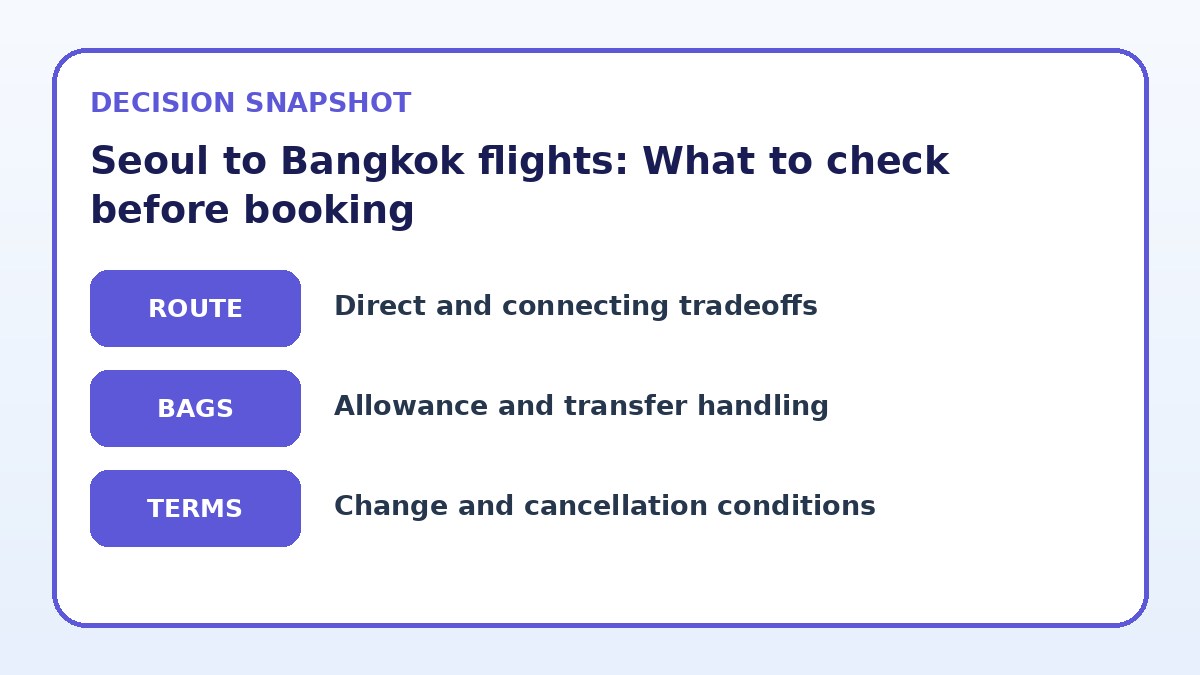
See current options before you compare the details
Availability and final conditions change. Open Trip.com now or keep reading for the practical comparison.
Start with the exact fare rules, not just the price
Headline fares tempt solo travelers, but the fare class and the explicit contract language on changes and cancellations are what matter. Look for a “fare rules” or “conditions” link on the booking page and read the parts about date changes, name changes, cancellations, refunds, and reissue fees. Note whether the airline allows free date changes within a certain window, whether any change results in a fare difference payment, and whether vouchers are offered in place of cash refunds. These specifics determine your real flexibility: a low-cost fare with a small change fee can still become expensive if the airline charges the full fare difference on rebooking.
If you’re using an online travel agent, check their separate change policies as well—some agencies add their own service fees or require you to process changes through them rather than directly with the airline. Save or screenshot the fare rules and the purchase confirmation that contains them; these documents are the evidence you’ll use if there’s a dispute. Finally, pay attention to deadlines (how soon you must request a change) and whether refund processing times are quoted, since solo travelers often need a clear timeline to plan onward arrangements.
Deciding between refundable, flexible, and basic fares
Refundable fares give the clearest route to getting money back but they are usually pricier. For solo travelers who value certainty—if your itinerary depends on exact work or health commitments—refundable tickets reduce stress because cancellations return at least part of your funds to the original payment method, subject to the fare rules. Flexible or semi-flexible fares often allow one date change without a fee or only a nominal admin charge, making them a middle ground: cheaper than fully refundable fares but better than rock-bottom fares that carry high penalties for changes or cancellations.
Basic nonrefundable fares can be attractive when your plans are solid, but they require careful calculation: add-up the change fees, any seat or baggage charges you’ll need, and the cost of alternative flights if you must rebook. If a single date change is likely, compare the price difference between a flexible fare and a basic fare plus an anticipated change fee. Solo travelers should also consider the hassle factor—who handles the change if you need assistance at odd hours? Flexible fares often include easier handling and sometimes dedicated customer support.
| Approach | Best for | Tradeoff to check |
|---|---|---|
| Buy a refundable fare | Travelers who need the highest cancellation certainty | Higher upfront cost but easier cash refunds and fewer disputes |
| Choose a flexible fare with free changes | Travelers who might shift dates but want lower cost than refundable tickets | Moderate premium; may still require fare difference payment on rebooking |
| Pick a cheap nonrefundable fare + insurance | Travelers with stable plans wanting to minimize ticket cost while covering specific risks | Savings if no change needed; insurance may not cover all cancellation causes |
| Book separate legs to save and accept rebooking risk | Experienced solo travelers focused on lowest fare and longer layover buffers | No protection for missed connections; multiple change rules to manage |
Ready to check the option that fits your plan?
Use your exact dates and traveler details so the provider page can show the current total and conditions.
Connecting flights and carrier responsibilities
Don’t assume that a single booking equals single responsibility. If your Seoul to Bangkok trip includes a connection—whether through another Asian hub or a partner airline—check who issued the ticket and which carrier’s contract of carriage applies. If all segments are on one carrier or marketed/operated by partners in a single itinerary, the operating carrier typically handles delays and rebooking. But if you piece together separate tickets, each segment’s change and cancellation terms apply independently, and you could be left to rebook a missed connection at your expense.
When comparing options, weigh the risk of separate tickets against savings. A connecting itinerary sold as one ticket usually offers protected connections and reissue rules under the issuing carrier’s policy. Verify which carrier shows as the ticketing carrier and read both the marketing and operating carrier rules on changes. Always confirm the minimum connection time the carrier suggests, and when booking separate legs leave a generous buffer to account for delays—solo travelers have fewer shoulders to rely on when flights are missed.
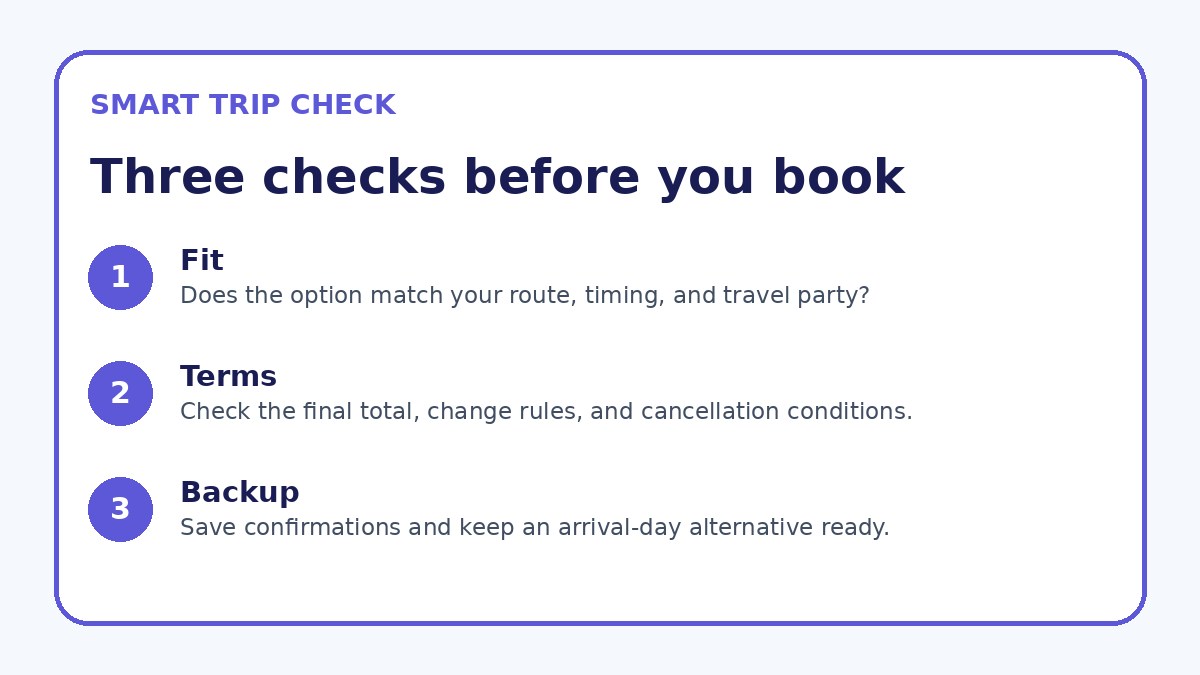
Before you book
- Open the fare rules PDF or conditions link and screenshot the change, cancellation, and refund sections before you pay.
- Compare total landed cost: base fare plus expected change fees, seat selection, baggage, and any agency service fees.
- If booking through an OTA, confirm whether changes must go through the OTA or the airline and save OTA contact details.
- Decide whether to buy airline waiver add-ons or independent travel insurance and save policy numbers and claim instructions.
- When an itinerary includes connections, verify which carrier is the ticketing carrier and read the operating carrier’s rebooking rules.
- After purchase, download and keep the e-ticket, fare rules screenshot, payment receipt, and any waiver/insurance confirmation in a single folder.
Using insurance and add-ons intelligently
Trip insurance can fill gaps that airline fare rules don’t cover—such as cancellations due to illness, certain work emergencies, or some travel suppliers failing. But insurance policies vary in coverage, exclusions, and claim procedures; read the policy’s cancellation triggers, the time limits for filing claims, and whether missed connections caused by third-party delays are covered. For many solo travelers, a narrow short-term policy that covers specific risks (illness or work cancellation) can be more cost-effective than blanket cancellation protection bundled into an expensive fare.
Some airlines and OTAs sell waivers or refundable bundles as add-ons during booking. These can be useful if they clearly state what changes are permitted, any limits on how often you can change, and how refunds are handled. Always verify on the final airline or agency booking page whether the waiver is refundable itself and whether the waiver covers only date changes or also full cancellations. If you do buy a waiver or insurance, store policy numbers, contact lines, and the exact wording of covered events in your travel notes.
Frequently asked questions
How do I quickly tell if a Seoul to Bangkok fare allows free date changes?
Look for explicit language on the booking page such as “free changes” or “no change fee” and open the detailed fare rules to confirm whether changes are allowed without a fee and within what time window. Some fares allow one free date change but still require you to pay any difference in fare; others permit changes only to the same season or cabin. If you’re booking through an OTA, find the agency’s terms about processing changes—OTAs sometimes add service fees or route you to the airline for final processing. Always save screenshots of the wording that appears when you buy.
If I need to cancel, when will I receive a refund for a refundable ticket?
Refund timing varies by airline and payment method; many carriers quote processing times in their fare rules or refund policy, but these are estimates rather than guarantees. Refunds typically return to the original payment method; some airlines issue vouchers instead depending on the ticket type or current policies. When the timing matters, confirm the airline’s stated refund timeline on the booking confirmation and ask customer service for an estimate. Keep copies of your ticket, confirmation emails, and any refund reference numbers to follow up if the refund is delayed.
Should I rely on travel insurance instead of buying a flexible ticket?
It depends on the risks you want covered. Travel insurance can reimburse nonrefundable ticket costs for covered reasons like sudden illness or specified emergencies, but policies exclude many common causes such as voluntary work changes or pre-existing conditions without prior disclosure. A flexible ticket guarantees you can change dates under the carrier’s rules—insurance does not change the airline’s contract of carriage. For solo travelers, a cost-effective approach is to buy a cheaper ticket and add a targeted insurance policy if you’re worried about specific cancellation scenarios; always read the policy’s covered reasons and claims process.
Final planning note
Solo travelers planning Seoul to Bangkok flights benefit most from clarity and a short decision checklist: read the fare rules, compare flexible and refundable options against likely change scenarios, and verify who handles changes when booking through an OTA. If your schedule could shift, favor fares that explicitly allow free or low-cost date changes or buy a waiver that states exactly what it covers. Use targeted travel insurance to cover specific personal risks the ticket won’t, and keep screenshots and confirmation emails to avoid disputes. Finally, before you pay, re-open the airline’s final booking page and confirm the exact change, cancellation, and refund terms—those words govern what happens if plans change.
Continue planning
Check current options and final conditions
Use the provider page to confirm live availability, the final total, cancellation terms, and every condition that matters to your trip.
This evergreen planning guide was created with AI-assisted drafting and a structured quality review. It does not display live prices, schedules, availability, visa guidance, or provider rankings. Verify current details before booking. Some links are affiliate links; we may earn a commission at no additional cost to you.