
If you’re planning your first trip to Paris, prioritize clarity on cancellation and change rules before you commit to a flight, train, or hotel. The practical answer: choose a refundable or change-friendly option when uncertainty is high, and use a cheaper nonrefundable fare only if your dates are locked and you can absorb the loss or resell. Read the exact penalty, the time window for free changes, and whether vouchers are offered instead of cash refunds. Make booking decisions based on how likely your plans are to shift, how much flexibility the provider actually sells on the checkout page, and whether travel insurance or a credit card will backstop cancellations. Below I explain tradeoffs, decision criteria, and step-by-step checks so you can compare Paris travel deals with confidence.
See current options before you compare the details
Availability and final conditions change. Open Trip.com now or keep reading for the practical comparison.
How to read cancellation language on Paris travel deals
Cancellation terms use several common phrases—refundable, partially refundable, nonrefundable, changeable with fee, and voucher-only refund. When you see these on a fare or hotel rate, open the full terms and conditions on the booking page and read three specifics: the time window for penalty-free changes or cancellations, the exact fee or percentage retained, and whether the refund is returned to your original payment method or issued as a supplier voucher. Also check whether some changes (like modifying passenger names, dates, or room types) are prohibited or treated differently; hotels may allow free date moves for some restricted rates but not others.
Don’t rely on summary labels alone. Many booking interfaces summarize flexibility in a single line, but the operational details live in a separate policy document or the final confirmation. Look for phrases that describe exceptions such as blackout dates, peak-season restrictions, or forced conversion to credits during disruptions. If you need clarification, contact the provider or the booking platform and request a written confirmation of the cancellation rules you’re being sold; verify that the final checkout page restates the same policy before you enter payment details.
Flights and trains: comparing change fees, vouchers, and refunds
Airlines and rail operators use different approaches to flexibility. Low-cost carriers and discount fares often lock you in with limited or no refunds, offering paid change options instead. Legacy airlines and major rail operators may sell flexible tickets that allow free changes within a certain window or waive change fees for specific circumstances. When comparing Paris travel deals, check both the listed change fee and any fare difference you would owe if the new ticket is more expensive—some policies waive the fee but still require you to pay the price gap.
When a provider offers a voucher instead of a cash refund, ask how long the voucher is valid, whether it can be used on any route or service class, and whether partial refunds are possible. For trains between Paris and nearby cities, look at ticket exchange windows—some national rail systems allow free changes up to a few hours before departure, while others treat exchanges as new purchases. Always confirm on the operator’s final booking and confirmation pages whether your chosen fare includes cash refunds, vouchers, or only date-change options.
| Approach | Best for | Tradeoff to check |
|---|---|---|
| Fully refundable bookings | Travelers with uncertain schedules or important events | Higher upfront cost but minimal worry about losing money if plans change |
| Changeable-with-fee fares or rates | Those who want a middle ground between cost and flexibility | Lower than refundable rates but fees and fare differences can add up |
| Nonrefundable prepaid deals | Travelers confident in fixed dates seeking lower upfront prices | Substantial financial loss if you must cancel or reschedule |
| Voucher-only refunds or credits | Flexible travelers who can use future travel vouchers | Limits on redemption windows and possible value loss compared with cash refunds |
Ready to check the option that fits your plan?
Use your exact dates and traveler details so the provider page can show the current total and conditions.
Hotels in Paris: deposit rules, free cancellation windows, and penalties
Hotel rates in Paris can vary from fully refundable, with free cancellation up to 24–72 hours before arrival, to nonrefundable prepaid rates that require the full charge at booking. Evaluate how likely your dates are to shift and whether the refundable rate’s price premium is worth the peace of mind. If you choose a prepaid rate to save money, verify the exact cancellation cut-off time (often local hotel time) and confirm whether early departures or changes incur additional penalties; some properties retain a night’s charge for no-shows regardless of the original cancellation policy.
When booking a room, look for two actionable items on the final page: a clear cancellation deadline and the amount charged if you cancel after that deadline. If a third-party booking platform is involved, confirm who handles refunds and disputes—the hotel or the platform. In case of ambiguous wording, request an email from the hotel that explicitly states the cancellation policy for your reservation. This written confirmation becomes important if you need to contest fees later.
Before you book
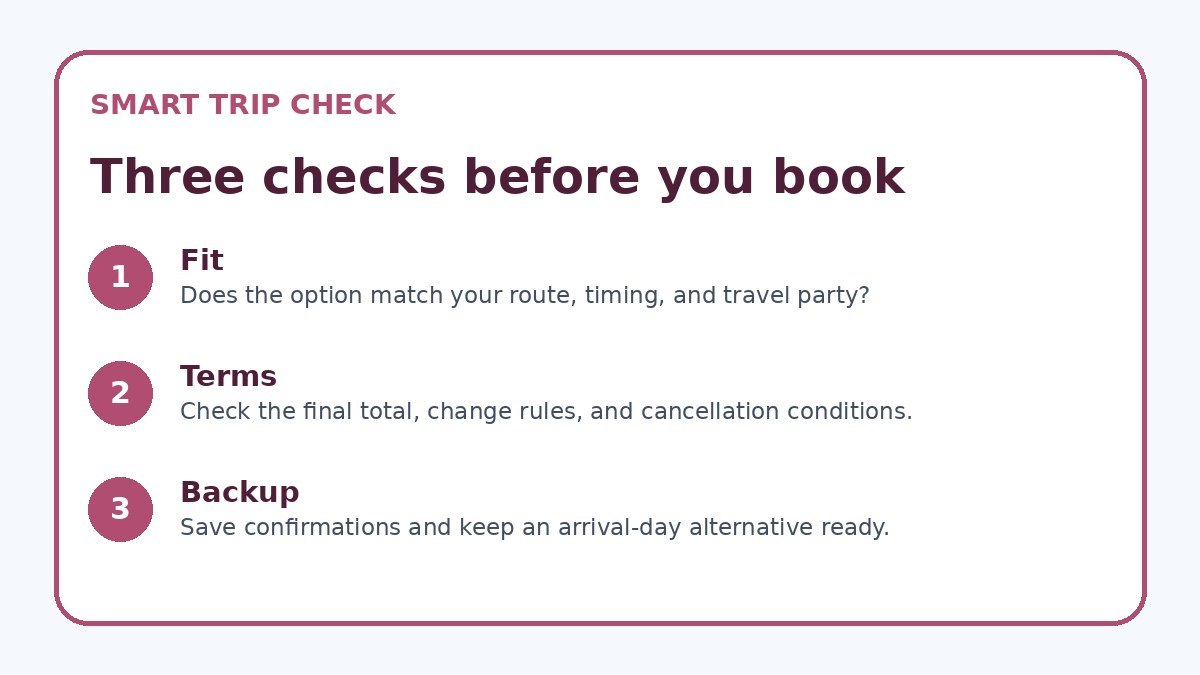
- Before paying, open the full cancellation and change policy linked from the checkout page and save a screenshot or PDF of the terms.
- Confirm whether refunds are issued to your original payment method, as a supplier voucher, or only as a credit on the booking platform.
- Note the exact local time cut-off for free cancellation (hotel check-in time or carrier local office time) and calendar it immediately.
- If the policy is unclear, ask the provider in writing and request confirmation that matches the policy text on the final booking page.
- Compare whether paying for a flexible rate or buying travel insurance offers better financial protection for your likely cancellation reasons.
- If you book a nonrefundable deal, check resale or transfer options (if allowed) and whether the supplier charges a name-change or transfer fee.
Decision criteria: when to pay more for flexibility in Paris
Decide based on three personal factors: how firm your travel dates are, your tolerance for financial loss, and alternative options if your booking is canceled. If you have fixed events—weddings, visa appointments, or time-limited work commitments—paying for flexibility reduces risk. Conversely, if you can travel on multiple date windows, you might favor a cheaper, nonrefundable option while holding off on final commitments until the cheapest fares appear. Remember that travel disruption risk (strikes, weather, family uncertainty) should push you toward refundable or changeable rates.
Also consider whether your credit card or standalone travel insurance covers cancellations for reasons you anticipate. If insurance will reimburse covered cancellations, a cheaper nonrefundable fare combined with insurance can sometimes be the right mix. But read the insurance fine print: some policies exclude cancellations for events that predate purchase or for routine changes of mind. Ultimately, choose the approach that balances the financial hit of a potential cancelation with the premium for flexibility you’re being asked to pay.
Frequently asked questions
Can travel insurance replace a refundable fare when booking Paris travel deals?
Travel insurance can sometimes provide similar protection, but it depends on the policy and covered reasons. Many policies reimburse nonrefundable costs for covered incidents like illness, injury, or certain travel supplier failures, but they often exclude changes of mind or pre-existing conditions unless specifically included. Compare the insurance policy’s cancellation reasons, claim timelines, and documentation requirements with the refundable fare’s terms. If you rely on insurance, keep receipts and follow the insurer’s claim procedure quickly; also verify whether the insurer requires purchase within a set number of days of booking.
If a price difference applies when I change dates, how should I compare options?
When a change fee is listed, treat it as only part of the potential cost. Calculate the total cost of a future change by adding the stated change fee to any fare or rate difference you would owe for the new travel dates. For hotels, consider seasonal variations and weekend surcharges that can make the same room more expensive on new dates. Use this combined cost comparison—flexible rate premium versus likely change costs—to decide whether buying flexibility up front is economically sensible for your situation.
What should I verify on the final booking page for flights, trains, or hotels to avoid surprises?
On the final booking page confirm: the exact cancellation deadline, the cash refund policy versus voucher issuance, any change fees and who charges them, and whether fare differences apply. Check whether taxes and service charges are refundable or deducted from refunds. If booking via a third-party platform, confirm who manages refunds and dispute resolution, and capture a screenshot of the final confirmation showing the policy. If anything is ambiguous, request written clarification before you complete payment to prevent later misunderstandings.
Final planning note
For first-time visitors to Paris, think of cancellation flexibility as insurance: it costs more up front but reduces stress and financial exposure if plans change. Use refundable or change-friendly options when your dates or personal circumstances are uncertain, and choose nonrefundable deals only when you’re confident and willing to absorb a loss. Always verify the specific refund method, deadlines, and fees on the provider’s final booking page, and consider travel insurance or a credit-card benefit as a secondary layer of protection. If you want to compare current options and how they present their cancellation rules, you can check platforms like Trip.com as one place to view availability, but always confirm policy details on the supplier’s own confirmation page before finalizing.
Continue planning
Check current options and final conditions
Use the provider page to confirm live availability, the final total, cancellation terms, and every condition that matters to your trip.
This evergreen planning guide was created with AI-assisted drafting and a structured quality review. It does not display live prices, schedules, availability, visa guidance, or provider rankings. Verify current details before booking. Some links are affiliate links; we may earn a commission at no additional cost to you.