
Practical answer first: for an efficient family visit, pick a base that matches your priorities. If you want short walks to museums and trams, stay in the CBD or Southbank. For beaches and quieter mornings choose Brighton or St Kilda. If you prefer local cafes, green parks, and child-friendly playgrounds with more of a neighbourhood feel, Fitzroy or Carlton are strong picks. Each area trades off convenience, nightly calm, and family-focused amenities such as kitchens, laundry, or adjoining rooms. This article compares the main family-friendly areas in Melbourne, explains the tradeoffs that matter when you book a hotel, and gives decision criteria you can apply to your dates, group size, and preferred daily rhythm.
See current options before you compare the details
Availability and final conditions change. Open Trip.com now or keep reading for the practical comparison.
CBD and Southbank: convenience and culture
Staying in Melbourne’s CBD or neighbouring Southbank is a practical choice when your family wants short transfers from the airport, easy access to public transport, and walking distance to major attractions like the science museum, aquarium, and riverfront. Hotels here often have flexible room types, 24-hour front desks, and concierge help arranging taxis or child-focused tours. For parents who plan museum-heavy days or evening performances, this area cuts commute time and keeps an eye on nap schedules.
The tradeoffs are the urban feel and potentially smaller room footprints compared with suburban properties. Streets can be busier at night and breakfast or grocery options may be geared toward quick service rather than family-sized portions. When comparing specific hotels, check whether the property offers family suites, kitchenettes, or laundry; verify these on the hotel’s booking page. If noise or space is a priority, look for hotels advertising family rooms or adjoining rooms and confirm bed arrangements directly.
St Kilda and Brighton: beach mornings and playgrounds
If your family imagines seaside mornings, St Kilda and Brighton put sand and playgrounds close to your door. St Kilda has a lively foreshore with a pier, playgrounds, and weekend markets—good for families who enjoy alternating beach time with casual dining. Brighton is quieter and more residential, with broad beaches and family-friendly promenades; it suits travellers who prefer a slower pace and roomier hotel gardens or apartment-style stays.
These areas offer calmer nights and easy outdoor activities, but central Melbourne attractions require a tram or car ride. If you plan several museum visits or theatre nights, factor transfer time into your itinerary and compare hotel shuttle options or tram stops nearby. Also check whether the hotel provides beach gear storage or family-friendly breakfast options. When booking, confirm public transport connections and nearby emergency services on the hotel’s final booking page to ensure peace of mind.
| Approach | Best for | Tradeoff to check |
|---|---|---|
| Stay in CBD/Southbank | Families wanting minimal transit to museums, shows, and riverfront attractions | Smaller rooms and a busier urban environment compared with residential neighbourhoods |
| Choose St Kilda/Brighton | Families prioritising beach access, relaxed mornings, and outdoor play | Longer transfers to central attractions and less hotel concierge support |
| Pick Fitzroy/Carlton | Families who prefer neighbourhood cafes, apartment-style stays, and local parks | Fewer tourist services at hotels and slightly longer trips to main museums |
| Book an apartment-style hotel | Longer stays, picky eaters, and families needing kitchens or laundry | May lack daily housekeeping or full front-desk services of city hotels |
Ready to check the option that fits your plan?
Use your exact dates and traveler details so the provider page can show the current total and conditions.

Fitzroy and Carlton: neighbourhood life and space
Fitzroy and Carlton are great for families who want a neighbourhood atmosphere: leafy streets, cafés with high-chair options, local playgrounds, and more apartment-style accommodation that often includes kitchens and laundry. This makes them practical for longer stays or families who prefer to prepare a few meals and keep routines stable. Carlton, close to the university and museum precinct, blends green spaces with easy tram access to the CBD, providing a balanced base for city exploration without the downtown intensity.
The tradeoff is that these neighbourhoods are less tourist-centric, so hotel front desks may not offer the same level of family concierge services found in the CBD. You may need to plan transport to major attractions or book guided activities in advance. Verify whether the property has baby cots, interconnecting rooms, or family packages on its booking page, and confirm laundry and kitchen amenities if those matter to your daily plan. A short walk to a tram stop usually solves most access concerns.
Before you book
- Map your daily must-sees and choose a hotel that shortens your longest regular trip.
- Confirm room type, bed layout, and availability of interconnecting rooms directly on the hotel’s booking page.
- Verify family amenities such as cots, high chairs, kitchen or kitchenette, and laundry facilities before booking.
- Check transport links: nearest tram stop, train station, parking availability, and recommended airport transfer options.
- Ask the property about noise levels and room location options (quiet rooms, higher floors) if naps and early bedtimes matter.
- Compare cancellation terms and whether the hotel requires prepayment; confirm any non-refundable conditions on the provider’s site.
Choosing by logistics: transport, space, and daily rhythm
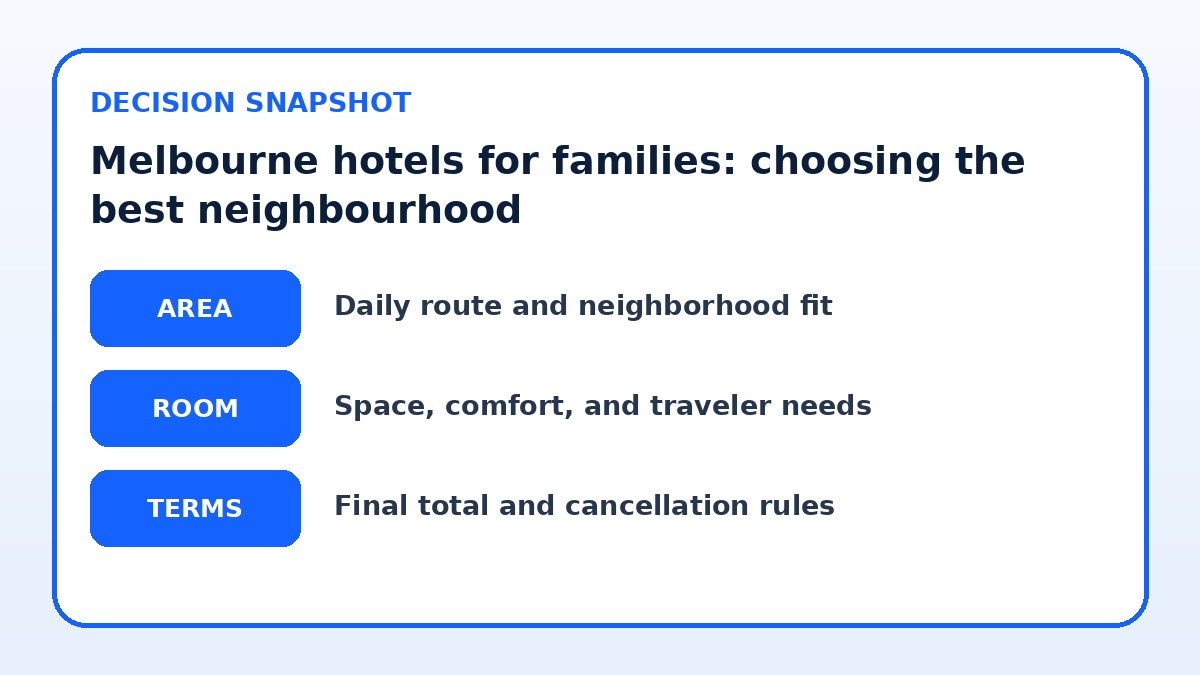
When you compare Melbourne hotels for families, focus on three practical decision points: transport logistics (airport transfers, tram stops, parking), the type and size of rooms (suites, kitchenettes, interconnecting rooms), and the family services offered (breakfast options, cots, laundry). Map where you’ll spend long parts of the day—museums, beaches, parks—and choose a base that shortens the longest daily trip. For example, if mornings and naps drive the schedule, central locations reduce transit time; if evening beach walks matter most, a seaside suburb is better.
Also think about arrival and departure: a hotel with easy taxi access or airport shuttle reduces stress on travel day, while self-catering makes early mornings and picky eaters simpler. Always double-check specifics that change frequently—room configuration, parking availability, airport transfer schedules, and cancellation rules—on the hotel’s booking page before finalising. Trip.com can be a useful comparison tool for current availability and conditions, but confirm key details directly with the property.
Frequently asked questions
Which Melbourne neighbourhood is easiest with a stroller and young children?
The CBD and Southbank are generally easiest with a stroller because sidewalks are wide, trams are frequent, and many attractions are within short walking distances. Museums, aquariums, and river walks have accessible routes and elevators, which simplify moving between activities. St Kilda’s foreshore is stroller-friendly for beach walks, but sand access can require a push or a baby carrier. For local neighbourhoods like Fitzroy, expect narrower footpaths in spots; plan routes in advance and confirm lift access and stroller storage with the hotel.
Should I prioritise a kitchen in my Melbourne hotel for a family stay?
A kitchen or kitchenette is very helpful for families with small children, picky eaters, or longer stays because it lets you handle breakfasts, snacks, and simple meals on your schedule. Apartment-style hotels in Fitzroy, Carlton, and some Brighton properties commonly offer these facilities. If you plan mainly to eat out and want hotel services, a city hotel without kitchen facilities may still be better. Whatever you choose, verify the exact kitchen equipment, grocery options nearby, and whether cookware or utensils are included on the hotel’s booking page.
How should we plan transport between suburbs, the beach, and central attractions?
Decide whether you’ll use public transport, rideshares, or a hire car. Melbourne’s tram network serves the CBD, Southbank, and reaches St Kilda; trains and buses connect suburbs like Brighton. If you rely on trams and trains, pick a hotel near a stop on the routes you’ll use most. For beach days with gear, a car may be more convenient, but parking policies vary—confirm on the hotel page. For shorter stays with concentrated sightseeing, a central hotel reduces transfer time and lets you walk more.
Final planning note
Choosing where to stay in Melbourne with your family comes down to which daily tradeoffs you’re willing to make: shorter transit times and concierge services in the CBD, seaside calm in St Kilda or Brighton, or neighbourhood space and kitchen facilities in Fitzroy and Carlton. Start by listing your non-negotiables—bedroom layout, kitchen, proximity to a tram or beach—and then compare a few hotels in the chosen area for those specifics. Always verify room configurations, family amenities, transport connections, and cancellation policies on the hotel’s booking page before you commit. Use comparison sites like Trip.com if you want to view availability quickly, but confirm final details with the property directly for the most reliable planning.
Continue planning
Check current options and final conditions
Use the provider page to confirm live availability, the final total, cancellation terms, and every condition that matters to your trip.
This evergreen planning guide was created with AI-assisted drafting and a structured quality review. It does not display live prices, schedules, availability, visa guidance, or provider rankings. Verify current details before booking. Some links are affiliate links; we may earn a commission at no additional cost to you.