Practical answer first: for most family visits focused on Hong Kong Island, Kowloon and the urban MTR areas, a rental car is more hassle than help. The city’s efficient public transit, pedestrian-friendly neighborhoods, and limited parking make trains, trams and taxis the faster, cheaper choice for sightseeing and short hops. Choose a rental only if your family itinerary includes significant time on Lantau, the New Territories, outlying islands with road access, or if you require a private vehicle for mobility needs, long countryside drives, or multi-stop day trips that public transit won’t serve well. This article lays out the tradeoffs, decision criteria and practical checks you need to decide whether a Hong Kong car rental fits your family trip.
See current options before you compare the details
Availability and final conditions change. Open Trip.com now or keep reading for the practical comparison.
When a rental car makes sense for family trips
A rental becomes attractive when your family itinerary moves beyond central Hong Kong. If you plan multiple full days exploring the New Territories, Sai Kung, or long Lantau drives (and you’ll be visiting places not well served by buses or ferries), a car can save travel time, reduce transfers with luggage and young children, and let you carry picnic gear or stroller-sized items without juggling trains. Families with toddlers, children who nap on the road, or members with limited mobility often appreciate the privacy, flexibility and predictable door-to-door access a vehicle offers.
A car is also useful when your trip includes early starts or late finishes when public transit is limited, or when your group is large enough that multiple taxi rides would be costly. For multi-stop day trips to dispersed beaches, rural villages, or scenic lookouts where public transit requires long waits or multiple connections, driving can make the day manageable and enjoyable. Always factor in local driving style, left-hand traffic, and whether the primary drivers are comfortable with narrow roads and dense urban driving conditions.
Why public transit and taxis often win in Hong Kong
Hong Kong’s transit system is among the most reliable and extensive in Asia: the MTR, trams, ferries and buses knit together the urban area with frequent service. For families staying in tourist hubs like Central, Tsim Sha Tsui or Causeway Bay, the convenience of elevators, stroller-friendly station layouts and predictable schedules usually outweighs the convenience of a private car. Traffic congestion, limited on-street parking and expensive managed parking lots add time and uncertainty; the MTR’s predictability often beats a short drive that becomes a slow crawl during peak hours.
Taxis are widely available and can be a pragmatic middle ground for short hops, late-night returns, or when public transit is awkward with young children and luggage. When you plan museum visits, markets, and attractions that cluster near stations, combining MTR and short taxi rides reduces parking hassles and the need to navigate one-way streets. Also consider that many family attractions provide limited on-site parking or charge by the hour—these costs and the time spent finding a spot can erode a rental’s convenience advantage.
| Approach | Best for | Tradeoff to check |
|---|---|---|
| Public transit and taxis | Urban sightseeing, museum days, market visits, short hotel-area travel | Less private space and flexibility; relies on schedules and occasional transfers |
| Single-day car rental for specific outings | Planned rural day trips or family outings outside transit coverage | You avoid full-trip parking hassles but still must handle local driving and parking for the day |
| Full-trip rental car | Extended stays with multi-day rural exploration or mobility needs | Higher parking and rental costs; urban driving and finding daily parking add time |
| Private transfers or chauffeur service | Families wanting door-to-door reliability without driving responsibilities | More expensive than taxis for frequent use but removes driving stress and parking worries |
Ready to check the option that fits your plan?
Use your exact dates and traveler details so the provider page can show the current total and conditions.
Key practical tradeoffs to evaluate before booking
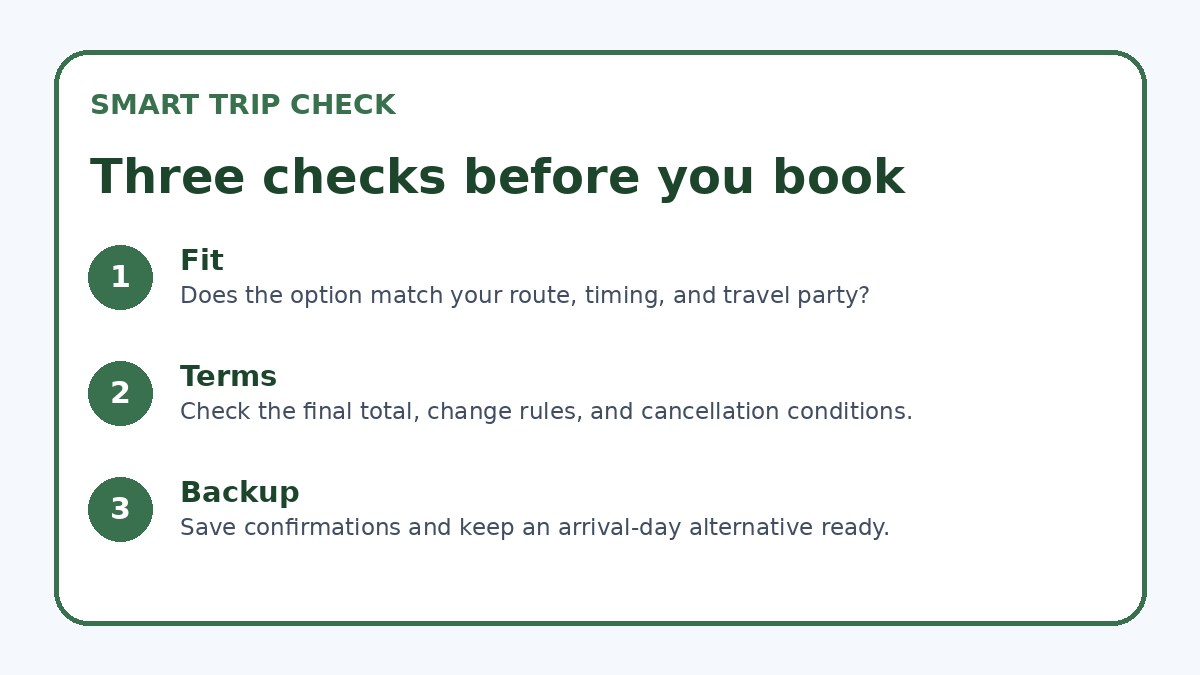
Calculate door-to-door time, not just distance. A painless 20–30 minute MTR or taxi trip can beat driving if parking or traffic adds extra minutes. Add time for finding parking, walking from remote lots, or waiting for elevator access to parking garages. Consider how much of your daily itinerary involves short, frequent stops versus long continuous driving stretches. If most stops are inside densely packed neighborhoods, a car will likely spend more time parked than moving, making transit a better use of both time and money.
Factor in parking availability and the type of parking you’ll need: street, multi-storey garages, or hotel valet. Hotels in central districts often limit spaces or reserve them for guests who request a spot in advance. When you travel with child seats, confirm whether the rental company provides properly installed seats and whether the hotel can accommodate stroller storage or in-room parking access. Also weigh fuel, tolls, and potential congestion charges against the cost and convenience of taxis or private transfers for occasional day trips.
Before you book
- List every major destination and mark which are within easy walking distance of an MTR station or ferry pier.
- Calculate door-to-door travel time for transit versus driving for your longest days, including parking and walking.
- Confirm child-seat policies and request certified seats from the rental company if you need them.
- Ask the rental provider about insurance excess, roadside assistance and what to do in case of an accident.
- Check hotel parking options and reserve a space if your accommodation has limited or managed parking.
- If you plan cross-border travel, verify vehicle authorization and required permits before booking.
What to check on vehicle pages and local rules
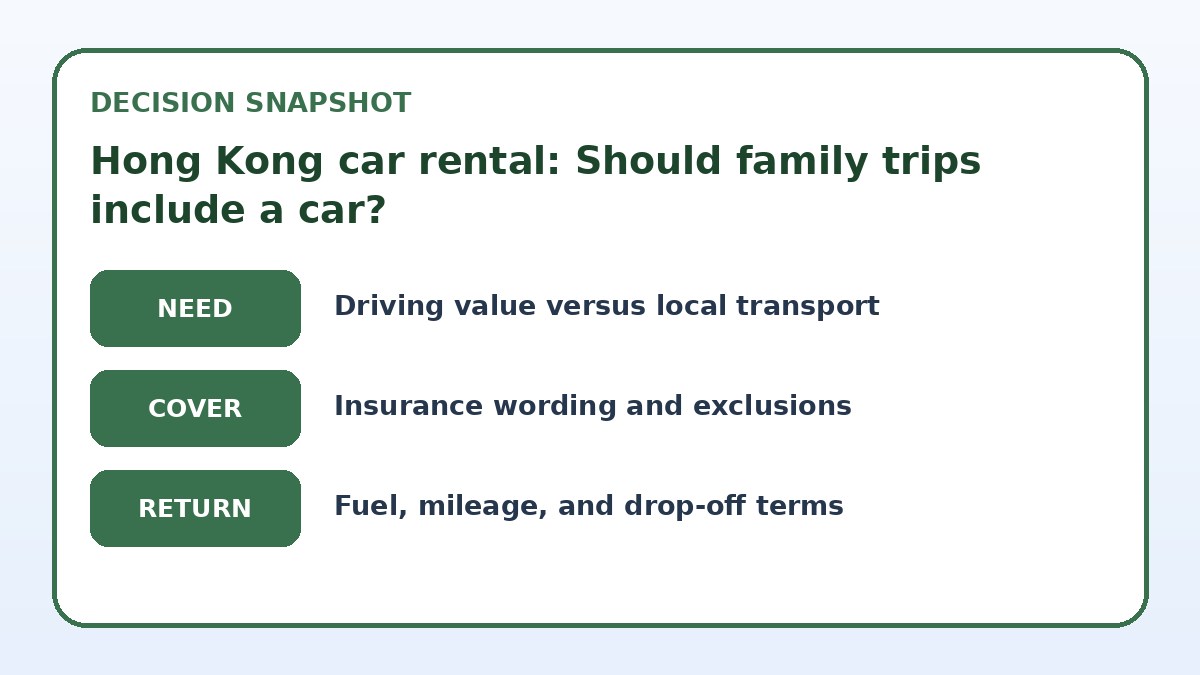
Before you book a Hong Kong car rental, verify the exact insurance coverage, excess/deductible amounts, and whether additional drivers are included or cost extra. Confirm child-seat availability, the company’s policy for installing or delivering car seats, and whether the rental includes unlimited mileage if you plan long drives. Check fuel policy (full-to-full is usually clearest), deposit amounts, and acceptable payment methods so there are no surprises at pick-up. For family peace of mind, ask about roadside assistance provisions and emergency contact procedures.
If your itinerary could cross into mainland China or Macau, do not assume cross-border permission; rental companies have strict rules and special documentation for cross-border travel. Verify whether the specific vehicle is authorized for border crossings and whether you must buy separate insurance or permits. Finally, check vehicle size and luggage capacity: a compact car may feel cramped with a stroller, two large suitcases and a child seat. When in doubt, opt for a larger category and confirm measurements or trunk volume on the provider’s booking page.
Frequently asked questions
Is driving in Hong Kong difficult for visitors?
Driving in Hong Kong uses left-hand traffic and can be challenging for visitors unfamiliar with dense urban driving, narrow lanes and frequent short one-way streets. Signage is generally in English and Chinese, but rush-hour congestion and local driving styles may require extra caution. If you’re comfortable with urban driving and confident navigating roundabouts, ramps and parking structures, renting can work—especially for outlying areas. Otherwise, consider taxis or hiring a driver for specific days to avoid stress while still accessing places outside public-transit coverage.
Do family attractions in Hong Kong have parking?
Many major family attractions provide parking, but availability, cost and proximity vary considerably, and some sites prioritize public transport access. Theme parks and country parks often have larger lots, while urban museums, markets and shopping districts expect visitors to arrive by transit. Check each attraction’s official page for the latest parking details, opening times and any reservation requirements. When parking is limited, factor in time for finding a spot and the likelihood of additional walking from lots to the entrance.
Can I cross into Macau or mainland China with a rental car from Hong Kong?
Cross-border travel with a rental vehicle is tightly regulated and not automatically permitted by every rental company or vehicle type. Many providers require special documentation, additional insurance and specific vehicle authorization to cross into Macau or the mainland. Always confirm cross-border rules with the rental firm and relevant border authorities before you book; do not assume a standard rental allows this. If cross-border travel is a firm plan, ask the provider exactly what paperwork and fees are required and whether the car you reserve is eligible.
Final planning note
Deciding whether a Hong Kong car rental fits your family trip comes down to the map of your days. For city-centered itineraries, the MTR, trams, ferries and taxis usually offer faster, simpler and more predictable travel than navigating traffic and parking. A rental makes sense when your schedule includes several rural or dispersed sites, early/late transfers, or specific accessibility needs that public transit cannot meet. Before you book, map destinations, compare door-to-door times, confirm child-seat and insurance conditions, and check hotel parking. If you still need a quick comparison, tools like Trip.com can show current availability and policies, but always verify critical rental terms directly with the provider’s booking page.
Continue planning
Check current options and final conditions
Use the provider page to confirm live availability, the final total, cancellation terms, and every condition that matters to your trip.
This evergreen planning guide was created with AI-assisted drafting and a structured quality review. It does not display live prices, schedules, availability, visa guidance, or provider rankings. Verify current details before booking. Some links are affiliate links; we may earn a commission at no additional cost to you.