
If you're traveling solo from New York City to Boston with luggage, start by deciding what you can carry comfortably and how much flexibility you want. The practical route options—intercity rail, intercity bus, and rideshare or car—handle luggage differently and suit different priorities: comfort, cost, mobility, and how many bags you can manage without assistance. For a quick decision: choose intercity rail if you want room to stretch and stored luggage space; pick a bus for lower-cost, compact travel; choose a rideshare or rental if door-to-door convenience and multiple bags matter. This guide explains how luggage rules, platform access, transfers, and last-mile options affect solo travelers so you can compare real booking pages and decide what to verify before you confirm.
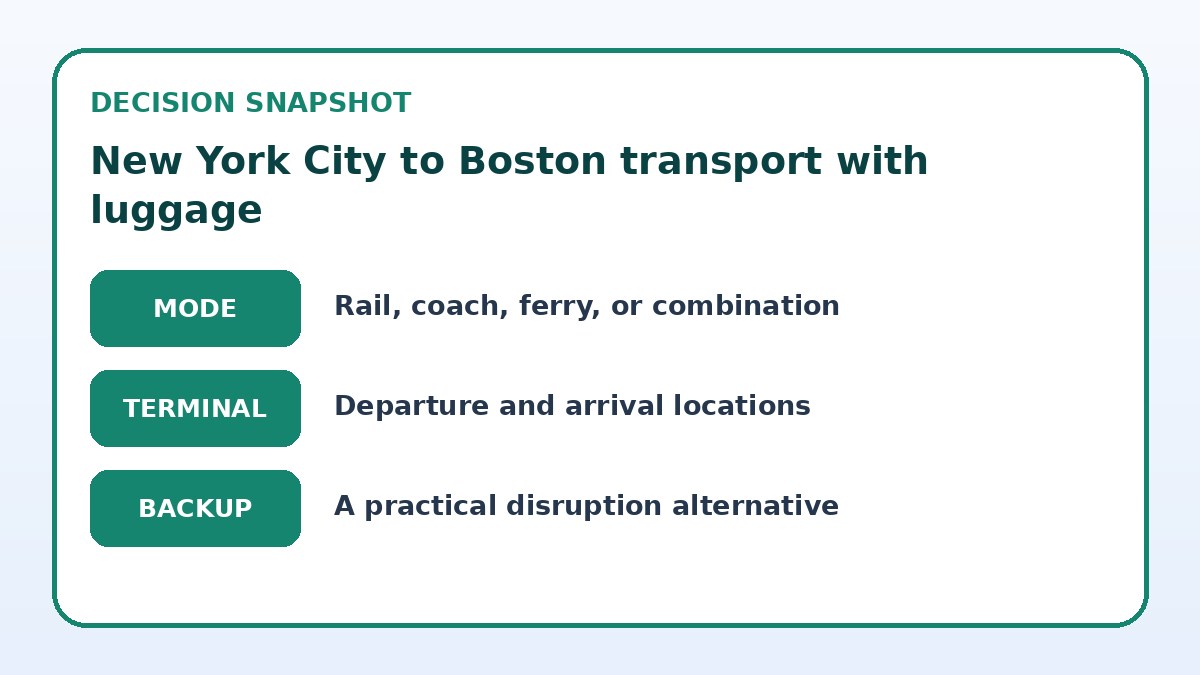
See current options before you compare the details
Availability and final conditions change. Open Trip.com now or keep reading for the practical comparison.
Compare transport modes for luggage handling
Trains, buses, and cars each have predictable strengths and limits when you travel with luggage between New York City and Boston. Trains generally offer the most space to stretch, larger aisles, and areas where you can keep a suitcase near your seat or in overhead racks. Intercity trains often allow larger carry-ons without a fee, making them attractive to solo travelers who value comfort during a few-hour journey. However, access to platforms and the need to lift luggage onto racks or into luggage rooms is a factor: check platform layouts at your departure and arrival stations if mobility or heavy lifting is a concern.
Buses usually load checked luggage into an underfloor bay and allow only a small carry-on in the cabin; that can simplify carrying because you pass your bag to a loader, but it adds handling time and means you may not have access during the trip. Rideshares and taxis remove restrictions but require you to lift and fit your luggage into a vehicle; they are best when door-to-door convenience outweighs cost. When choosing between modes, weigh how much time you want to spend moving bags yourself versus handing them off, and confirm the transport provider’s luggage size and weight rules on the booking page.
Packing and bag choices for a smooth transit
For a solo traveler, bag selection is crucial. A wheeled suitcase with sturdy wheels works best for station-to-station transfers and rolling along sidewalks and subway corridors; choose one with an upright position and balanced wheels to reduce effort on short walks. A daypack or soft duffel on top of your wheeled bag gives quick access to essentials during the journey and keeps important items with you if you gate-check luggage on a bus or leave a bag in storage. Bring packing cubes or compression bags to organize clothing and protect fragile items during multiple transfers.
Consider weight and ergonomics: airlines and some bus carriers have weight limits, but even without formal limits heavy bags are harder to lift onto racks or into trunks. Distribute weight so you can lift at most one moderate-sized item; keep heavier things low and near wheel bases for easier rolling. Include a lock for checked baggage and a luggage tag with contact details. If you anticipate walking long distances with luggage in either city, test your carry setup in a transit-rich neighborhood before departure to confirm comfort and maneuverability.
| Approach | Best for | Tradeoff to check |
|---|---|---|
| Intercity train | Travelers who value onboard space and predictable luggage storage | May require platform transfers and lifting bags onto racks or into luggage rooms |
| Intercity bus | Budget-conscious travelers with compact or checkable bags | Limited cabin access to baggage during the trip and possible longer loading times |
| Rideshare / taxi | Door-to-door convenience and multiple heavy bags | Higher cost and potential difficulty fitting very large items in standard sedans |
| Luggage storage plus light transit | Travelers splitting time between cities or wanting hands-free sightseeing | Extra step and cost to store/retrieve bags; requires reliable storage locations |
Ready to check the option that fits your plan?
Use your exact dates and traveler details so the provider page can show the current total and conditions.
Station navigation and last-mile planning
Both New York City and Boston have busy stations and multiple transit options for reaching your final destination. Plan your arrival point based on how easy it will be to retrieve and move your luggage: choose a terminal with elevators, clear signage, and convenient taxi or rideshare pickup zones. For trains, check which platform and concourse the service uses, and verify whether stations have escalators or lifts; when in doubt, allow extra time for transferring between platforms. On nights or during peak hours, prefer stations with sheltered waiting areas and predictable baggage handling processes.
Last-mile options matter: if you prefer to avoid carrying bags through subways or busy sidewalks, arrange a pickup (taxi, rideshare, or local shuttle) directly at the station entrance. If you plan to take public transit, map an elevator-accessible route and check for temporary closures on the transport provider’s booking or service alerts page. For short stays in either city, consider reserving luggage storage near the station or your accommodation to minimize repeat carrying. Always verify station accessibility and local pickup rules on the provider’s page before finalizing travel plans.
Before you book
- Weigh and measure each piece of luggage and confirm size/weight rules on the carrier’s official booking page.
- Pack a daypack with essentials (documents, charger, medications, a change of clothes) you won’t want to check.
- Reserve a train or bus ticket with adequate transfer time between connections if you must move bags across platforms.
- Locate elevator or lift routes at departure and arrival stations using official station maps or provider service alerts.
- Arrange a pickup point or book a rideshare in advance if you prefer door-to-door transfer with heavy or multiple bags.
- Identify and reserve a nearby luggage storage option if you plan a stopover or want to sightsee without full baggage
Timing, connections, and what to verify before booking
Schedules and connections affect how manageable your luggage will be. If you choose a service with a transfer, factor in extra time to move bags between vehicles and pass through security or concourse levels. Direct services cut that risk but may be less frequent or priced differently—compare direct versus connecting options by looking at total door-to-door duration, number of transfers, and layover time needed to move luggage. For any option, confirm baggage allowances, whether bags must be checked at boarding, and if you can keep carry-ons in the passenger area during the trip.
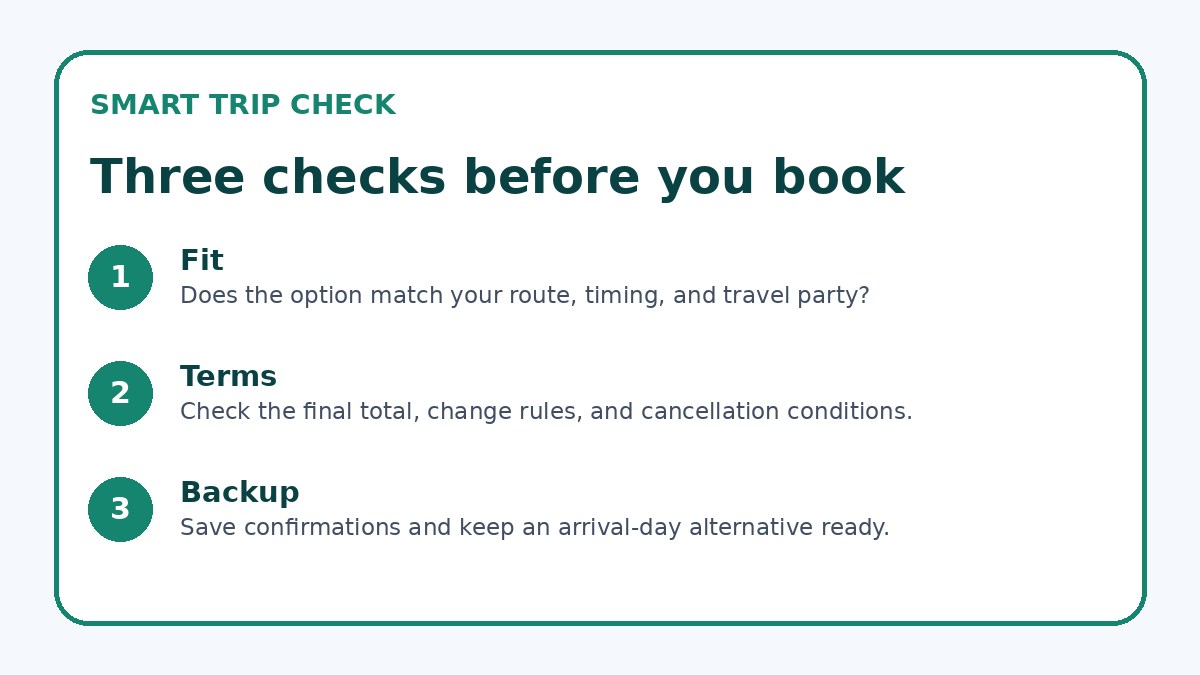
Before you book, check provider pages for up-to-date luggage policies, station maps, accessibility details, and boarding procedures. If you are using a third-party comparison site such as Trip.com, use it to compare availability but verify final baggage rules and any additional fees on the carrier’s own booking page. Also check cancellation and change policies in case your plans change and ensure you have contact options for lost or delayed luggage resolution. These steps prevent surprises and help you choose the option that fits both your bags and your comfort level.
Frequently asked questions
Can I bring multiple bags on intercity trains between New York City and Boston?
Most intercity train services allow reasonable amounts of luggage and have overhead racks, luggage areas, or designated baggage rooms, but specific limits vary by operator. Before you book, check the train company’s current baggage policy on its official site to confirm the number of bags allowed, any size or weight restrictions, and rules for storing oversized items. If you have more than two large bags, consider arranging assistance for boarding or a rideshare pickup to avoid struggling with multiple carry items on platforms or stairs.
Is it safer to check my bags into a bus’s underfloor storage?
Checking a bag into a bus underfloor bay is common and can simplify carrying, but it means you won’t have access to that baggage during the trip. For valuable, fragile, or time-sensitive items keep them in a carry-on you control. If you must use bus storage, pad fragile items and use a visible, secure tag with contact information. Always verify the bus operator’s liability policy and any handling procedures on the provider’s booking page in case of loss or damage.
How do I plan station pickups and drop-offs with heavy luggage?
Plan to use official passenger pickup points, curbside lanes, or designated rideshare zones to minimize walking with heavy baggage. Check the station’s map and the transport provider’s instructions for the best drop-off point near elevators or main concourses. If you expect to arrive during busy periods, allow extra time for traffic and consider pre-booking a car service that can meet you at the station entrance. Confirm any curbside rules or temporary restrictions on the station or provider’s site to avoid delays.
Final planning note
Solo travelers moving between New York City and Boston can make luggage management a non-issue by matching the transport mode to their bag count, physical ability, and itinerary. Trains offer space and convenient onboard storage; buses simplify handling through checked bays; rideshares provide door-to-door ease at higher cost; and short-term storage can free you for hands-free time in either city. Before you finalize a booking, verify luggage rules, station accessibility, and boarding procedures on the carrier’s official page and plan last-mile pickups in advance. With those checks in place you’ll choose the option that keeps your bags secure and your travel stress low.
Continue planning
Check current options and final conditions
Use the provider page to confirm live availability, the final total, cancellation terms, and every condition that matters to your trip.
This evergreen planning guide was created with AI-assisted drafting and a structured quality review. It does not display live prices, schedules, availability, visa guidance, or provider rankings. Verify current details before booking. Some links are affiliate links; we may earn a commission at no additional cost to you.