
If you and your partner want a practical way to travel from Bangkok to Chiang Mai, prioritize comfort, flexibility, and time rather than theoretical savings. For most couples who value a relaxing journey and predictable logistics, an overnight sleeper train or a direct domestic flight combined with easy airport transfers are the two most practical choices. Each keeps hotel-needing-night decisions and transit fatigue in mind: trains let you sleep and arrive in the city center, while flights save daytime hours and pair well with short city stays. Your choice should hinge on how much travel time you want to convert into rest, how much luggage you carry, and whether scenery or speed matters more. Read on to weigh tradeoffs, compare decision criteria, and find a short checklist to finalize your booking with confidence.
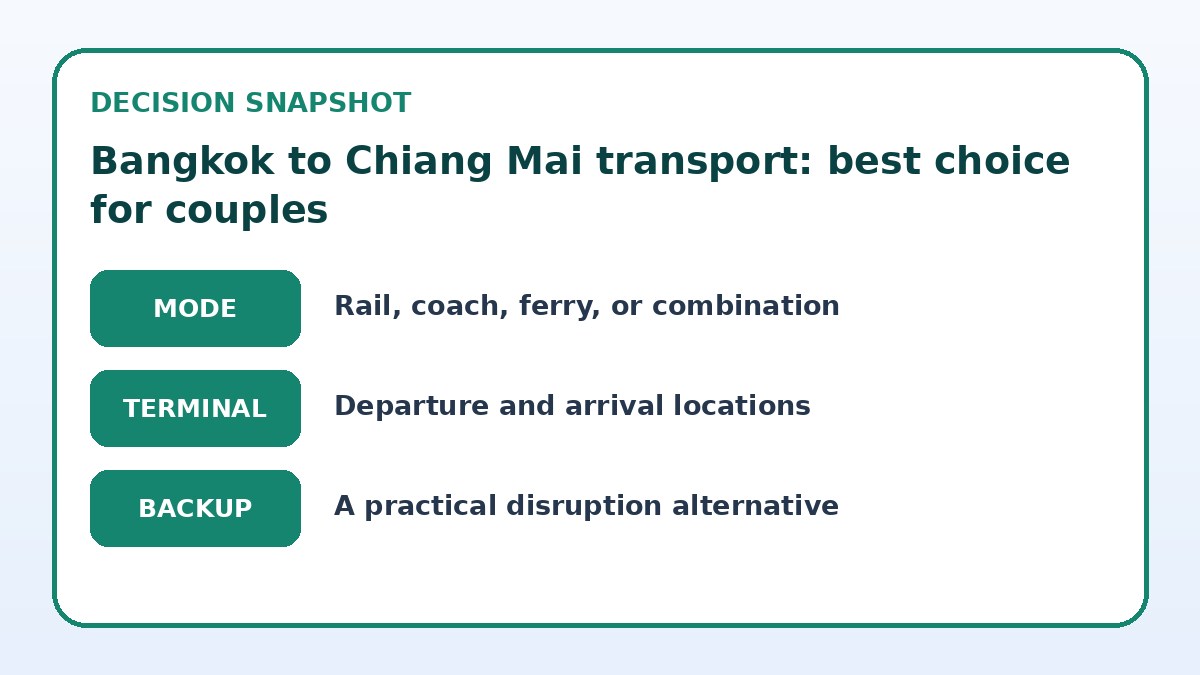
See current options before you compare the details
Availability and final conditions change. Open Trip.com now or keep reading for the practical comparison.
Comfort versus speed: how to weigh travel experience
Comfort and speed are often inversely related on the Bangkok to Chiang Mai corridor. If you prize uninterrupted sleep and a relaxed transition between cities, overnight sleeper trains offer cabins or couchettes where you can lie down and rest. Trains typically arrive closer to city centers, which reduces time and expense on transfers and can make hotel check-ins easier. For couples who enjoy shared space and slower travel, the train journey also lets you experience changing landscapes at a steady pace without the stress of airport security and boarding deadlines.
If maximizing waking hours in Chiang Mai is the priority, choose a flight. Flying is faster of the two main options and is efficient for short itineraries that need extra sightseeing time. Airports require earlier arrival windows and transfers to and from terminals, so tally total door-to-door time rather than just in-air time. Also consider how much luggage you have, mobility constraints, or if one partner prefers simple logistics—these practical elements often decide comfort more than nominal transit time.
Cost, convenience, and luggage: practical considerations
Budget matters, but so does convenience. Compare the total cost of door-to-door travel rather than ticket price alone: include transfers, baggage surcharges, and the cost of an extra night’s accommodation if a schedule forces you to arrive late. Trains can be more forgiving for larger suitcases and don't always have strict weight rules like airlines do. On the other hand, flights can be economical if booked sensibly and when the couple values time over incremental savings.
Convenience also covers scheduling and the number of checks and handoffs during the journey. A private car or minivan provides direct pickup and drop-off at your lodgings, which simplifies moving between doorways but often costs more. When comparing options, list your non-negotiables—departure window flexibility, luggage needs, and whether you want an evening arrival—and eliminate any mode that fails those checks. For live availability and final conditions, verify schedules, baggage policies, and transfer options on the provider’s booking page; Trip.com can be one tool to compare current offerings.
| Approach | Best for | Tradeoff to check |
|---|---|---|
| Overnight sleeper train | Couples who want to rest en route and arrive near the city center | Slower travel time and potential schedule variability; book cabins for privacy |
| Direct flight | Couples prioritizing speed and more daytime hours in Chiang Mai | More transfers and airport time; check baggage rules and total door-to-door time |
| Private car or minivan transfer | Couples wanting door-to-door convenience and flexible departure times | Higher cost and longer road time compared with flights; plan for traffic variability |
| Mixed approach (one-way flight, one-way train) | Couples seeking both efficiency and a scenic or romantic experience | Requires more planning and separate bookings; coordinate arrival times and luggage logistics |
Ready to check the option that fits your plan?
Use your exact dates and traveler details so the provider page can show the current total and conditions.
Safety, predictability and when to avoid surprises
Couples traveling together often prioritize predictability: reliable schedules, straightforward connections, and minimal late-night maneuvering. Flights generally operate on published timetables, but airports and security lines introduce variables. Trains run on set departure times too, though delays can happen and you should plan a buffer if you have onward plans. If either partner is sensitive to motion, motion sickness or health concerns, choose the mode with the smoother conditions for them—this practical aspect matters more than any advertised speed advantage.
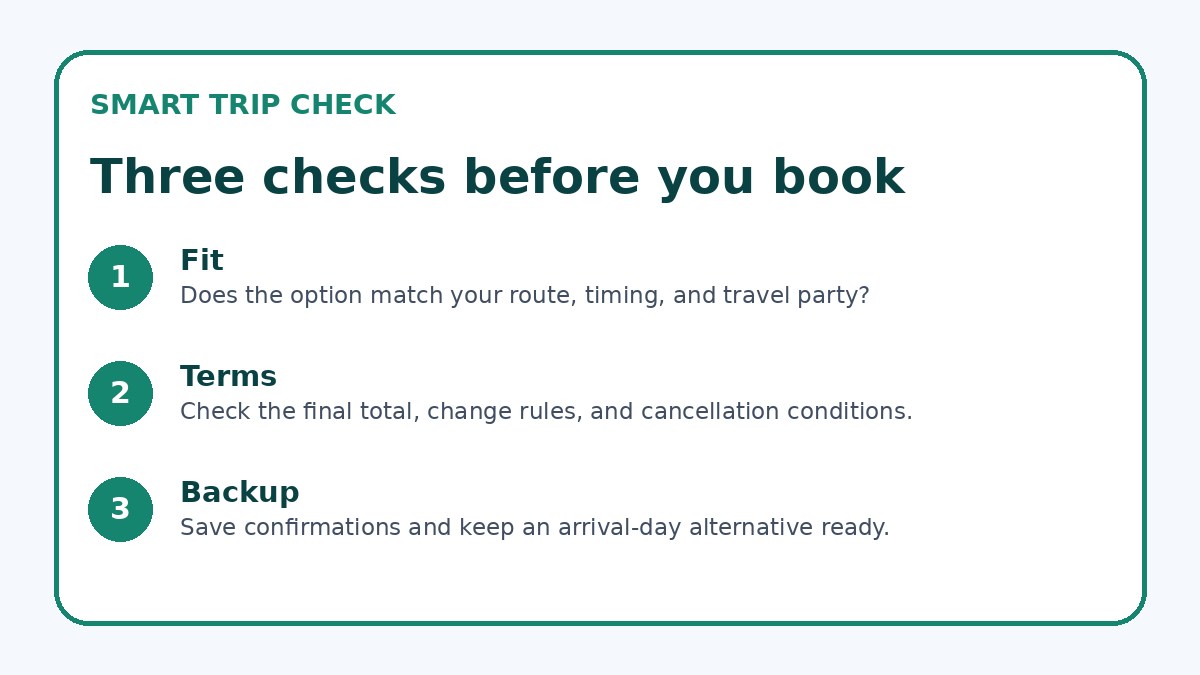
If you dislike unexpected changes, book options that allow clear customer support touchpoints and easy changes or cancellations if plans shift. For trains and flights, confirm baggage allowances, refund/transfer policies, and terminal/station addresses before booking. When using private transfers, ask for a written pick-up time, vehicle type, and driver contact. Always have backup plans for late arrivals, such as a confirmed hotel that accepts late check-in or a reliable taxi app so arrival logistics don’t become a stress point.
Before you book
- Decide whether you value sleep-on-route or maximum daytime hours and choose train or flight accordingly.
- Verify total door-to-door time by adding transit to and from airports or stations, not just in-transit time.
- Compare baggage allowances and fees on provider booking pages before finalizing tickets.
- Confirm arrival times relative to hotel check-in and arrange a transfer if you need guaranteed pick-up.
- If privacy matters, book a private cabin or premium seat early to secure adjacent seating for both travelers.
- Record provider contact info and save tickets or reservation codes in an accessible place for arrival day.
Romance and rhythm: choosing an experience together
Travel decisions for couples are about logistics, but also about shared experience. An overnight train can feel romantic and unhurried—time to talk, play cards, or watch the countryside slip by—making the journey part of the trip’s memory. Select a class or cabin that provides privacy and comfort; a convertible sleeper can be cosier than individual seats. Consider whether you want an arrival in the morning to start exploring immediately, or a late-evening arrival when checking into an intimate guesthouse.
If your itinerary is packed with activities, a flight helps you keep more waking hours for sightseeing, dining and planning. Couples who mix a flight one way and a train the other often get a taste of both convenience and romance. Whatever you choose, align the transportation decision with the tone you want for this leg of your trip—relaxed and scenic, or fast and efficient—and plan transfer and luggage logistics accordingly so the journey supports, rather than undermines, your shared plans.
Frequently asked questions
Is the overnight sleeper train a good choice for couples on a short trip?
An overnight sleeper can be a very practical choice for short trips if you want to avoid losing a daytime in transit. It turns travel hours into rest and often delivers you into the city center, saving morning transfer time. However, sleeper trains can be slower than a flight and might require booking higher-class cabins for the privacy and comfort many couples prefer. If you need more waking hours in Chiang Mai for sightseeing, compare total door-to-door times and consider flying one way instead.
How should couples compare total travel time between flying and taking the train?
Compare door-to-door time rather than just scheduled flight time or rail duration. Add time for check-in, security, potential luggage waits, and transfers to and from airports or stations. For trains, include time to reach the station and any overnight boarding procedures. Once you total those segments, weigh them against how much active time you want in Chiang Mai and whether you prefer to use travel hours for sleep or sightseeing. That comparison gives a clearer practical picture than headline durations.
What practical safety or comfort checks should couples do before booking?
Confirm baggage policies, seating or cabin layouts, and any change or cancellation rules on the provider’s final booking page. Check pickup/drop-off addresses and transfer options so arrival logistics are simple. Look for customer service contact details and traveler reviews about punctuality and vehicle condition where available. If either partner has mobility or health concerns, check step-free access, seat sizes, or the ability to reserve specific accommodations that reduce strain during the journey.
Final planning note
For most couples planning Bangkok to Chiang Mai transport, the practical choice depends on whether you want to sleep through the journey or maximize daytime in the destination. Pick an overnight train if you value a low-stress, center-to-center transfer and a relaxed shared experience. Choose a flight if saving daytime and minimizing hours in transit is your priority. Mix modes for a balanced trip. Before booking, verify total door-to-door time, baggage rules, and transfer options on the provider’s final page and save contact details. Those checks will keep logistics simple and let you focus on enjoying Chiang Mai together.
Continue planning
Check current options and final conditions
Use the provider page to confirm live availability, the final total, cancellation terms, and every condition that matters to your trip.
This evergreen planning guide was created with AI-assisted drafting and a structured quality review. It does not display live prices, schedules, availability, visa guidance, or provider rankings. Verify current details before booking. Some links are affiliate links; we may earn a commission at no additional cost to you.