Practical answer first: before you hit purchase on a Kuala Lumpur travel deal, add up the full trip cost — flights, transfers, insurance, visa steps, daily budget, and the price of flexibility. Many solo travelers focus on a low headline fare or a flash hotel rate but miss airport transfers, baggage fees, travel insurance that covers solo plans, connectivity, and the cost of sightseeing or coworking days. Once you have a realistic total, compare that bundled number across options and decide where you want to trade convenience for savings. Below you’ll get a step-by-step approach to find and compare realistic Kuala Lumpur travel deals, the key decision points for solo travelers, and a checklist to use right before booking.
See current options before you compare the details
Availability and final conditions change. Open Trip.com now or keep reading for the practical comparison.
Build a realistic total cost for your Kuala Lumpur trip
Start with the obvious: flight and accommodation headline prices. Then layer in items travelers often overlook. For a solo traveler, baggage fees (both carry-on and checked), seat-selection or preferred-cabin upgrades, airport transfers or taxi fares from Kuala Lumpur International Airport (or other airports), and travel insurance that covers medical and theft are all predictable add-ons. Also factor in any visa or entry costs if applicable to your nationality, plus the cost of a local SIM card or roaming package to stay connected. Add a contingency fund for unexpected delays, small medical expenses, or a missed connection.
Calculate a daily budget for food, local transport (trains, buses, ride-hailing), entrance fees for attractions you plan to visit, and any coworking or café expenses if you’ll work while traveling. If your trip includes day trips or domestic flights, estimate those separately. Put everything into a single spreadsheet or note so you can compare the total with other options. This clear total cost lets you compare a cheap headline fare that adds many extras to a slightly pricier package that bundles convenience.
Compare booking approaches: packages, DIY, and flexible fares
You can buy a bundled package that includes flights, hotel, and transfers; assemble flights and hotels separately; or choose flexible tickets with generous change rules. For solo travelers, the right approach depends on priorities: convenience and single-point support versus control and possibly lower base costs. When comparing, force each option through the same total-cost lens: if a package includes an airport transfer and breakfast, quantify those items and compare the package total to your DIY combination. Remember to check what ‘included’ actually covers on the provider’s final booking page — for example, transfer group-size, hotel check-in policy, and exact baggage allowance.
If using flexible fares, confirm how changes and cancellations are handled, which fees apply, and whether flexibility covers all legs in a multi-segment trip. For DIY bookings, you may save money but take on more risk if a flight change impacts separate hotel or transfer reservations. If you value local support, see whether the package provider includes a 24/7 help line; if not, ensure you have insurance, contact numbers, or a plan B. Trip.com can be used to compare current availability and conditions as one of several comparison tools, but always verify details on the supplier’s final booking pages.
| Approach | Best for | Tradeoff to check |
|---|---|---|
| Bundled package (flight+hotel+transfer) | Travelers who want one point of contact and fewer separate bookings | Can appear pricier upfront; you must verify included services and exact terms before booking |
| DIY booking (separate flight and hotel) | Travelers who want control and to shop for lower base fares | Saves on headline cost sometimes but increases risk if flights change or baggage isn’t covered |
| Flexible fare with refundable options | Solo travelers with uncertain plans or higher change risk | Higher upfront ticket cost but reduces potential rebooking fees and stress |
| Budget fare with pay-for-extras | Cost-sensitive travelers who can travel light and accept less convenience | Low ticket price but many small fees can add up; requires diligent pre-checking |
Ready to check the option that fits your plan?
Use your exact dates and traveler details so the provider page can show the current total and conditions.
Decide where to trade money for convenience and safety
Solo travel often means balancing cost with personal safety and comfort. For example, arriving late at night is cheaper with a budget hotel but may require paying for a secure transfer or ride-hail; alternatively, a centrally located hotel reduces nighttime transit needs but often costs more. Think about your personal tolerance for risk: are you comfortable navigating Kuala Lumpur’s public transport at night, or would you rather pay for a hotel near transit hubs? Factor in how fatigue affects your first day — an inexpensive red-eye flight may save money but increase taxi and refreshment expenses upon arrival.
Also consider digital safety and backup resources. Buying refundable or changeable tickets can be worth the extra cost if your plans are flexible or if you’re coordinating with timed tours. A slightly pricier option that includes free cancellation or flexible date changes can save both money and stress if plans shift. Evaluate health and travel insurance coverage tied to trip cancellation or medical evacuation; for many solo travelers, this coverage is a small cost for meaningful protection.
Before you book
- Add flight base fare, expected baggage fees, seat selection costs, and any optional upgrades into your total cost spreadsheet.
- Estimate airport transfer or taxi costs from your arrival airport to planned accommodation and compare with hotel transfer inclusions.
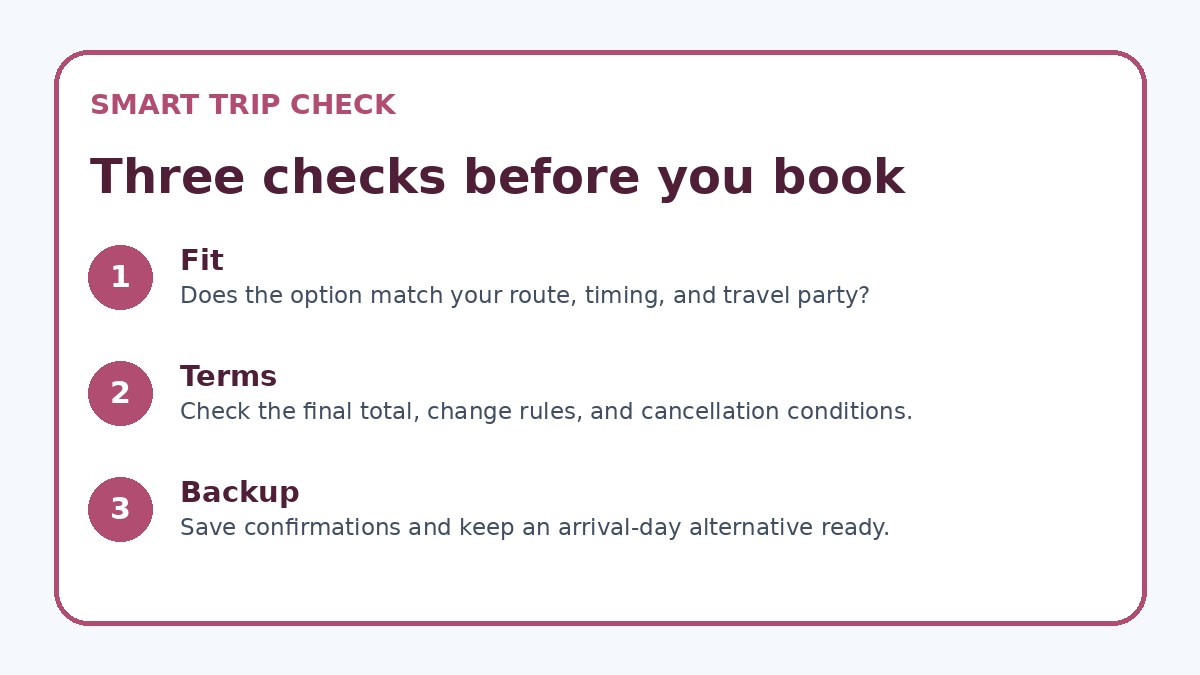
- Confirm cancellation, change rules, and refund policies on the airline and hotel final booking pages before paying.
- Check visa/entry requirements for your passport on official sources and add any application costs or processing time you’ll need.
- Verify hotel amenities you rely on (Wi-Fi, late check-in, secure luggage storage) directly on the hotel’s site or confirmation.
- Buy travel insurance that covers your planned activities, date changes, and any emergency medical or evacuation needs you might encounter.
Practical verification steps before finalizing a booking
Before clicking confirm, verify the provider pages that cover the items that most commonly change: baggage allowances on each flight segment, the airport transfer meeting point and included vehicle type, hotel check-in times and any resort or city taxes applied at check-in, and the fine print of cancellation or change fees. If booking multi-city or multi-carrier itineraries, check whether baggage transfers are protected or if you must recheck bags through immigration. For sightseeing or attraction reservations listed as included, confirm whether they require advance time slots or additional local fees.
Double-check visa and entry requirements for your passport on official government sites; travel platforms can be helpful, but the final authorities set rules. Confirm the payment currencies and whether your card incurs foreign transaction fees. If connectivity is important, verify whether the hotel offers reliable Wi-Fi or has a business center. Finally, make a copy of confirmation numbers and local emergency contacts and store them offline in case you lose network access on arrival.
Frequently asked questions
How do I compare total trip costs for a Kuala Lumpur deal versus booking separately?
Make a single workbook with line items for every predictable expense: flights, baggage, seat fees, transfers, visas, daily budget, attraction tickets, local transport, and insurance. Fill in exact numbers from the airline, hotel, and attraction pages rather than platform summaries, then compare the summed totals. For bundles, subtract documented inclusions (like transfers or breakfast) to compare to separate bookings. Run scenarios — e.g., worst-case change fees — to see how flexible and refundable fares affect the overall cost. Use the same dates and arrival times to keep comparisons consistent.
What are the most common hidden costs solo travelers miss when booking to Kuala Lumpur?
Solo travelers often overlook baggage fees on budget carriers, airport transfer fares from the airport to city, and local taxes or resort charges payable at the hotel. Other common misses are the cost of a local SIM or roaming package, entrance fees for paid attractions, and optional seat selection charges. If you plan late-night arrivals or early departures, expect additional taxi costs or a night at a hotel with 24-hour reception. Always verify baggage rules and transfer details on the supplier’s final page and add a small contingency amount for surprises.
Should I use a package or book flight and hotel myself for a solo trip to Kuala Lumpur?
There’s no one-size-fits-all answer: choose a package if you prefer fewer separate reservations and single-point support; packages can simplify logistics for solo travelers arriving late or wanting included transfers. Book separately if you’re price-sensitive and want flexibility to mix airlines or neighborhoods. Whichever route you pick, compare total costs using the same line items (baggage, transfers, daily budgets) and verify inclusions on the provider’s final booking pages. Consider paying a bit more for flexibility or coverage if your plans might change.
Final planning note
For solo travelers, the difference between a ‘cheap’ Kuala Lumpur travel deal and a practical, stress-free trip is often the small extras you add after the headline price. By totaling every predictable cost — baggage, transfers, visas, insurance, daily spending, and a contingency — you’ll avoid unpleasant surprises and make smarter trade-offs between convenience and savings. Use the checklist to verify critical details on supplier pages before booking, and run simple comparisons between bundled packages, DIY combinations, and flexible fares. That single total number will reveal which deal truly fits your priorities and comfort level.
Continue planning
Check current options and final conditions
Use the provider page to confirm live availability, the final total, cancellation terms, and every condition that matters to your trip.
This evergreen planning guide was created with AI-assisted drafting and a structured quality review. It does not display live prices, schedules, availability, visa guidance, or provider rankings. Verify current details before booking. Some links are affiliate links; we may earn a commission at no additional cost to you.