
For most couples prioritizing comfort, minimal hassle, and a balance of time and cost, the train is the practical default between New York City and Washington, DC. It places you in city centers, avoids airport security lines, and gives room to relax, talk, or work—helpful when traveling as a pair. That said, the ideal choice depends on your priorities: speed and schedule flexibility may push you toward flying; a private, scenic, or multi-stop weekend might make driving appealing; the cheapest shared-ride buses remain a sensible fall-back. This article gives a clear recommendation up front, then walks through tradeoffs and decision criteria—ride comfort, door-to-door time, luggage needs, budget flexibility, and how you want to spend the trip together—so you can pick the option that fits the kind of trip you and your partner want to have.
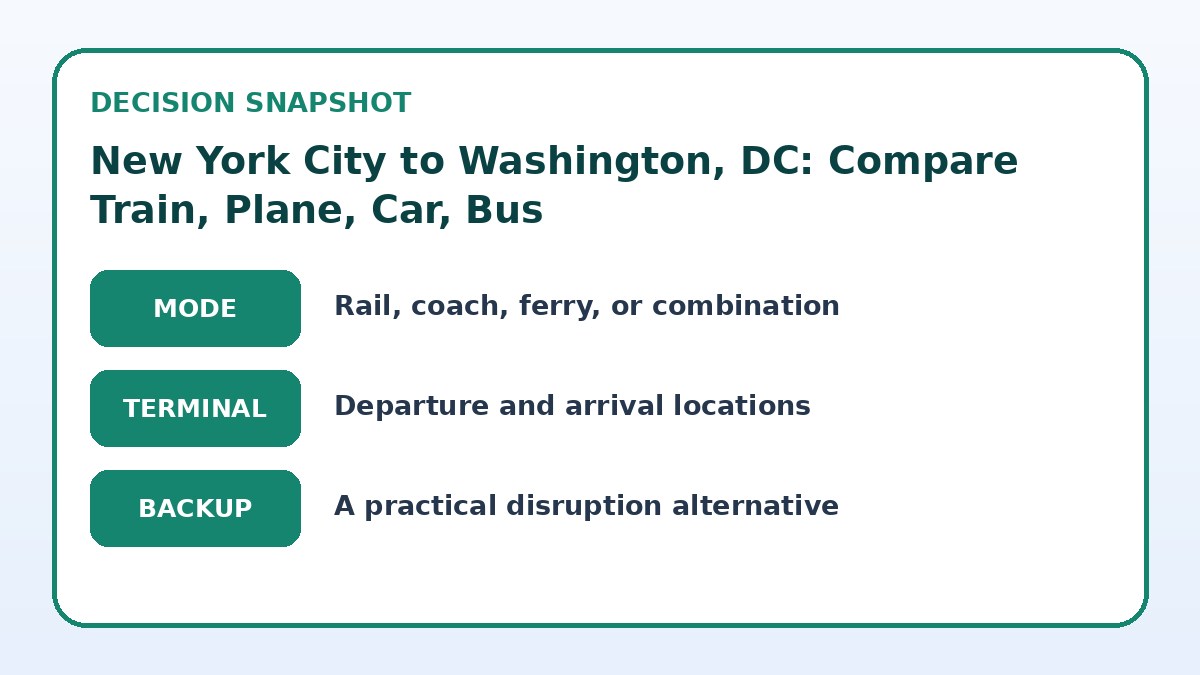
See current options before you compare the details
Availability and final conditions change. Open Trip.com now or keep reading for the practical comparison.
Why the train is often the practical choice for couples
Trains typically combine central-city stations, roomy seats, and the ability to move around—advantages couples appreciate when they want to talk, read together, or work without wearing headphones. You avoid airport security lines, early check-in buffers, and long transfer rides to or from out-of-town airports. For many pairs the train’s predictability and straightforward boarding reduce stress, letting the trip itself feel like part of the getaway. If relaxation and a smooth city-to-city transition trump shaving off a bit of total journey time, the train's mix of comfort and convenience makes sense.
That said, train options vary in service class, frequency, and onboard amenities, so compare departure points, seat types, and cancellation rules on provider booking pages before you buy. If you need checked baggage, a particular seating arrangement, or specific onboard services (quiet cars, food service, accessibility), verify the train operator’s policies on the final booking screen. Also weigh schedules: some trains are faster or offer more comfortable departures in the time window you prefer. These small checks ensure the train delivers the practical couple-friendly experience you expect.
When flying may suit couples better
Flying can save door-to-door time when schedules align and short hops are needed between commitments, making it attractive for couples on a tight itinerary. If one partner has a business obligation or you’re connecting to a region beyond DC that’s easier reached by air, plane travel can be the practical choice. For those who prioritize getting to the destination as quickly as possible and are comfortable with airport navigation and transfer logistics, flying reduces time in transit even when factoring in taxis or rideshares to and from airports.
Before booking, compare total travel time rather than just flight duration: include transfer times, security, and the time to travel from each airport into downtown. Also check baggage allowances, change and cancellation rules, and whether flights involve connections—some offerings require a transfer at another airport, which changes the convenience calculation. Always verify final baggage, boarding, and transfer details on the carrier’s booking page so you know exactly what to expect and can coordinate pickups or rideshare reservations on arrival.
| Approach | Best for | Tradeoff to check |
|---|---|---|
| Train (city-center, roomy seating) | Couples valuing comfort, conversation, and easy downtown arrival | Sometimes slightly longer door-to-door time than fastest flights; schedules to verify |
| Plane (fastest travel time) | Couples with tight schedules or longer connecting travel needs | Adds airport transfers and security time; check total travel time and baggage rules |
| Car (private, flexible itinerary) | Couples who want privacy, scenic stops, or extra luggage capacity | Traffic, parking, and tolls can add stress and unpredictable delays |
| Bus (most budget-friendly) | Couples prioritizing lower cost and simple booking | Less space and comfort; onboard amenities and reliability vary by operator |
Ready to check the option that fits your plan?
Use your exact dates and traveler details so the provider page can show the current total and conditions.
Driving or renting a car: privacy and flexibility versus logistics
Driving gives couples complete control over departure times, routes, and stops—useful for scenic detours, visiting smaller towns, or carrying extra luggage and gear. A car turns the trip itself into part of the getaway: you can stop for photos, take a preferred scenic route, or split driving responsibilities to relax. For couples traveling with bulky items (bikes, instruments) or who want the privacy of their own space from door to door, the car can be the most practical option.
Balance those benefits against traffic, parking hassles, and toll costs that can be significant in both cities. Factor in where you’ll park in New York and DC and any low-emission or congestion zones you might cross. If you’re renting, compare pickup and drop-off locations and fees, and confirm insurance coverage and fuel policy on the rental company’s final booking page. These logistics determine whether driving remains practical or becomes more trouble than it’s worth for your plans.
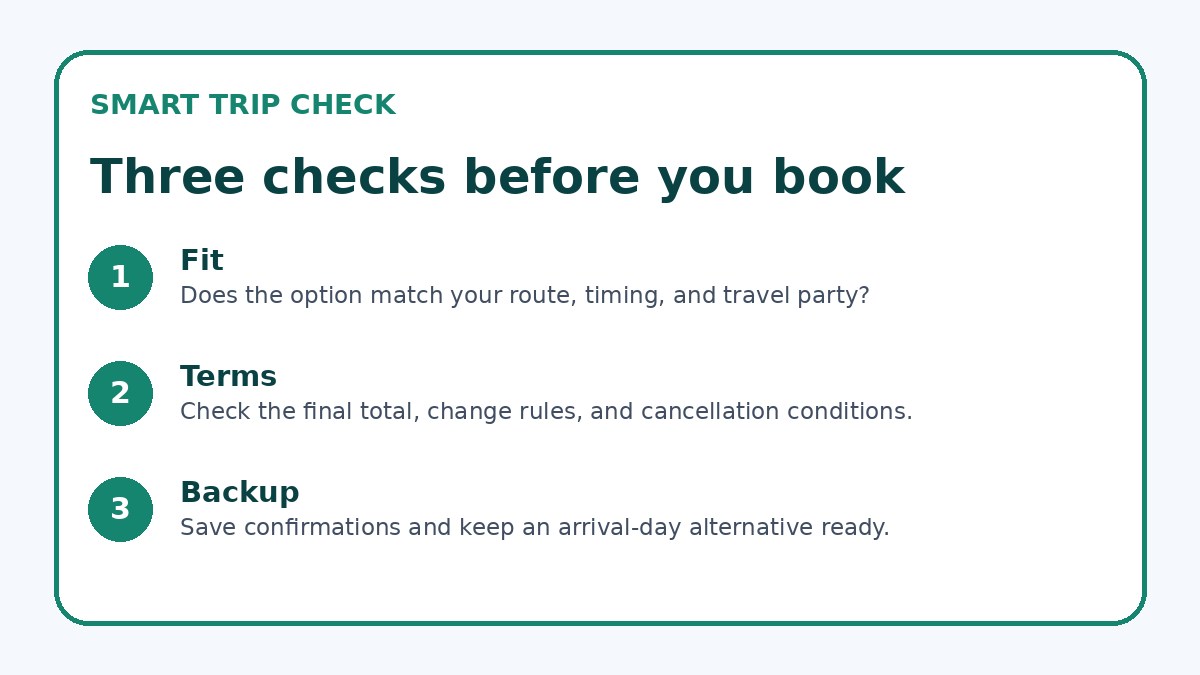
Before you book
- Decide whether door-to-door time or on-board comfort is your priority and use it to shortlist transport modes.
- Compare total travel time for each option including transfers, waiting, and city-to-station/airport rides.
- Check baggage allowances and fees on the final booking page of the operator before confirming.
- Confirm exact pickup and drop-off addresses and how you’ll get between station/airport and your lodging.
- Review cancellation, change, and refund policies on the provider’s booking page to match your flexibility needs.
- If renting a car, verify insurance coverage, fuel policy, and drop-off fees on the rental confirmation screen.
Buses and shared coaches: budget-friendly but check comfort tradeoffs
Buses are typically the most budget-friendly mass-transport option and can be sensible for couples who prioritize cost savings over onboard roominess. Many bus operators serve convenient pickup points in each city and offer frequent departures, making them flexible for various schedules. If you plan to sleep on the move, or if you’re traveling very light and want a no-frills way to transfer between cities, a bus can be a practical choice.
Yet coaches vary widely in seat pitch, onboard amenities, and reliability, so read current carrier policies about luggage, seat reservations, and refunds before buying. Think about how important space, legroom, and restroom access are to you as a couple—longer daytime rides on a cramped bus may be tiring. When comparing options, include the total door-to-door time, and check the final booking pages for pick-up/drop-off addresses and any optional seat upgrades or comfort features that matter to you.
Frequently asked questions
Is taking the train more relaxing than flying between New York City and Washington, DC?
Many couples find train travel more relaxing because you avoid airport security lines and lengthy check-in windows. Trains offer room to move, onboard seating designed for longer conversation or working together, and central arrivals that reduce transfer time into the city. Relaxation depends on the specific service and schedule—some trains can be crowded at peak times—so check seating classes and available departures on the operator’s booking page. If relaxation is your top priority, look for services with larger seats or quieter cars and reserve seats together if the system allows.
How should couples decide between driving and taking public transport?
Start by listing what matters most: privacy and flexibility versus avoiding traffic and parking hassles. If you want scenic stops or carry bulky gear, driving is likely better. If you prefer avoiding unpredictable congestion, saving on parking fees, or relaxing without a driver, choose train, bus, or plane depending on time and budget. Compare estimated door-to-door times, expected parking cost, and any tolls. When renting, verify pickup/drop-off locations and fees on the rental page. This practical tradeoff assessment usually clarifies the best choice for the pair.
What should couples check about schedules and connections before booking?
Always look at the full itinerary: departure time, arrival time, and any transfers or connections required. For flights, include time needed for security and airport transfers; for trains, verify whether the route is direct or involves changes. Check seat reservation options and cancellation policies on the provider’s final booking screen. If using third-party aggregators like Trip.com to compare current availability, use the operator’s official booking page to confirm final fares, baggage allowances, and boarding procedures so nothing unexpected arises on travel day.
Final planning note
For most couples balancing comfort and practicality between New York City and Washington, DC, the train will be the default choice—it delivers city-center access and a relaxed onboard environment good for conversation or planning together. Flying can beat trains on pure transit time when schedules align, while driving wins for privacy and flexible detours. Buses remain the value option if budget is the top concern. The right choice comes down to what you want from the journey: save time, save money, or make the trip part of the experience. Use the checklist above, verify baggage and change rules on provider booking pages, and pick the option that fits how you want to travel together.
Continue planning
Check current options and final conditions
Use the provider page to confirm live availability, the final total, cancellation terms, and every condition that matters to your trip.
This evergreen planning guide was created with AI-assisted drafting and a structured quality review. It does not display live prices, schedules, availability, visa guidance, or provider rankings. Verify current details before booking. Some links are affiliate links; we may earn a commission at no additional cost to you.