
For couples who want milder weather, quieter attractions, and more flexible options, Sydney’s shoulder seasons—spring (early September–November) and autumn (March–May)—are ideal windows to hunt for travel deals. The practical choice: target midweek stays and look at centrally located neighborhoods with easy tram, ferry, or rail access to plan relaxed mornings and lively evenings without long transit times. Prioritize accommodation with a simple cancellation policy and easy check-in, and compare refundable vs non-refundable rates along with any package add-ons.
This guide shows how to weigh comfort vs cost, where to base yourselves for both romantic moments and practical access, and which booking details to verify on a provider’s final page. I’ll explain tradeoffs—weather variability, event-driven price spikes, and transport choices—so you can pick the shoulder-season approach that fits your priorities as a couple, whether you value calm afternoons, outdoor time, or cultural nights out.
See current options before you compare the details
Availability and final conditions change. Open Trip.com now or keep reading for the practical comparison.
Why shoulder seasons suit couples
Shoulder seasons in Sydney bring a useful balance: warmer days than winter, cooler crowds than summer, and more space for unhurried activities. For couples, that means easier dinner reservations, relaxed mornings at harbourside walks, and a higher chance of securing a table at popular restaurants without battling peak-season waits. The lower visitor density also opens up options for spontaneous day trips—ferries to bays, coastal walks, or short drives to nearby vineyards—without the pressure of packed itineraries.
That flexibility changes the rhythm of a trip: instead of racing to fit in landmarks between crowds, you can choose longer café stops, lie back on less-crowded beaches, or spend an afternoon in a museum without feeling rushed. At the same time, weather during shoulder seasons can be variable—expect some cool or rainy interludes—so pack layers and plan at least a couple of indoor alternatives. When booking, weigh how much unpredictability you accept for quieter streets and easier plans.
Where to stay: neighborhoods that fit couples
For first-time visitors who want iconic views and walkable romance, compare accommodation around Circular Quay, The Rocks, and the adjacent harbourside precincts. These areas put you close to the Opera House, harbour bridges, ferries, and many restaurants. If you prefer trendy cafés, boutiques, and an evening food scene, Surry Hills and Paddington offer intimate streets and short transit times to central sights. Each neighborhood trades proximity for price and ambiance: decide whether you prefer waking up to a harbour view or staying in a quieter, character-filled terrace row.
If you plan day trips along the coast or to the Blue Mountains, look at lodging near major transit links—Central Station and major ferry wharves—to reduce door-to-door travel time. For a relaxed beach focus, consider staying near Bondi or Manly to combine morning walks with afternoon sun without lengthy commutes. When comparing properties, check how close the accommodation is to the transport nodes you’ll actually use rather than relying on the general neighborhood name; confirm walking times and transport frequency on the provider’s final booking page.
| Approach | Best for | Tradeoff to check |
|---|---|---|
| Flexible refundable rate | Couples who value peace of mind and may change dates | Usually higher upfront cost compared with strict advance-purchase rates |
| Non-refundable discount rate | Couples with fixed plans who want lower nightly rates | Little to no refund if plans change; change fees may apply |
| Central harbour-front base | Couples prioritizing iconic views and walkable evenings | Higher nightly rates and sometimes more daytime tourist activity |
| Neighborhood stay with transit access | Couples who prioritize quiet nights and authentic local dining | Requires short daily commutes to major sights; check transit schedules |
Ready to check the option that fits your plan?
Use your exact dates and traveler details so the provider page can show the current total and conditions.
How to compare deals strategically
Start by lining up a few properties you like and comparing total out-the-door costs: nightly rate, local taxes, service fees, and any mandatory extras. Pay particular attention to cancellation terms and whether the quoted rate includes breakfast or other amenities you value. For couples, complimentary perks—late checkout, room upgrades, or welcome amenities—can tilt a choice even if the base rate is slightly higher. If a lower non-refundable rate appears tempting, compare how much you’d pay to change dates; that helps decide if the risk is acceptable.
Also compare transport time, not just distance. A centrally located property with poor transit connectivity can cost time and energy that blunts the benefit of a cheaper nightly rate. When comparing flights, weigh direct vs connecting options for comfort; shorter total travel time might justify a higher fare for couples prioritizing rest. Use the provider’s final booking page to verify baggage rules, seat assignment options, and any additional fees. You can check current availabilities and reviews on platforms like Trip.com to cross-reference, but verify all final terms on the supplier’s site before booking.
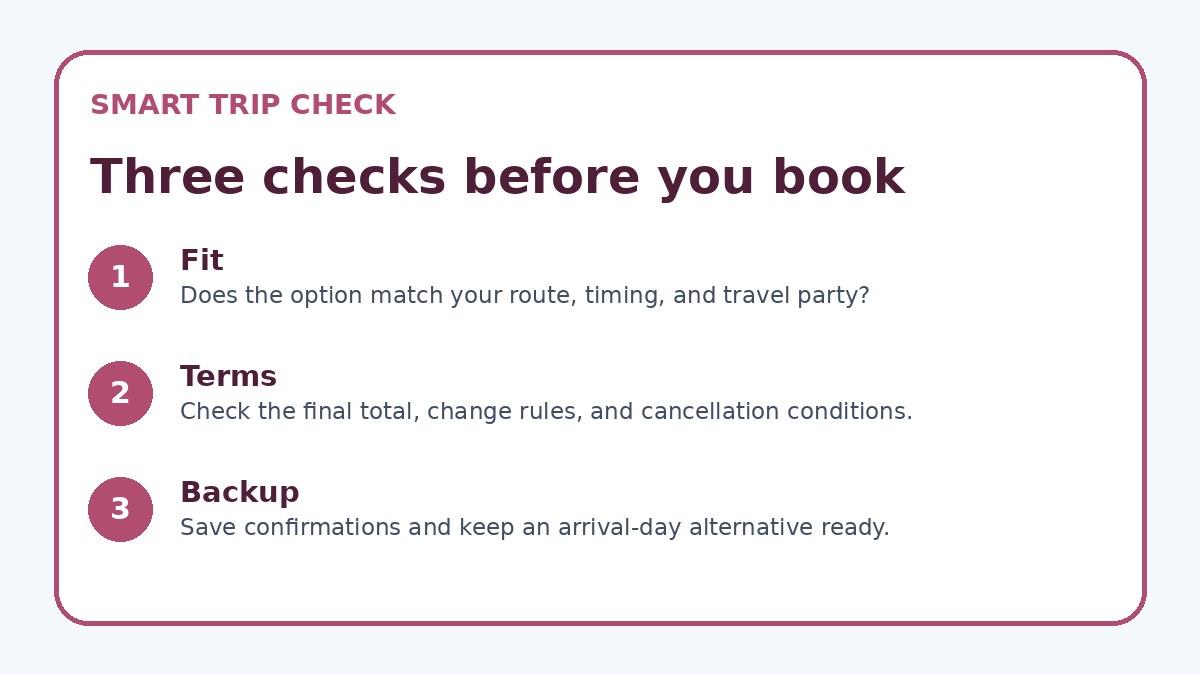
Before you book
- Compare total price including taxes, service fees, and any mandatory extras before selecting a rate.
- Confirm cancellation policy, change fees, and cut-off times on the provider’s final booking page.
- Check walking times to the nearest ferry, light rail, or train station and verify schedules for planned day trips.
- Look for included perks (late checkout, upgrades, breakfast) that matter more than small differences in nightly rates.
- Review recent guest feedback for noise, cleanliness, and accuracy of advertised amenities before booking.
- If booking flights, compare direct and connecting options and verify baggage rules and seat-assignment terms on the carrier’s site.
Tradeoffs: cost, crowd levels, and weather
Moving into shoulder-season savings often reduces crowd friction but introduces weather risk. Spring and autumn are pleasant overall, though a string of cool or rainy days can disrupt planned outdoor time. If you’re flexible and comfortable with occasional indoor plans, shoulder seasons usually offer better value and a calmer pace. If guaranteed beach weather is a must, you’ll need to accept higher peak-season rates or be prepared to shift plans on short notice based on forecasts.
Another tradeoff concerns special events: festivals and school holidays can still push prices up during shoulder times. If a specific event is important to your trip—concerts, theatre runs, or a regatta—book early and confirm event dates before locking in accommodation. Conversely, if you want to avoid crowds entirely, look at precise midweek windows and compare different neighborhoods for quieter evenings. In every case, confirm cancellation windows and any date-change penalties on the booking page so you know the practical implications if plans shift.
Frequently asked questions
When exactly are Sydney’s shoulder seasons and why do they offer deals?
Shoulder seasons typically fall in autumn (March–May) and spring (September–November). These periods sit between summer and winter demand peaks, so hotels and tour operators often have more flexible inventory. Couples can find better availability for preferred rooms and midweek rates may be lower. However, you should verify current deal dates and any special event overlaps on booking sites, because festivals or school breaks within those months can temporarily reduce the deal window.
Is it worth choosing a cheaper non-refundable rate for a couple’s trip?
A non-refundable rate can make sense if your dates are locked and you’re comfortable accepting the risk of change. For couples with firm plans—fixed vacation days, booked time off, or a special occasion—the savings can be meaningful. If your schedule is uncertain or health and travel disruptions are a concern, a refundable or flexible rate often offers better value despite a higher price because it preserves options and reduces stress. Always check the fine print on change and cancellation penalties before committing.
How should couples prioritize neighbourhoods to get the most out of Sydney?
Decide what you want most: harbour views and easy ferry access (Circular Quay, The Rocks), a lively dining scene and cafes (Surry Hills, Paddington), or beachside mornings (Bondi, Manly). For day trips, proximity to Central Station or major ferry wharves saves travel time. Couples who want romantic strolls and iconic sights should prioritize walkability; those seeking quieter local life may choose smaller neighborhoods with a short transit ride to central attractions. Verify actual walking times and transit frequency on booking pages.
Final planning note
Planning a Sydney trip around shoulder seasons is a pragmatic way for couples to enjoy a relaxed, romantic visit with fewer crowds and more flexible choices. Focus on midweek stays, neighborhoods that suit your preferred rhythm—harbourfront for views, inner-city for dining, or coastal for beach time—and compare refundable versus non-refundable options according to your comfort with change. Always confirm cancellation terms, included amenities, and transport links on the provider’s final booking page before you pay. Use comparison platforms, including Trip.com as one place to check availability, but rely on supplier pages for final terms so your shoulder-season plans unfold smoothly.
Continue planning
Check current options and final conditions
Use the provider page to confirm live availability, the final total, cancellation terms, and every condition that matters to your trip.
This evergreen planning guide was created with AI-assisted drafting and a structured quality review. It does not display live prices, schedules, availability, visa guidance, or provider rankings. Verify current details before booking. Some links are affiliate links; we may earn a commission at no additional cost to you.