
If you travel between Seoul and Jeju for work, change and cancellation rules determine how much flexibility your ticket gives you and how costly a schedule hiccup becomes. The practical answer: pick the fare class and ticket type that match how likely you are to change plans, then verify the exact change fees, refundability, reissue rules, and any required documentation on the airline’s final booking page before you buy. Business travelers prioritizing schedule certainty should weigh refundable tickets or flexible non-refundable fares that waive or cap change fees, while those with fixed itineraries can save on restricted fares. Always check whether partner codeshares, connecting legs, or package bookings affect the policy—these often carry different terms. Use Trip.com or the airline site to compare current availability and the explicit wording of change and cancellation conditions before confirming payment.
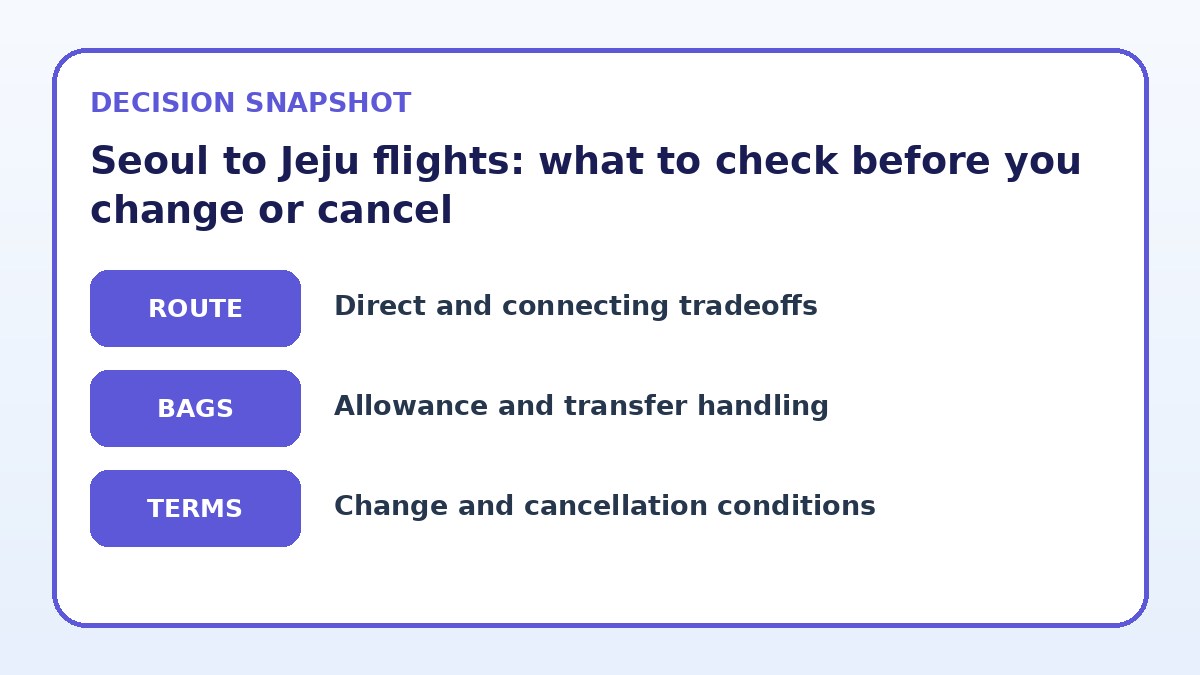
See current options before you compare the details
Availability and final conditions change. Open Trip.com now or keep reading for the practical comparison.
Decide what flexibility you really need
Start by mapping how often your schedule shifts and how far ahead you book. If your company calendar changes frequently or if meetings are routinely rescheduled, a ticket that allows free or low-cost changes will pay for itself. Conversely, if your trips are fixed with preapproved itineraries and travel policies demand lower fares, a restricted nonrefundable fare might be acceptable. Consider also whether you can absorb last-minute changes by swapping colleagues or using internal travel credits before selecting a fare.
Next, factor in the cost of lost time and productivity. For a same-day change, the inconvenience of rebooking and potential missed meetings can outweigh the price difference between a flexible and a cheap fare. Think through the full cost levers: change fees, potential fare differences, time spent arranging alternate travel, and any penalties your employer applies for schedule variations. That will help you choose the ticket rules that match your risk tolerance and corporate reimbursement rules.
How to read fare rules and what to verify
Fare rules can be dense; focus on a few critical lines: whether changes are permitted, the fee amount or waiver conditions, whether refunds are allowed and in what form, and whether schedule changes initiated by the airline are handled differently. Look for phrases like “changes permitted with penalty,” “non-refundable,” or “credit only.” Also check time limits for free changes—some fares waive fees only within a short window after booking or require changes to be made a certain number of hours before departure.
When you find a promising fare, open the airline’s full policy page from the booking confirmation level. Verify whether ancillary purchases—seat assignments, checked bags, or added flexibility bundles—are refundable or transferable. If your booking uses a corporate or partner discount, confirm whether that discount alters the standard refund/change language. Finally, save a copy of the exact terms and any confirmation emails; those documents are the evidence you’ll need if the airline and your company later disagree about what was promised.
| Approach | Best for | Tradeoff to check |
|---|---|---|
| Buy refundable/business flexible fare | Travelers who frequently change plans and need straightforward refunds. | Higher upfront fare compared with restricted tickets. |
| Buy flexible non-refundable fare with change waiver | Those wanting lower base fare with moderate change protection. | May still incur fare difference charges on rebooking. |
| Buy the cheapest restricted fare | Very predictable itineraries where cost savings trump flexibility. | High penalties or no refund if plans change. |
| Use corporate or agency bookings | Teams needing consolidated billing, policy enforcement, and support. | Rules can be more complex; agency terms may add procedures for changes. |
Ready to check the option that fits your plan?
Use your exact dates and traveler details so the provider page can show the current total and conditions.
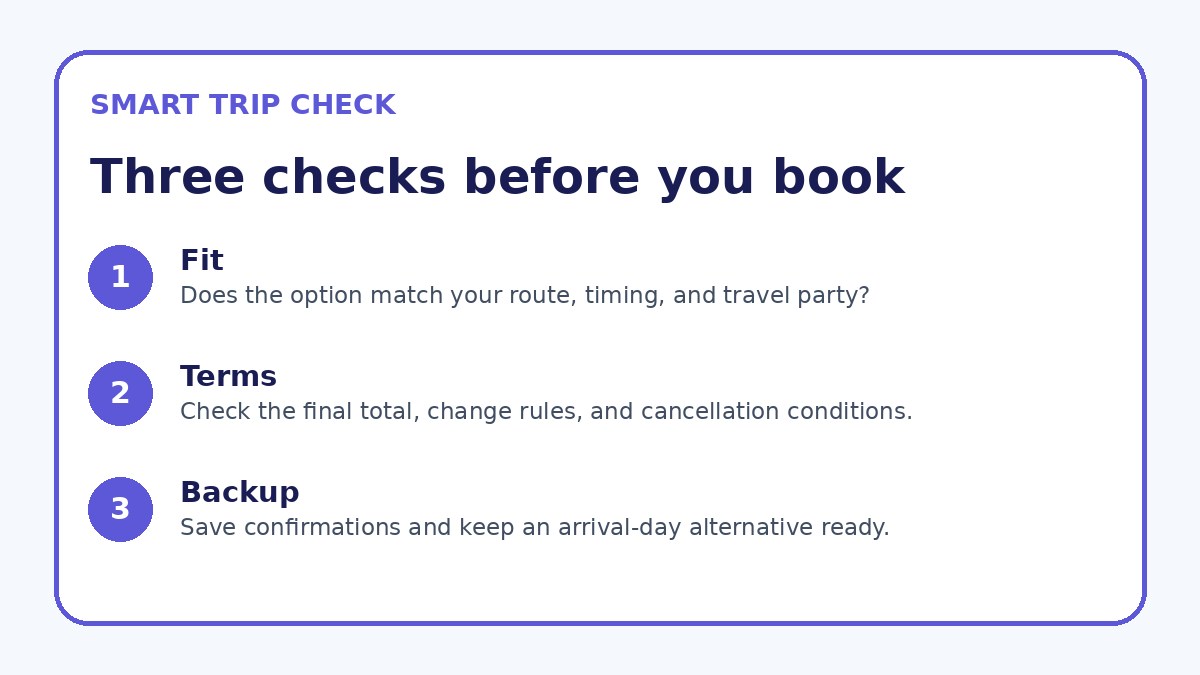
Comparing direct versus connecting options
On the Seoul–Jeju route you’ll typically compare direct flights with any options that include connections. Direct flights reduce the number of providers involved, which often simplifies changes and refunds because only one carrier’s rules apply. Connecting itineraries, codeshares, or interline combinations can complicate the situation: the most restrictive segment or the ticketing carrier’s policy may govern changes and refunds. Always identify which airline issued the ticket (the ticketing carrier) and which airline operates each segment before assuming a single, simple rule applies.
When evaluating options, ask how changes are handled across segments. If you change the departing flight on a connecting itinerary, the return or onward segment may need reissue, and fare differences can be recalculated across the whole ticket. If a codeshare is involved, confirm whether the operating airline allows online self-service changes or requires phone support. For business travelers, the convenience of a simple direct ticket can outweigh a moderate fare saving when it prevents policy complexity during last-minute changes.
Before you book
- Open the full fare rules from the airline’s booking page and screenshot the sections about changes, cancellations, refunds, and reissues.
- Confirm which carrier issued the ticket and which airline operates each segment, especially for codeshares.
- Check whether corporate travel policy or company card rules require refundable tickets or preapproval for expensive changes.
- Verify whether change fees are fixed amounts, waived under certain conditions, or variable based on fare difference.
- Note how refunds are processed (original form of payment versus travel credit) and expected processing timelines.
- If booking through an agent or third party, confirm their role in rebooking and any additional fees they might charge.
Practical steps if you need to change or cancel
If your plans change, act quickly and check the booking confirmation or the airline app for the self-service change option. Many airlines allow online changes that clearly show the new total before you accept it; this transparency helps you decide whether to proceed. If the online system is unclear or shows an unexpected charge, call the airline or your corporate travel manager rather than accepting an automated reissue. Keep records of the interaction—agent name, time, the exact fees quoted—and ask for an email confirmation of any agreement.
If the airline cancels or significantly changes a scheduled flight, their contract of carriage often provides different remedies than voluntary cancellations, such as a full refund or free rebooking. In those situations, confirm what the airline offers and whether your corporate travel policy prefers refunds or rebooking. When a refund is available, verify whether it will be returned to the original form of payment or provided as travel credit, and how long processing may take. If you used a third-party booking platform, check whether the platform’s change policies add steps or fees before you contact the carrier.
Frequently asked questions
Can I rebook a different flight the same day without penalty?
It depends on your fare rules and the airline’s operational policies. Some flexible fares and corporate tariffs allow same-day changes with a reduced or waived fee, while many restricted tickets impose full change penalties plus any fare difference. Airlines also offer separate same-day standby or confirmed same-day policies that can apply only to certain ticket classes. Before assuming you can move flights free of charge, check the precise wording on your ticket and, if necessary, call the airline or your corporate travel manager to confirm the specific same-day change options and any paperwork required.
What happens if the airline cancels my Seoul–Jeju flight?
When the airline cancels a flight, contract-of-carriage rules typically provide passengers the choice of a refund or rebooking at no additional charge; the exact remedy can vary by carrier. For business travelers, rebooking onto the next available service is often the fastest option, but insist on written confirmation of any alternative travel arrangements the airline offers. If your booking came through a corporate travel agency or third party, verify whether you should contact them or the airline directly to arrange the rebooking or refund and whether they will assist with compensation or connecting transport.
Will adding extras like seat reservations or checked bags affect refundability?
Ancillary purchases often have their own rules separate from the base fare. Seat assignments, priority boarding, or checked baggage fees may be non-refundable, partially refundable, or transferable depending on the carrier and fare conditions. If flexibility is important, check whether the airline bundles changeable seats or baggage with certain fare families or offers a flexible bundle you can add at purchase. Always confirm on the booking summary whether ancillary items will be refunded or retained as credit in the event of a ticket cancellation or voluntary change.
Final planning note
For business travelers on Seoul to Jeju flights, the right decision balances cost, likelihood of schedule changes, and the administrative burden of rebooking. Start by assessing how often you adjust plans, then read the fare rules carefully for change fees, refund form, and any reissue conditions. Prefer simpler, single-carrier itineraries if you want fewer surprises and keep records of the exact policy language and confirmations. When in doubt, verify the final terms on the airline’s booking page or with your corporate travel manager; Trip.com can be used as an additional place to compare current availability and conditions but always confirm the carrier’s published policy before you pay.
Continue planning
Check current options and final conditions
Use the provider page to confirm live availability, the final total, cancellation terms, and every condition that matters to your trip.
This evergreen planning guide was created with AI-assisted drafting and a structured quality review. It does not display live prices, schedules, availability, visa guidance, or provider rankings. Verify current details before booking. Some links are affiliate links; we may earn a commission at no additional cost to you.